
Rachel Syme in The New Yorker:
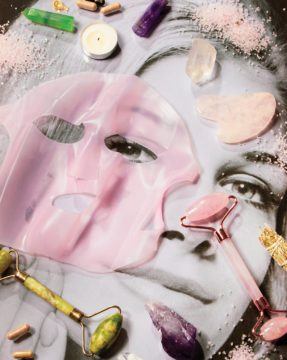 About halfway through a recent episode of “POOG,” a new podcast that is essentially one long, unbroken conversation about “wellness” between the comedians and longtime friends Kate Berlant and Jacqueline Novak, the hosts spend several minutes trying—and failing—to devise a grand theory about the existential sorrow of eating ice cream. “The pleasure of eating an ice-cream cone for me,” Novak says, in the blustery tone of a motivational speaker, “involves the attempt to contain, catch up, stay present to the cone. Because the cone will not wait.” Berlant, a seasoned improviser, leaps into the game. “And it’s grief,” she says, with no trace of irony. “And it’s loss, because it’s so beautiful, it’s handed to you, and you’re constantly having to reckon with the fact that it is dying, and yet you’re experiencing it.”
From here, the conversation begins to warp into almost sublime absurdity. Novak suggests that what she ultimately desires is not the cone itself but the emptiness that comes after the cone has been consumed, or what she calls “the dead endlessness of infinite possibility.” She makes several attempts to refine this idea, in a state of increasing agitation. And then she begins to cry. “Are you crying because you are still untangling what this theory is?” Berlant asks. “No,” Novak blubbers. “I’m crying out of the humiliation of being seen as I am.”
At first, listening to this meltdown, I wondered what, precisely, was going on. Novak and Berlant are brilliant comics, denizens of the alternative-standup scene that bridges the gap between punch lines and performance art. They had to be up to something. And then, after several incantatory hours of listening to them talk, it became clear: “poog” is a show about wellness which is, in a dazzling and purposefully deranged way, utterly unwell. Of course Novak can’t process her desire to have everything and nothing at once; like so much of the language of being “healthy” in a fractured world, her yearning can never compute. “poog” is not just “Goop” (as in Gwyneth Paltrow’s life-style empire) spelled backward—it’s an attempt to push the wellness industrial complex fully through the looking glass. Each episode begins the same way. “This is our hobby,” Berlant says. “This is our hell,” Novak adds. “This is our naked desire for free products,” Berlant concludes.
More here.
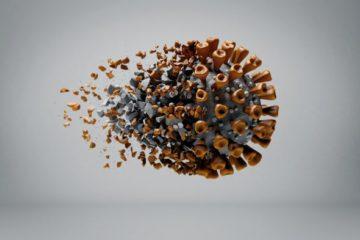 A lot of worry has been triggered by discoveries that variants of the pandemic-causing coronavirus
  As we learn in The Tyranny of Merit, Michael Sandel’s view of meritocracy rests in part on the historical claim that it is grounded in the Calvinist understanding of predestination. “Combined with the idea that the elect must prove their election through work in a calling,” he writes, such a doctrine “leads to the notion that worldly success is a good indication of who is destined for salvation.” In this he follows Max Weber in The Protestant Ethic and the Spirit of Capitalism, but Sandel extends this thesis to the present moment, citing the evangelical idea of the “prosperity gospel” and the secular rationalizations of such well-known achievers as Lloyd Blankfein (CEO of Goldman Sachs) and John Mackey (founder of Whole Foods), who represent the understanding of health and wealth “as matters of praise and blame…a meritocratic way of looking at life.”
 “Time” and “the brain” are two of those things that are somewhat mysterious, but it would be hard for us to live without. So just imagine how much fun it is to bring them together. Dean Buonomano is one of the leading neuroscientists studying how our brains perceive time, which is part of the bigger issue of how we construct models of the physical world around us. We talk about how the brain tells time very differently than the clocks that we’re used to, using different neuronal mechanisms for different timescales. This brings us to a very interesting conversation about the nature of time itself — Dean is a presentist, who believes that only the current moment qualifies as “real,” but we don’t hold that against him.
 The hardest thing about teaching someone how to drive a boat is that it’s not at all like driving a car. To steer a car, you turn the wheel until your nose is pointing where you want to go, then you straighten out and go there. This works because the car is attached to the road. It’s when the car itself is no longer attached to the road that things get weird. When you turn too hard, for example, the rubber in your tyres loses purchase on the street, and you are “in drift”. The normal rules no longer apply.
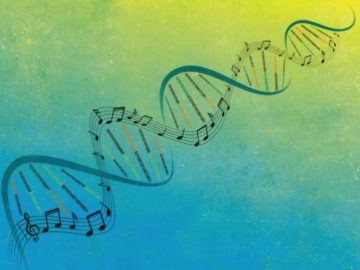 DIGITAL-DATA PRODUCTION
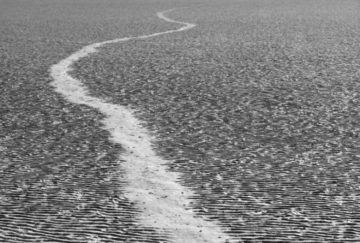 Where do you place the boundary between “science” and “pseudoscience”? The question is more than academic. The answers we give have consequences—in part because, as health policy scholar Timothy Caulfield
 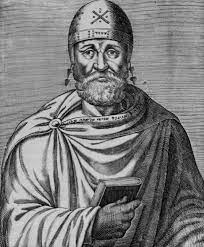 W
W According to Panter, he didn’t set out to create Jimbo, “he just showed up.” Jimbo made his first public appearance in the punk magazine Slash in 1977 and his cover debut two years later. His pug-nosed mug moved to Françoise Mouly and Art Spiegelman’s radical art-comics anthology Raw in 1981; some of Jimbo’s stories there made up the first Raw One-Shot, a spin-off of the periodical, the following year. He joined an ensemble cast in Panter’s Cola Madnes, written in 1983 but not published until 2000, and landed his first full-length book, Jimbo: Adventures in Paradise, in 1988, published by Raw and Pantheon. Jimbo has since starred in four issues of a self-titled comic published by Zongo in the nineties and stood in for Dante in two illuminated-manuscripts-cum-comic-books: Jimbo in Purgatory (2004) and Jimbo’s Inferno (2006). He is, as you read these words, being sent out into fresh adventures by Panter’s fervid imagination and tireless pen.
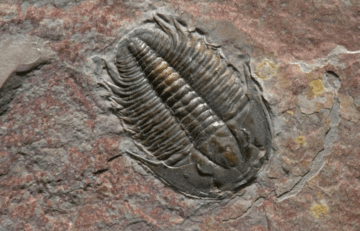 Shortly after September 11, 2001, Bruno Latour for example
 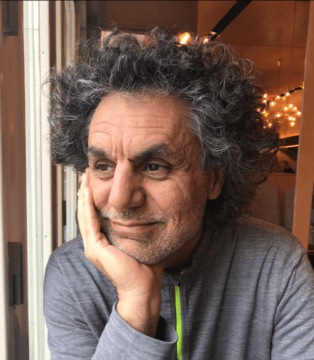 I am a non-white Mizrahi Jewish academic who has been studying Israel/Palestine and the history of Jews in the Middle East for two decades. My family hails from Ottoman Palestine, Egypt, Tunisia, and the Greek islands of Zakynthos and Corfu. All too many of us were murdered by Nazi Génocidaires (and rest assured that we will not forget or forgive). Precisely because of this scholarly and biographic background I was embarrassed to read the
 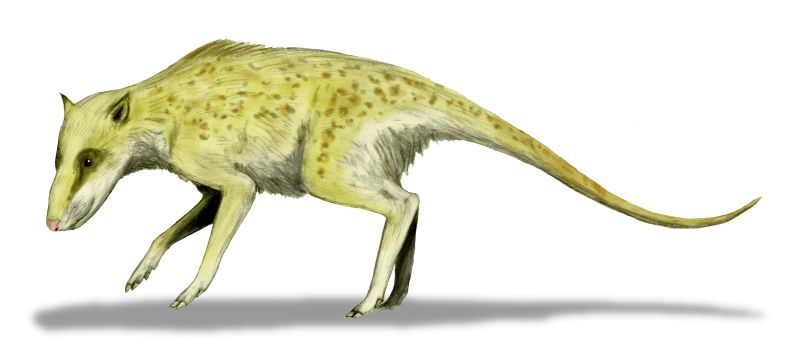 The largest animals that have ever existed on our planet descended from a miniature deer-like creature that walked on four legs in the swamps of ancient India.
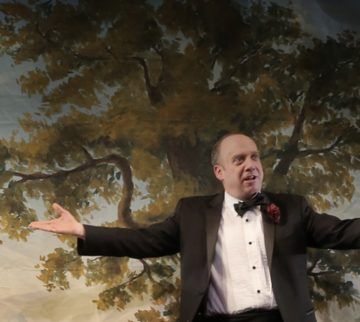 Like other artists, the actor is a kind of shaman. If the audience is lucky, we go with this emotional magician to other worlds and other versions of ourselves. Our enchantment or immersion into another world is not just theoretical, but sensory and emotional. How do actor and audience achieve this shared mysterious transportation? This shared ritual draws upon a kind of sixth sense, the imagination. The actor’s imagination has gone into emotional territories of intense feeling before us. Now they guide us like a psychopomp into those emotional territories by recreating them in front of us.
 I HAVE NEVER BEEN ABLE
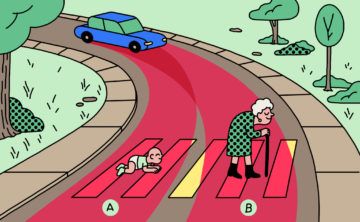 In 2014 researchers at the MIT Media Lab designed an experiment called