
Category: Recommended Reading
Sunday Poem
The Missing Father
“About suffering they were never wrong,
The Old Masters.” — W.H. Auden,
That’s what Auden tells us:
never wrong because their
paintings show how suffering
occurs while others don’t notice,
or care. People close their windows
while the girl screams in the alley.
They drive past the strange man
staggering alongside the road.
Brueghel’s Landscape with the Fall
of Icarus gives Auden his example.
In the painting, Icarus has just
plummeted into the sea. Only his legs
and a tiny splash are still visible. Yet
the plowman in the foreground
goes on plowing. And the “expensive,
delicate ship” whose passengers may
have seen Icarus fall had, Auden writes,
“somewhere to get to, and sailed calmly on.”
And so here’s my question: Where is
the father in this painting? Where
is Daedalus, who conceived and created
the wings and planned their escape
from the island prison; who carefully
instructed his son on the dangers
of flight and then, magically, sprang
into the air with him? Why did Brueghel
and Auden not see him scan the waters
for a sign of his foolish, elated boy;
and, not finding Icarus, searching
across every island; and finally,
realizing what must have happened,
pulling up to the spot, seeing
the tire marks and the smoldering wreck,
running down into the ditch, choking back
the tears, frantically trying to pry open
the door of the crushed vehicle?
by Lou Lipsitz
from The Sun
Chick Corea (1941 – 2021)
https://www.youtube.com/watch?v=ppUpj90YAFU&ab_channel=TheChoke77
Isadore Singer (1924 – 2021)
Digging Deeper Into Holocaust History
Virat Markandeya in Nautilus:
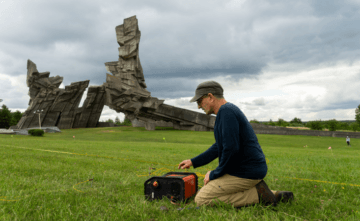 On a trip to Warsaw, Poland, in 2019, Richard Freund confronted the history of resistance against the Nazis at a Holiday Inn. Freund, an archaeologist, and professor of Jewish Studies at Christopher Newport University in Virginia, was led by the hotel manager into the basement. “Lo and behold,” Freund says, a section of the Warsaw Ghetto wall was visible. Freund was in Warsaw accompanied by scientists from Geoscientists without Borders, a nonprofit group whose mission includes investigating archaeological sites and working to mitigate natural disasters like earthquakes and tsunamis.
The geoscientists were helping Freund pinpoint the location and contents of underground bunkers, where hundreds of Nazi resisters, led by 24-year-old Mordechai Anielewicz and his girlfriend Mira Fuchrer, plotted to combat the deportation of Jews to death camps. The rebellion erupted in the Warsaw Ghetto Uprising of 1943, the largest Jewish revolt in World War II. The resistance lasted nearly a month. During the battles, Nazis funneled poison gas into the underground bunkers, killing many of the rebels and driving others to escape through sewer tunnels. The Nazis crushed the uprising and razed the Warsaw ghetto. Tens of thousands of Jews either died in the battles, were executed, or were deported to death camps.
The history of the uprising was written in part by those who escaped. “They tell us what happened in that final moment,” says Freund, who has led archaeological investigations into Jewish history in Israel and Europe. But the story of the Warsaw uprising, and the Holocaust, is not complete. Holocaust survivors and their stories are dwindling. Now geoscientists have stepped in to fill in the historical gaps. By employing geophysical mapping and soil sampling, among other techniques, they have located mass grave sites—there are an estimated 200 such sites in Lithuania alone—corroborated testimonies of daring escapes, and unearthed the remains of a once-thriving culture.
More here.
Saturday, February 13, 2021
Is Now the Time for a Federal Jobs Guarantee?
What Happens If China Makes First Contact?
 Ross Andersen in The Atlantic:
Last January, the Chinese Academy of Sciences invited Liu Cixin, China’s preeminent science-fiction writer, to visit its new state-of-the-art radio dish in the country’s southwest. Almost twice as wide as the dish at America’s Arecibo Observatory, in the Puerto Rican jungle, the new Chinese dish is the largest in the world, if not the universe. Though it is sensitive enough to detect spy satellites even when they’re not broadcasting, its main uses will be scientific, including an unusual one: The dish is Earth’s first flagship observatory custom-built to listen for a message from an extraterrestrial intelligence. If such a sign comes down from the heavens during the next decade, China may well hear it first.
In some ways, it’s no surprise that Liu was invited to see the dish. He has an outsize voice on cosmic affairs in China, and the government’s aerospace agency sometimes asks him to consult on science missions. Liu is the patriarch of the country’s science-fiction scene. Other Chinese writers I met attached the honorific Da, meaning “Big,” to his surname. In years past, the academy’s engineers sent Liu illustrated updates on the dish’s construction, along with notes saying how he’d inspired their work.
More here.
A Parable and Parody of Restorative Justice
 Judith Levine in Boston Review:
After “the,” “and,” and “fuckin’,” the most frequently used word in the Netflix series Dead to Me must be “sorry.”
The protagonists of the show, Judy Hale and Jen Harding, have plenty for which to be sorry. First Judy (Linda Cardellini) kills Jen’s husband with her 1966 Mustang in a hit-and-run accident. Then Jen (Christina Applegate) bludgeons Judy’s ex-fiancé with a wooden bird and leaves him to bleed to death in her backyard pool.
Their victims, it must be said, sort of had it coming. Ted Harding was a peach of a dad but a rotter of a husband: he rejected his wife after a double mastectomy and breast reconstruction and cheated on her with a waitress named Bambi, who is about as old as her namesake. Steve Wood, Judy’s fiancé (who survives until the end of the first season), has no redeeming qualities aside from bedroom-blue eyes and a big cock. He is, among other things, a liar, an egotist, an abuser, a Mafia collaborator, and a preposterous home decorator. He is also the reason Judy left the scene of the accident after hitting Jen’s husband.
More here.
Dynamo Current, Feet, Fists, Salt
 Adam Shatz in the LRB:
When Jacques Carbonnel went to Algeria to do his army service in 1956, his wife, Jeanne, asked him not to hide anything from her. ‘You want me to tell you everything,’ he wrote to her soon after arriving. ‘It’s ugly and you are too pretty. We arrest suspects, we release some, we kill some – it’s the dead runaways you see in the newspapers, phoney runaways! We push some out of helicopters above their villages. Criminal, inexcusable. The military solution doesn’t work here.’ Three days later, after returning from a two-day operation, he explained the method the army used to make suspected rebels talk: ‘We fill them up with water. We put a pipe in their mouths, in the anus, and we open the tap.’
Carbonnel was one of 1.5 million conscripts – appelés – who were sent to Algeria to defeat a nationalist uprising: an entire generation of young men in their early twenties. (The population of France in 1954 was 43.3 million.) But they were not at war, at least not officially. Algeria had been conquered in 1830 and administered as an integral part of France since 1848, when it was divided into three départements. More than a million European settlers lived there as French citizens. In Algeria the French were chez eux: according to a popular saying, the Mediterranean separated France from Algeria just as the Seine in Paris divided the Left Bank from the Right. When the rebels of the Front de Libération Nationale launched their war of independence in November 1954, France referred to them as hors-la-loi, outlaws rather than combatants. By the time Algeria won its independence in July 1962, hundreds of thousands of Algerians, and roughly 24,000 French soldiers, were dead. Algeria was liberated after more than a century of colonial domination, and France woke up to find itself stripped of its most prized imperial possession.
More here.
The Hum and Buzz of Implication: Biography and Edith Wharton
Frostquake by Juliet Nicolson
Kathryn Hughes at The Guardian:
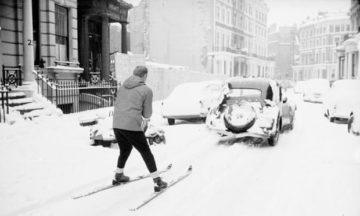 On Boxing Day 1962 it began to snow and didn’t stop for the next 10 weeks. In effect, Britain had entered its own little ice age. There were drifts 23ft high on the Kent-Sussex border, while Stonehenge was buried so deeply that it was almost invisible when viewed from the sky. Icebergs entered the River Medway and, inland, icicles hung from the trees. The upper middle classes dug out their skis, while everyone else experimented with bits of corrugated iron strapped to their feet. A milkman died at the wheel of his float in Essex while indoor laundry froze before it could dry, so that next week’s vests and pants stood rigidly to attention before the kitchen fire. Someone had calculated that the last time it had been this cold was 1814, the year before Napoleon met his Waterloo.
more here.
Hermione Lee and Tom Stoppard
Charles McGrath at the NYT:
 Lee, or to be formal, Dame Hermione (she was awarded the title in 2013 for “services to literary scholarship”) is a leading member of that generation of British writers — it also includes Richard Holmes, Michael Holroyd, Jenny Uglow and Claire Tomalin — who have brought an infusion of style and imagination to the art of literary biography. She is probably most famous for her 1997 life of Virginia Woolf, which upended much of the received wisdom about Woolf and demonstrated that there was much more to say than that she was a depressive in a cardigan wading into a river. In similar fashion, her 2007 biography of Edith Wharton rescued Wharton from her snobbish, old-fashioned reputation and reimagined her as a modern.
Lee said yes to Stoppard, of course. How do you say no to someone so famous for charm? And then, as she recalled over Zoom last fall from her house in Oxford, she immediately thought to herself, “Oh my God, what have I done?”
more here.
Black History Is American History
David Boaz in The Huffington Post:
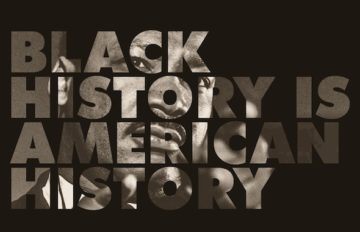 Some people think libertarians only care about taxes and regulations. But I was asked not long ago, what’s the most important libertarian accomplishment in history? I said, “the abolition of slavery.”
The greatest libertarian crusade in history was the effort to abolish chattel slavery, culminating in the nineteenth‐century abolitionist movement and the heroic Underground Railroad. It’s no accident that abolitionism emerged out of the ferment of the Industrial Revolution and the American Revolution. How could Americans proclaim that “all men are created equal … endowed by their Creator with certain unalienable rights,” without noticing that they themselves were holding other men and women in bondage? They could not, of course. The ideas of the American Revolution — individualism, natural rights and free markets — led logically to agitation for the extension of civil and political rights to those who had been excluded from liberty, as they were from power — notably slaves, serfs and women. As the great English scholar Samuel Johnson wrote in 1775, “How is it that we hear the loudest yelps for liberty among the drivers of Negroes?”
The world’s first antislavery society was founded in Philadelphia that same year. Thomas Jefferson owned slaves, yet he included a passionate condemnation of slavery in his draft of the Declaration of Independence the following year: “[King George] has waged cruel war against human nature itself, violating its most sacred rights of life and liberty in the persons of a distant people who never offended him.” The Continental Congress deleted that passage, but Americans lived uneasily with the obvious contradiction between their commitment to individual rights and the institution of slavery.
More here. (Throughout February, at least one post will be dedicated to honoring Black History Month. The theme this year is: The Family)
Uncivil Liberty: The labor of democracy never ends
Lewis Lapham in Lapham’s Quarterly:
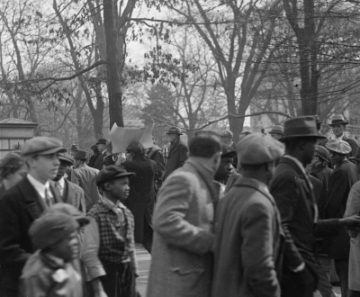 Released in the two-hundredth-anniversary year of the signing of the Declaration of Independence, Paddy Chayefsky’s script for the 1976 film Network finds the outraged television news anchor Howard Beale urging his viewers to rise up in revolutionary protest against a world in which “there is no America, no democracy,” only the vast and inhumane “dominion of dollars.” Beale names the twentieth century’s colossal capitalist cash machine as the equivalent of the eighteenth-century British Empire dominating a world in which the man or woman who would be free must stand and say, “I’m a human being, goddamn it. My life has value.” The home viewers have been slow in getting to their feet, but as this issue of Lapham’s Quarterly goes to the printer two weeks before the 2020 presidential election, they’re up from their chairs and out in the streets, mad as hell, insisting that their lives—black, white, and brown; young, old, and yet to be born; male, female, transgender, or none of the above—matter. The long-delayed uprising was provoked by the Memorial Day death of George Floyd, unarmed black man, age forty-six, arrested on suspicion of passing a counterfeit twenty-dollar bill in a Minneapolis convenience store. A passerby took note of the incident with a cell-phone camera that sees Floyd in handcuffs lying facedown on the pavement. A police officer pressing his knee into Floyd’s neck holds the position for eight minutes and forty-six seconds; Floyd struggles to breathe until he loses all trace of a pulse.
The video is horrifying because the officer’s face lacks all trace of human feeling or expression. He seems neither to know nor care to know what he’s doing, which is violence being processed into mindless bureaucratic routine. He might as well be stamping an envelope or closing a box in an Amazon warehouse. Survivors of the Holocaust mention similarly empty faces of the Sonderkommando loading Jews into an oven. The video’s appearance on Facebook prompted the gathering of an angry crowd at the Minneapolis Cup Foods, smashing its windows, setting fire to nearby buildings and automobiles. By nightfall the video had gone viral, and within a matter of hours, revolutionary protests were springing up everywhere in the country, angry syllables of the great word democracy issuing from ten thousand pens, tongues, television screens, and social-media portals.
More here.
Saturday Poem
There Are Birds Here
—for Detroit
There are birds here,
so many birds here,
is what I was trying to say
when they said those birds were metaphors
for what is trapped
between fences
and buildings. No.
The birds are here
to root around for bread
the girl’s hands tear
and toss like confetti. No,
I don’t mean the bread is torn like cotton,
I said confetti, and no
not the confetti
a tank can make out of a building.
I mean the confetti
a boy can’t stop smiling about,
and no his smile isn’t much
like a skeleton at all. And no
their neighborhood is not like
a war zone.
I am trying to say
the neighborhood is as tattered
and feathered as anything else,
as shadow pierced by sun
and light parted
by shadow-dance as anything else,
but they won’t stop saying
how lovely the ruins,
how ruined the lovely
children must be
in your birdless city.
by Jamaal May
from The Book of Exit Strategies
Alice James Books, 2016
Friday, February 12, 2021
Gadamer on Heraclitus
https://www.youtube.com/watch?v=TvnjdBNUFio&list=PLBHxLhKiPKxAuP99mqHQImX6Tn3MTUG39&index=3&ab_channel=PhilosophyOverdose
Have We Already Been Visited by Aliens?
Elizabeth Kolbert at The New Yorker:
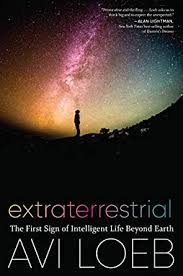 In an equation-dense paper that appeared in The Astrophysical Journal Letters a year after Weryk’s discovery, Loeb and a Harvard postdoc named Shmuel Bialy proposed that ‘Oumuamua’s “non-gravitational acceleration” was most economically explained by assuming that the object was manufactured. It might be the alien equivalent of an abandoned car, “floating in interstellar space” as “debris.” Or it might be “a fully operational probe” that had been dispatched to our solar system to reconnoitre. The second possibility, Loeb and Bialy suggested, was the more likely, since if the object was just a piece of alien junk, drifting through the galaxy, the odds of our having come across it would be absurdly low. “In contemplating the possibility of an artificial origin, we should keep in mind what Sherlock Holmes said: ‘when you have excluded the impossible, whatever remains, however improbable, must be the truth,’ ” Loeb wrote in a blog post for Scientific American.
more here.
The Dark Side of Clean Energy and Digital Technologies
Oliver Balch at Literary Review:
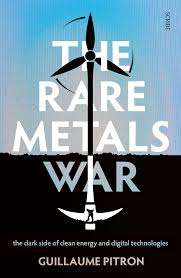 Everywhere rare metals are mined – be it the Democratic Republic of Congo (where conditions in the mines are ‘straight out of the Middle Ages’), Kazakhstan or Vietnam – pollution and environmental destruction follow. Safety standards aside, it’s hugely inefficient. Know how much lutetium you’ll get from extracting, crushing and refining 1,200 tonnes of rock? One solitary kilogram.
That translates not only into countless mountains being hollowed out but also into colossal amounts of energy being used. Assuming (correctly) that most of this energy comes from fossil fuels, then green tech’s promise of a low-carbon future seems misplaced at best (or, as Pitron prefers, a straightforward ‘ruse’). Never short on stats and facts, The Rare Metals War includes a reference to a US study that suggests that electric vehicles are three to four times as energy-intensive as conventional cars.
more here.
Maria Stepanova, Russia’s next great writer
Matthew Janney in The Guardian:
 Years ago, Maria Stepanova visited the United States Holocaust Memorial Museum in Washington DC to do research for a book she would end up working on for 30 years. After telling him of her plan, the museum adviser replied: “Ah. One of those books where the author travels around the world in search of his or her roots – there are plenty of those now.” “Yes,” replied Stepanova. “And now there will be one more.”
In Memory of Memory is an astounding collision of personal and cultural history, and Stepanova’s first full-length book published in English, translated by Sasha Dugdale. It is a remarkable work from a writer who has won Russia’s most prestigious honours (including the Big Book award for In Memory of Memory, the NOS literary prize, the Andrei Bely prize and a Joseph Brodsky fellowship); a writer who will likely be spoken about in the same breath as Poland’s Olga Tokarczuk and Belarus’s Svetlana Alexievich in years to come. But 2021 is the year of Stepanova: in addition to In Memory of Memory, her poetry collection War of the Beasts and the Animals, and a collection of essays and poems titled The Voice Over, will also be published in English this year. “I feel a bit funny about it,” she jokes, from her dacha outside Moscow. “Isn’t it a bit of an overkill?”
More here.
In Violation of Einstein, Black Holes Might Have ‘Hair’
Jonathan O’Callaghan in Quanta:
 Identical twins have nothing on black holes. Twins may grow from the same genetic blueprints, but they can differ in a thousand ways — from temperament to hairstyle. Black holes, according to Albert Einstein’s theory of gravity, can have just three characteristics — mass, spin and charge. If those values are the same for any two black holes, it is impossible to discern one twin from the other. Black holes, they say, have no hair.
“In classical general relativity, they would be exactly identical,” said Paul Chesler, a theoretical physicist at Harvard University. “You can’t tell the difference.”
Yet scientists have begun to wonder if the “no-hair theorem” is strictly true. In 2012, a mathematician named Stefanos Aretakis — then at the University of Cambridge and now at the University of Toronto — suggested that some black holes might have instabilities on their event horizons. These instabilities would effectively give some regions of a black hole’s horizon a stronger gravitational pull than others. That would make otherwise identical black holes distinguishable.
More here.