
Glenn Greenwald in his Substack Newsletter:
 For the third time in less than five months, the U.S. Congress has summoned the CEOs of social media companies to appear before them, with the explicit intent to pressure and coerce them to censor more content from their platforms. On March 25, the House Energy and Commerce Committee will interrogate Twitter’s Jack Dorsey, Facebooks’s Mark Zuckerberg and Google’s Sundar Pichai at a hearing which the Committee announced will focus “on misinformation and disinformation plaguing online platforms.”
The Committee’s Chair, Rep. Frank Pallone, Jr. (D-NJ), and the two Chairs of the Subcommittees holding the hearings, Mike Doyle (D-PA) and Jan Schakowsky (D-IL), said in a joint statement that the impetus was “falsehoods about the COVID-19 vaccine” and “debunked claims of election fraud.” They argued that “these online platforms have allowed misinformation to spread, intensifying national crises with real-life, grim consequences for public health and safety,” adding: “This hearing will continue the Committee’s work of holding online platforms accountable for the growing rise of misinformation and disinformation.”
House Democrats have made no secret of their ultimate goal with this hearing: to exert control over the content on these online platforms.
More here.

 You may not have heard of Robin Dunbar. But you will, perhaps, know of his work. Dunbar, now emeritus professor of evolutionary psychology at Oxford University, is the man who first suggested that there may be a cognitive limit to the number of people with whom you can comfortably maintain stable social relationships – or, as Stephen Fry put it on the TV show QI, the number of people “you would not hesitate to go and sit with if you happened to see them at 3am in the departure lounge at Hong Kong airport”. Human beings, Dunbar found when he conducted his research in the 1990s, typically have
 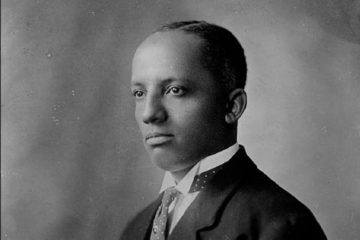 No one has played a greater role in helping all Americans know the black past than Carter G. Woodson, the individual who created Negro History Week in Washington, D.C., in February 1926. Woodson was the second black American to receive a PhD in history from Harvard—following W.E.B. Du Bois by a few years. To Woodson, the black experience was too important simply to be left to a small group of academics. Woodson believed that his role was to use black history and culture as a weapon in the struggle for racial uplift. By 1916, Woodson had moved to DC and established the “Association for the Study of Negro Life and Culture,” an organization whose goal was to make black history accessible to a wider audience. Woodson was a strange and driven man whose only passion was history, and he expected everyone to share his passion.
 Robert Hockett over at the New Labor Forum:
 Ravinder Kaur in Aeon:
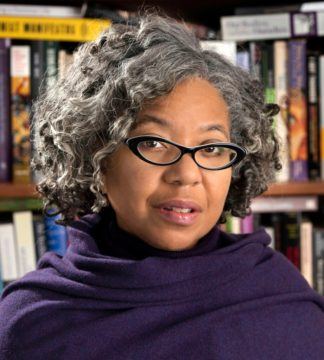
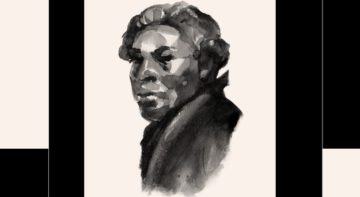 Danielle Allen in The Atlantic:
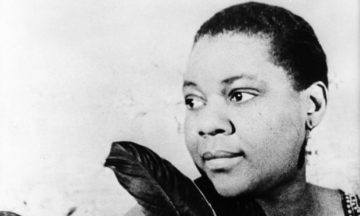 This timely republication of Bessie Smith, with a new introduction extolling hercontinued relevance, charts some of the distance travelled both by the publishing industry and by Kay herself, now Scotland’s
  “Fierce Poise” focuses on the artist in an unconventional way: It covers the years 1950-60 in 11 chapters, each jumping off a specific date during one of those years. The resulting book is lively but short, skimming the surface of Frankenthaler’s work. Nemerov calls this choice “true to Helen” in that “the singularity of a day offers me an unscientific precision — a fluid glimpse into a moment — like Helen’s own.” The conceit is that the early days capture the essence of her work, but the constraint only shortchanges her contested legacy by eliding the rest of her long career.
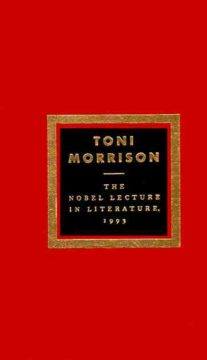 February 18, 2021 would have been
  For the Ishiguro household, 5 October 2017 was a big day. After weeks of discussion, the author’s wife, Lorna, had finally decided to change her hair colour. She was sitting in a Hampstead salon, not far from Golders Green in London, where they have lived for many years, all gowned up, and glanced at her phone. There was a news flash. “I’m sorry, I’m going to have to stop this,” she said to the waiting hairdresser. “My husband has just won the Nobel prize for literature. I might have to help him out.”
 For a critic, there’s maybe nothing so central but also confounding as the question of taste — why we like what we like, and whether it’s something we decide for ourselves, based purely on our own freedom and idiosyncracies; or if our tastes can be shaped and even scripted, influenced by earnest argument, entrenched biases or cynical manipulation.
 1. Always refer to Iran as the “Islamic Republic” and its government as “the regime” or, better yet, “the Mullahs.”