
Dwight Garner in The New York Times:
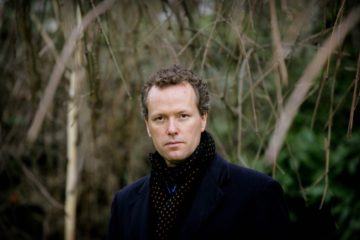 By the time Edward St. Aubyn completed the last of his Patrick Melrose novels in 2012, it was clear that a new animal had approached the watering hole of fiction in England. This animal was of a species thought to have largely gone extinct: the anatomist of the remote upper classes. The subject of these novels put St. Aubyn in an invidious position. His arrival was resisted. To a certain kind of reader, the notion of consuming five novels about extreme privilege — heavy manners, long bones — seemed about as enjoyable as expressing a dog’s anal glands. But St. Aubyn could write: He could really write. He blended woe with wit; his ironies were fierce and finely tuned. The details were precise because St. Aubyn actually had the British upper-class background that, as Clive James noted, the snobbier Evelyn Waugh longed for. St. Aubyn’s new book, “Double Blind,” is an entertainment on scientific themes: brain-mapping, biochemistry, botany, immunotherapy, schizophrenia and the ethics of placebos (hence the book’s title), among other topics.
…Here he is on neuroscience and my day job: “What part of the brain lights up when the reader first encounters Mr. Darcy and his odious pride? Can literary criticism afford to ignore what is happening to the reader’s amygdala when Elizabeth Bennet rejects his first proposal? It is a truth universally acknowledged that any topic in search of a reputation for seriousness must be in want of neuroimaging.”
More here.
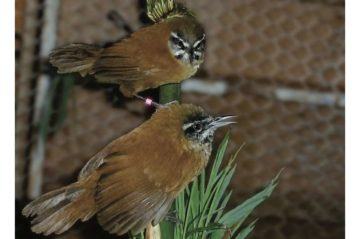 Art Garfunkel once described his legendary musical chemistry with Paul Simon, “We meet somewhere in the air through the vocal cords … .” But a new study of duetting songbirds from Ecuador, the plain-tail wren (Pheugopedius euophrys), has offered another tune explaining the mysterious connection between successful performing duos. It’s a link of their minds, and it happens, in fact, as each singer mutes the brain of the other as they coordinate their duets. In a study published May 31 in Proceedings of the National Academy of Sciences, a team of researchers studying
 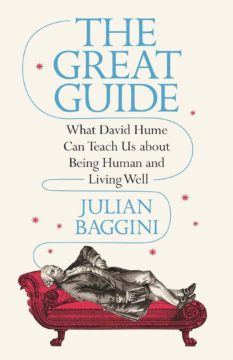 Philosophy has a vexed relationship with the business of self-help. On the one hand, philosophers offer systematic visions of how to live; on the other hand, these visions are meant to be argued with, not deferred to or chosen off the rack. Though it runs deep, this tension has not slowed the flood of titles, published in the last few years, that take a dead philosopher as a guide to life. These books will teach you How to Be a Stoic, How to Be an Epicurean, and How William James Can Save Your Life; you can take The Socrates Express to Aristotle’s Way and go Hiking with Nietzsche.
 Economics is one of the better-funded and more scientific social sciences, but in some critical ways it is failing us. The main problem, as I see it, is standards: They are either too high or too low. In both cases, the result is less daring and creativity.
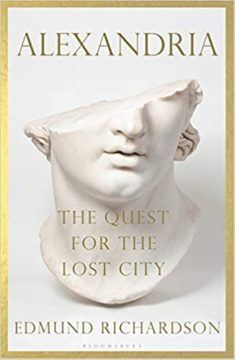 In the hot summer of 1840, the young orientalist Henry Rawlinson arrived in Karachi and began anxiously searching for his mentor, the pioneering archaeologist of Afghanistan, Charles Masson. The rumours he had heard profoundly alarmed him.
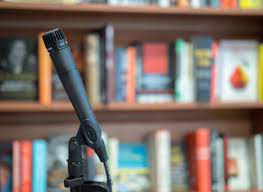 The first public literary reading I ever gave was at Manhattan’s Le Poisson Rouge for a now-defunct magazine’s issue showcase. I was 21 years old and had never read my poems in front of a live audience. More important, I had never built up the requisite nerves to read my poems aloud, and, as a way of coping, I had spent that afternoon day drinking in nearby Washington Square Park with a group of strangers from the Bronx who could have been troubadours from Kentucky. By the time I got to the venue, drunk on whiskey siphoned from their flasks and cheap beer from the local bodega, I was shocked to see that some of my friends and professional peers had shown up to watch me perform. If it wasn’t enough to want to impress them by reading at a public space, I had also trained myself to recite the poems, sans paper. Hours earlier, I had even been so bold as to crumple the printed poems and pour beer on them as a final act of humiliation. Now, in the impractically lit basement that functioned as a lounge, a bar, and a performance space, the lines of the poems melted away and the humiliation was turned inward. Once I was called up to the stage, I looked into the far recesses of the dim basement for something—call it a friendly face, call it a sign—to look back. But I saw nothing; I heard only applause and a couple glasses clink as they were placed on the bar. I put my sweaty palms inside my pocket in an attempt to dig out poems that were no longer there.
 I will remember 2020 not as a year of looking but as a year of listening. For months as the pandemic overtook New York, ambulance sirens sounded at all hours in strange choruses. When the sound of the sirens would break occasionally or fade into the distance after dawn, it was replaced not by eerie silence but by birdsong: the shrieks of the blue jays, the playful cheeps of the sparrows in the bushes, the eeks, chirps, and oddly varied sounds of the grackles everywhere. I wondered then, Were these sounds always here, and it was we who were made quiet? I rarely left my neighborhood of Ditmas Park, in Brooklyn, except to take my partner, Kate, pregnant with our second child, to appointments at the Manhattan hospital complex that was itself a hive of sirens that grew louder each time we approached. In my memory the sirens and birdsong were followed by police helicopters seemingly always overhead, as the city erupted in Black Lives Matter protests and the violent police response that only ensured they should continue. The helicopters loomed in the skies above as I ran circles over the same patch of weeds in the small plot of our shared backyard, playing a game my four-year-old daughter, Leo, calls “dinosaur chase” (she is the dinosaur, I am her lunch). Half the year was marked by interrupted sleep—first the constant fireworks at all hours of the night and then, by the end of the summer, the squawking and cooing of the baby, unaware of the distinction between day and night. As I write this, collecting a year, it is spring again. The neighborhood seems to be returning to some approximation of the old sounds from before. That is, if we can recall the way it used to sound. Even the old sounds are heard differently now. With my daughter in her mud boots, bird book and binoculars in hand, as the baby sleeps at home on Kate, we begin each day our circuit. Leo collects sticks, rocks, and seed pods, stomps in puddles, and pauses to track blue jays in a tree, following their noisy stutter.
 Adam Shatz in the LRB:
 Thomas Meaney in Sidecar:
 Rebecca Stropoli in Chicago Booth Review:
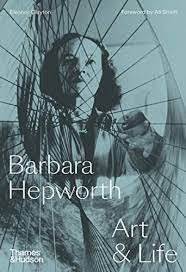 This biography’s value and novelty are level-headedness and fine-grained research. Clayton explains rather than exculpates, narrates rather than judges. She sets Hepworth talking through the pages, quoting generously from letters that correct, or complicate, previous accounts of her humourless self-absorption. A passionate and stylish correspondent, Hepworth makes strings of her words: “one’s mind is so turned towards France & the weather & winds & sea!”; “the feel of the earth as one walks on it, the resistance, the flow the weathering the outcrops the growth structure, ice-age, flood”. Clayton uses letters to show again and again how Hepworth doted on her children. On parting with the triplets: “it’s the hardest thing I’ve ever had to think about. I am so deeply happy about the babies & want them with me all the time”. This confirms what Hepworth’s work had already made clear: motherhood and family nourished and inspired her. Many of her sculptures of babies are exquisitely tender, the infant’s skull properly outsized and somehow translucent, as if veins pulsed beneath wooden skin and marble bone.
 It all goes back, strangely, to a trip the French thinker
  “There is nothing I could write in this book or tell you that would help you get to know me,” writes