Corinna da Fonseca-Wollheim in The New York Times:
 In December 1915, while serving on the Russian front, the German astronomer and mathematician Karl Schwarzschild sent a letter to Albert Einstein that contained the first precise solution to the equations of general relativity. Schwarzschild’s approach had been simple. He had plugged Einstein’s equations into a model that posited an ideal, perfectly spherical star, in order to calculate how its mass would warp the surrounding space. Schwarzschild’s solution was elegant, but it revealed something monstrous: If the same process were applied not to an ideal star but to one that had begun to collapse, its density and gravity would increase infinitely, creating an enclosed region of space-time, or a singularity, from which nothing could escape. Schwarzschild had given the world its first glimpse of black holes.
In “When We Cease to Understand the World,” a gripping meditation on knowledge and hubris, Benjamín Labatut describes how Schwarzschild was seized by a sense of foreboding over his own discovery. “The true horror” of the singularity, he told a fellow mathematician, was that it created a “blind spot, fundamentally unknowable,” since even light would be unable to escape it. And what if, he continued, something similar could occur in the human psyche? “Could a sufficient concentration of human will — millions of people exploited for a single end with their minds compressed into the same psychic space — unleash something comparable to the singularity? Schwarzschild was convinced that such a thing was not only possible, but was actually taking place in the Fatherland.”
Schwarzschild, who was Jewish, did not live to see Hitler rise to power and concentrate the collective German will to catastrophic effect. But a different premonition came true within months. The “void without form or dimension,” which he told his wife had invaded his being, took shape as a rare disease that would cover his body in pustulant blisters and kill him mere months after his scientific breakthrough.
More here.

 Adam Tooze at his podcast Ones and Tooze over at Foreign Policy:
 Marco D’Eramo in NLR’s Sidecar (Photo by
 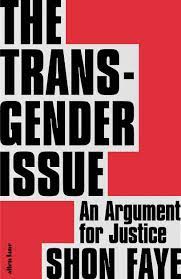 The
The 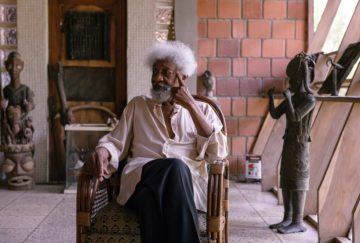 Wole Soyinka the firebrand activist is always getting Wole Soyinka the writer into trouble.
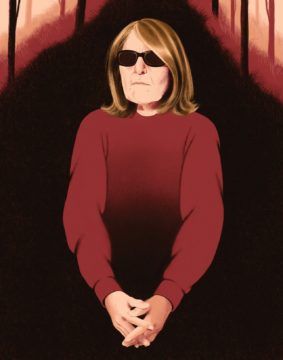 You don’t encounter the fiction of Joy Williams without experiencing a measure of bewilderment. Williams, one of the country’s best living writers of the short story, draws praise from titans such as George Saunders, Don DeLillo, and Lauren Groff, and many of her readers, having imprinted on her wayward phrasing and screwball characters, will follow her anywhere. But the route can be disorienting, like climbing an uneven staircase in a dream. Her tales offer a dark, provisional illumination, and they make the kind of sense that disperses upon waking. For years, Williams has worn sunglasses at all hours, as if to blacken her vision. The central subject of art, she has written, is “nothingness.”
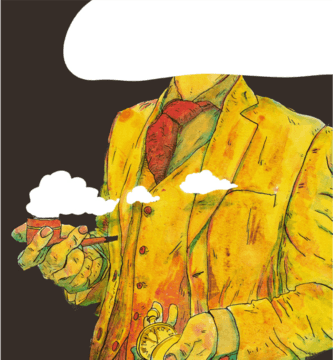 If you want to predict the future accurately, you should be an incrementalist and accept that human nature doesn’t change along most axes. Meaning that the future will look a lot like the past. If Cicero were transported from ancient Rome to our time he would easily understand most things about our society. There’d be a short-term amazement at various new technologies and societal changes, but soon Cicero would settle in and be throwing out Trump/Sulla comparisons (or contradicting them), since many of the debates we face, like what to do about growing wealth inequality, or how to keep a democracy functional, are the same as in Roman times.
 Barack Obama was awarded the Nobel Peace Prize during his first year in the White House, but he also became the first U.S. president to be at war during the entirety of his two terms in office. The irony of this contrast has often been noted. To historian and legal scholar Samuel Moyn, it represents more than a case of poor judgment by the Nobel committee—or, as others might see it, an example of how the toxic politics surrounding terrorism can blunt the best of intentions.
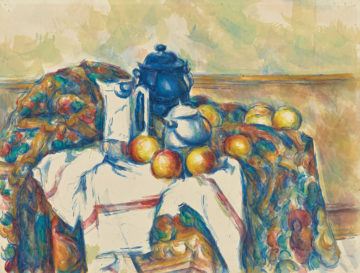 I’M NOT ONE FOR FLATTERY and hyperbole, especially when reacting to exhibitions. There is already enough sycophancy to go around on social media—even in the feeds of those who should know better. I am therefore going against every fiber of my being when I say that the Cézanne drawing show at New York’s Museum of Modern Art is unequivocally a once-in-a-generation not-to-be-missed event.
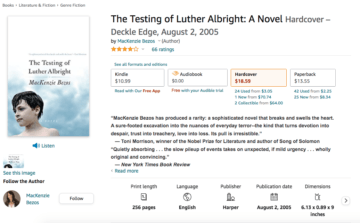 The Testing of Luther Albright (2005) and Traps (2013) are perfectly good novels if one has a taste for it. The second thing that needs to be noted about them is that, after her divorce from Jeff Bezos, founder and controlling shareholder of Amazon, their author is the richest woman in the world, or close enough, worth in excess (as I write these words) of $60 billion, mostly from her holdings of Amazon stock. She is no doubt the wealthiest published novelist of all time by a factor of … whatever, a high number. Compared to her, J. K. Rowling is still poor.
 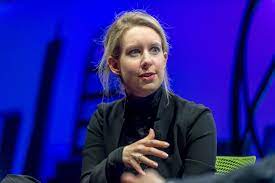 ELIZABETH HOLMES SAYS
  In
In 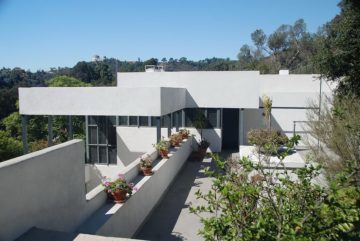 On December 15, 1929, Dr. Philip M. Lovell, the imperiously eccentric health columnist for the Los Angeles Times, invited readers to tour his ultramodern new home, at 4616 Dundee Drive, in the hills of Los Feliz. On a page crowded with ads promoting quack cures for “chronic constipation” and “sagging flabby chins,” Lovell announced three days of open houses, adding that “Mr. Richard T. Neutra, architect who designed and supervised the construction . . . will conduct the audience from room to room.” Neutra’s middle initial was actually J., but this recent Austrian immigrant, thirty-seven years old and underemployed, had little reason to complain: he was being launched as a pioneer of American modernist architecture. Thousands of people took the tour; striking photographs were published. Three years later, Philip Johnson and Henry-Russell Hitchcock, the codifiers of the International Style,
  THE ARC THAT SAID HIMSELF