
From The Cancer Letter:
 These are a few of the authors your colleagues are reading in 2021.
A diverse panel of clinicians, basic scientists, early-career faculty, and regulators submitted their book recommendations to The Cancer Letter for the second year in a row. Non-fiction and fiction are equally represented, ranging from opera to Obama, Proust to fly fishing. This year’s reading list genres have expanded to include a poetry anthology, a children’s book, a podcast—and Wafik El-Deiry’s in-depth review of seven books, which appears here.
Last year’s book recommendations told a story of a year filled with activism, grappling with the COVID-19 pandemic, and using fiction as an escape, perhaps in place of a much-needed vacation (The Cancer Letter, Aug. 6, 2020). The list seemed to want to answer the question: “What the hell is going on?” This year’s list demonstrates an evolution of thought: stories of personal and professional growth, the challenge of becoming a better leader, and deeper explorations of systemic racism in the U.S. All that, plus a passion for a good book—and fly fishing. If the question last year was “What the hell is going on,” this year’s question appears to be, “How can we be better?
More here.
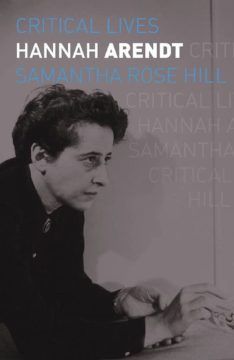 Shaan Sachdev over at the LA Review of Books:
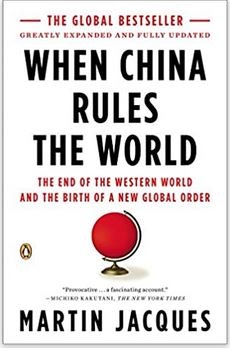 Branko Milanovic over at his substack:
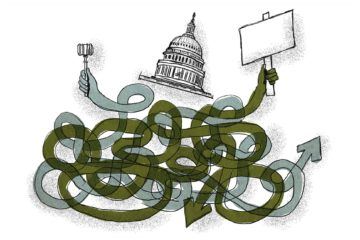 Kim Phillips-Fein in The New Republic:
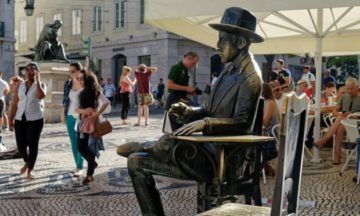 Three heteronyms in particular enabled Pessoa to work through the history of poetry. Impersonating a simple shepherd called Alberto Caeiro, he wrote naive pastoral lyrics; as the refined classicist Ricardo Reis, he composed Latinate homages to the gods; giving voice to the futurist Álvaro de Campos, supposedly an engineer by trade, he celebrated mechanised urban modernity. Commuting between these aliases was like metempsychosis or perhaps, as Pessoa confessed to a critic, like changing sex. His alter egos had extra-literary uses too. To extricate himself from a flirtation with a clingy young woman, Pessoa made Campos write a letter warning her off and when she telephoned in the hope of making a date he answered the call as Reis and informed her that Fernando was not available.
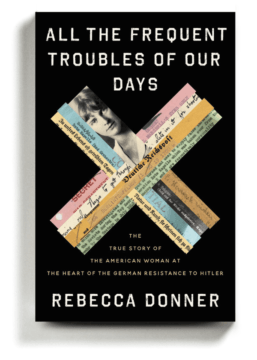 The title of Rebecca Donner’s astonishing new book is a line by Goethe, from a volume of his poems that had been smuggled into the cell of Mildred Harnack — an American woman who was shackled in a Berlin prison, awaiting her death sentence by the Nazi regime. On Feb. 16, 1943, the day she would be taken to the execution shed and beheaded, a chaplain found Mildred hunched over the poems, scribbling in the margins. The heavy gothic font of the German original was accompanied by the ghostly script of her English translation, written with a pencil stub.
 T
T O
O The better machines become at transferring equivalent words and even almost correct syntax and grammatical structures from one language to another, the more the mechanics of translation matter less, and the more we are aware of inflections and innuendoes; what we don’t know what to call, we call beauty.
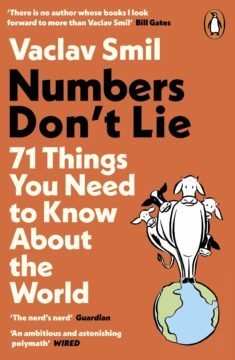 Vaclav Smil is my favorite author, but I sometimes hesitate to recommend his books to other people. His writing, while brilliant, is often too detailed or obscure for a general audience. (Deep dives on
 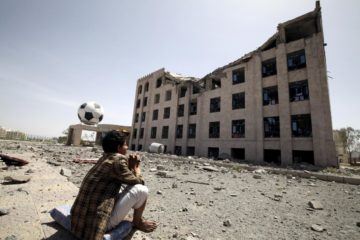 The shift in Washington is undeniable: the Middle East is no longer a top priority for the United States. The U.S. withdrawal from the broader region is evident in the departure of troops from Afghanistan and reductions in U.S. military commitments to Iraq, Jordan, Kuwait, and Saudi Arabia, alongside a heightened focus on China and Russia. There are good reasons for this shift in strategy, especially given the woeful recent history of U.S. involvement in the region, but it also brings risks of its own. The United States’ precipitous departure from Iraq in 2011, for example, paved the way for the rise of the Islamic State (also known as ISIS) and the expansion of Iran’s regional footprint. To avert similar damage this time, Washington must find a way to pair reductions in military commitments with gains in regional stability. One of the best opportunities for achieving those gains lies in emerging talks between the region’s two most consequential antagonists: Iran and Saudi Arabia.