
George Packer in The Atlantic:
 In the past few weeks, the Biden administration’s domestic agenda has come into sharp focus: a bipartisan Senate bill for physical and environmental infrastructure projects nearing passage; new statistics showing that COVID-19 relief has dramatically reduced poverty across demographic groups; an executive order aimed at concentrated market power, promoting competition and worker power; a $3.5 trillion budget proposal with large outlays in social spending, paid for by taxes on the rich and corporations; presidential speeches on behalf of better jobs for Americans at the bottom and middle of the economy. The sum of these and other policies is more ambitious, and more ideologically pointed, than the Biden campaign slogan “Build Back Better.” President Biden is using the resources of the federal government to reverse nearly half a century of growing monopoly, plutocracy, and inequality. Regardless of whether this agenda goes far enough, or whether Congress allows it to go anywhere at all, the administration is pointing the country in a fundamentally new direction.
Biden hasn’t given this new direction a name. His mind goes to the particular, not the general. He speaks in sayings, anecdotes, and exhortations. He provides reassurance, not inspiration. But successful presidents from Lincoln to Roosevelt to Reagan understood that the people need a vision. If Biden won’t give his a name, I’ll try.
In “The Four Americas,” an article adapted from my book Last Best Hope: America in Crisis and Renewal, I described the four dominant narratives in this country over the past half century: Free America, Smart America, Real America, and Just America.
More here.
 Arjun Jayadev and J.W. Mason in Boston Review:
 Virginia Jackson on the late Lauren Berlant, over at Critical Inquiry:
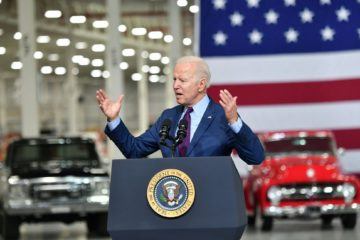 Kate Aronoff in The New Republic:
 Aziz Huq in the Los Angeles Review of Books:
 A
A Illich was a purveyor of impossible truths, truths so radical that they questioned the very foundations of modern certitudes — progress, economic growth, health, education, mobility. While he was not wrong, we had all been riding on a train going in the opposite direction for so long that it was hard to see how, in any practical sense, the momentum could ever be stalled. And that was his point. Now that “the shadow our future throws” of which Illich warned is darkening the skies of the present, it is time to reconsider his thought.
 For an entire year that involved emergency room visits, legal proceedings, involuntary unemployment and the death of loved ones, Mehran Nazir struggled with a depressive episode. He would find his mind flooded with self-destructive thoughts. He’d faintly hope his plane from Newark to San Francisco would crash or that he would doze off at the wheel of his car and end up in a fatal accident. The normally extroverted Nazir would lie paralyzed in bed for hours doing nothing, not wanting to speak with family and canceling plans with friends. It came to a head when Nazir found himself on the brink of suicide. In his darkest moment, he drafted a will and decided where it would happen.
 There are many variations to Hans Christian Andersen’s classic literary folktale “The Emperor’s New Clothes,” but most have the same basic plot points: A vain emperor is duped by two con men into buying clothes that don’t exist. They trick him by saying that the non-existent fabric is actually visible, but only stupid and incompetent people can’t see it. The emperor pretends that he can see the clothes, and then ordinary people follow his lead — whether because they believe him, or because they are simply afraid to state otherwise. It is only when a child blurts out that he is naked that the illusion is shattered.
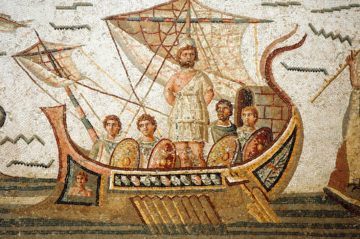 Octavian Report: Why should we read the Odyssey?
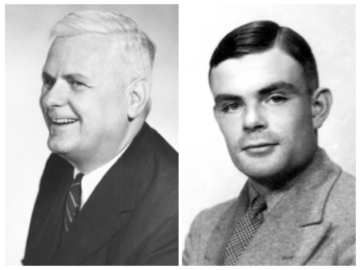 As Soare (2013) recounts,
  In the wreckage of World War I, it was hard to imagine a return to this borderless “economic Eldorado.” But today, it’s the relatively self-contained national economies of the mid-twentieth century that may seem like a lost world. To access the products of the whole earth, you don’t even have to pick up the phone; you can just log onto Amazon.