
Peter Singer in Project Syndicate:
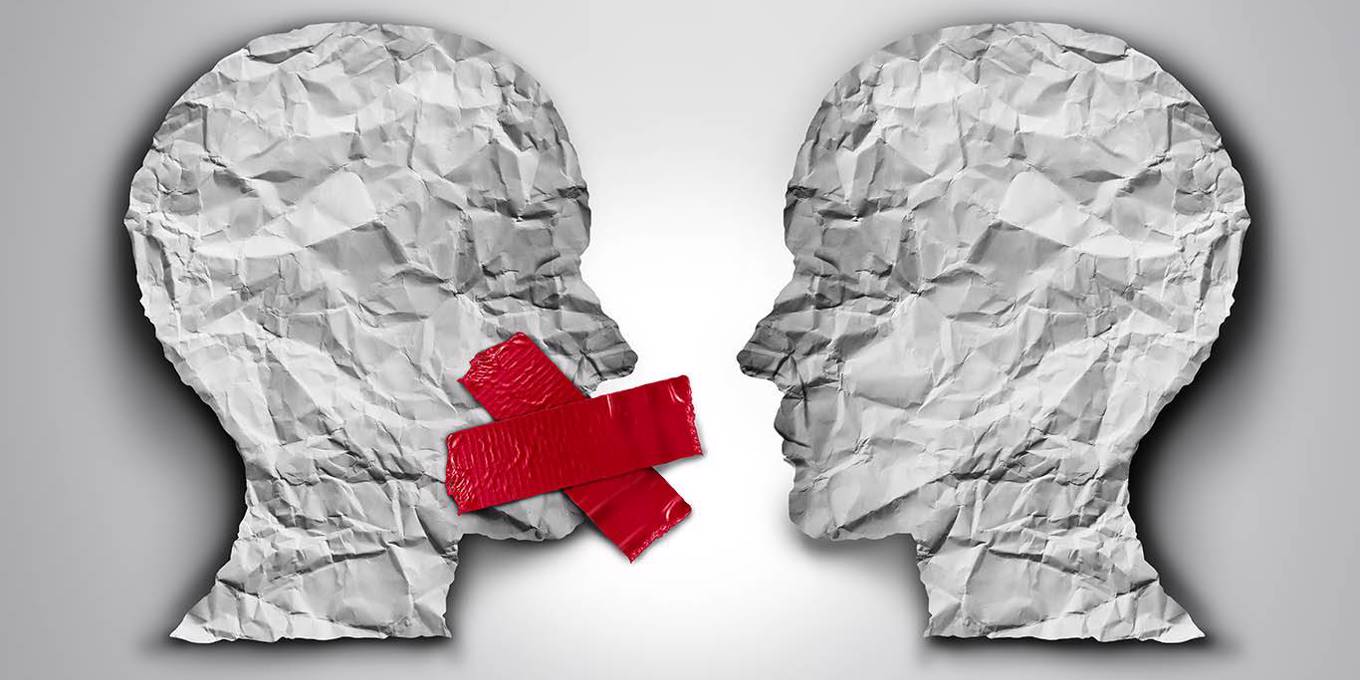
Last month, the Journal of Controversial Ideas – of which I am a co-editor – published its first issue. The journal is a response to the shrinking boundary, even in liberal democracies, of acceptable discourse. It is specifically designed to provide a forum in which authors can, if they wish, use a pseudonym to avoid running the risk of receiving personal abuse, including death threats, or of irrevocably harming their careers.
There was a time when the threat to academic freedom in democratic countries came primarily from the right. The free speech cause célèbre of the early twentieth century United States featured Scott Nearing, a left-leaning economist at the University of Pennsylvania who was dismissed because his activism for social justice did not sit well with the bankers and corporate leaders on the university’s board of trustees.
Fifty years later, in the McCarthy era, many people were blacklisted or dismissed because of their support for leftist ideas. When I came to Princeton in 1999, Steve Forbes (who was then campaigning for the Republican nomination for president) called for my appointment to be rescinded because he objected to my critique of the traditional doctrine of the sanctity of human life.
Today, however, most of the opposition to freedom of thought and discussion comes from the left.
More here.
 This time last year, the United States seemed stuck on a COVID-19 plateau. Although 1,300 Americans were dying from the disease every day, states had begun to reopen in
  Last Saturday was Nakba Day, which commemorates the 700,000 Palestinians who were expelled by Israel – or who fled in fear – during the country’s founding in 1948. The commemoration had special resonance this year, since it was Israel’s impending expulsion of six Palestinian families from the East Jerusalem neighbourhood of Sheikh Jarrah that
 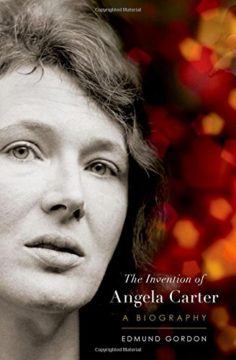 I would imagine that anyone approaching Edmund Gordon’s comprehensive biography, The Invention of Angela Carter, has a memorable “first time” with Carter. When it comes to cult figures of the intelligentsia, the story of the first time is practically de rigueur. Gordon himself mentions his own in his epilogue. During a post-university year in Berlin, he came upon a secondhand copy of The Magic Toyshop, which Carter had described to her editor in 1966 as a “Gothic melodrama about a sort of South Suburban bluebeard toymaker & his household.” A writer Gordon admired, Ali Smith (an iconoclast of her own order), had spoken highly of Carter, whose reputation he’d previously thought had something “off-putting” about it—“a sense, perhaps, that she was just for girls.” Nonetheless, he bought the novel and “tore” through it “in a few intoxicated hours, stunned by the fearless quality of the imagination on display and by the luminous beauty of the prose.”
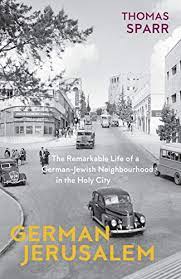 As a tormented young anarchist pacifist pining for radical deliverance while cooped up at home with his parents in Berlin during the First World War, Gershom Scholem felt absolutely committed to one cause: Zionism. The only problem, he acknowledged in his journal, was that Zionists had not yet defined the contents of their ideology. As far as Scholem was concerned, Zionism had no political implications. It did not necessitate an oceanic ingathering of the Jewish people from the diaspora. There was no imperative to farm the Holy Land. The movement, in the eyes of the future pioneering scholar of kabbalah, was a humanistic, anti-bourgeois endeavour that probably required a commitment to living in Palestine or thereabouts. But it did not require the acquisition of sovereign control over territory, let alone taking possession of land belonging to the Arab peoples resident in the country.
 Leading Indian authors Pankaj Mishra and
  Since the modern era of research on autism began in the 1980s, questions about social cognition and social brain development have been of central interest to researchers. This year marks the 20th anniversary of the first annual meeting of the
  It’s hard to understand the culture of policing in America from the outside.
 One pillar of the modern world was the project to transform science from a discipline for contemplating nature into a tool for mastering it. Queen among the new sciences was mathematical physics, made possible by a corresponding transformation of mathematics. Ancient mathematicians, said René Descartes, had misunderstood their subject. They offered a procession of dazzling spectacles, but mathematics properly understood is not the presentation of beautiful chance discoveries. It must instead provide a systematic method for solving problems.
 In a study of the effectiveness of putting calorie counts on menu items, consumers were more likely to make lower-calorie choices if the labels were placed to the left of the food item rather than the right.
 France’s literary institutions have long struggled with a diversity problem. Though France doesn’t collect statistics on race and ethnicity, a majority of top editors and authors have historically been white. Its literary awards heavily favor men: Since France’s top literature prize, the Prix Goncourt, began in 1903, only 12 women have won. The integration of marginalized literary voices, especially those of second-generation French or people of color, has come in fits and starts. Until the 1990s, literature written by children of immigrant parents of Maghrebis descent was categorized using a pejorative term for Arab. The publication of a 1999 novel by Rachid Djaïdani, which described daily life in France’s housing projects where many immigrants live, was a landmark in breaking the mold. Another was the publication in 2007 of a controversial literary collection by second-generation French writers about their complex relationship with France.
 T
T THE CHARACTERS
 “Everybody” ’s central character is the Viennese psychoanalyst