Erika Milam in Nautilus:
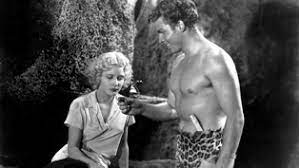 Elaine Morgan had sass. In Descent of Woman, published in 1972, she asked her readers to take science into their own hands. “Try a bit of fieldwork,” she suggested. “Go out of your front door and try to spot some live specimens of Homo sapiens in his natural habitat. It shouldn’t be difficult because the species is protected by law and in no immediate danger of extinction.” After completing observations of 20 random people, she suggested, substitute them when you are reading statements about universal human nature. The result?
“That window cleaner is one of the most sophisticated predators the world has ever seen.”
“The weapon is my grocer’s principal [sic] means of expression, and his only means of resolving differences.”
“The postman’s aggressive drive has acquired a paranoid potential because his young remain dependent for a prolonged period.”
Morgan added that you might imagine you were observing the wrong species and urged her readers to trust their experiences. “Remember,” she wrote, “you have been living among thousands of these large carnivores all your life, on more intimate terms than those on which Jane Goodall lived among the chimpanzees.”
In positing such a scenario, Morgan was engaged in serious work. All popular theories of human evolution to date, she insisted, were based on a male-centered notion of human evolution. Where were the evolutionary scenarios that began, “When the first ancestor of the human race descended from the trees, she had not yet developed the mighty brain that was to distinguish her so sharply from all the other species…”? This formed one of two major points Morgan wished to make in Descent of Woman.
The second was to advance a theory of aquatic adaptation that preceded life on the savannah. In semi-adaptation to a watery world, she imagined, humanity’s ancestors may have lost their body hair, gained a layer of subcutaneous fat to keep them warm, learned to walk upright (keeping their heads above water while foraging for tasty snacks in the shallows), came to use stones and manufacture tools for breaking open shells, and developed the ability to control their breathing when diving beneath the surface—a precondition for true spoken language and an obvious boon to any individual trying to communicate with most of her body submerged. In short, Morgan suggested humans acquired precisely those traits that distinguish them from the rest of the animal world while living around water, not in the arid grasslands. These activities, she noted, were associated with gathering, not hunting, an activity in which women’s contributions were widely acknowledged.
More here.

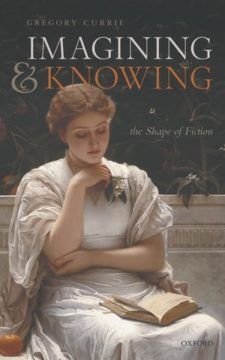 Few would dispute that, all things considered, some exposure to works of imaginative literature (novels, plays, poems) as part of a rounded education is better than no such exposure. Beyond that, disagreements are rife. Culture wars loom, with anxieties over curriculum choice, gender and racial bias, elitism, contested pedagogic methods, and a disconcerting vagueness about aims sought.
 As we traveled from Nabi Saleh to Ramallah by bus, we engaged in a vigorous discussion about the military occupation of the West Bank and whether it resembled apartheid. Yehuda Shaul of BtS told us he had escorted Barbara Hogan, an ANC member and former South African political prisoner, around the occupied territories. Hogan had declared after her tour that apartheid was in fact not an appropriate comparison, because what Hogan saw of Israel’s military occupation of the West Bank was so much more extreme than what she knew of apartheid South Africa. Whatever the correct descriptor might be, the military occupation of the West Bank is hard to understand until you see it. You might be surprised at your own intolerance of the idea of a democracy maintaining an open-air prison for 2.7 million people. Before going there myself, I had heard this phrase, open-air prison, and figured it was not literally a prison. (As someone who spends a fair amount of time in prisons, I’m sensitive to its use as a metaphor.) But everywhere I went I saw guard towers and concrete barriers and razor wire—truly an open-air prison—except where there were settlements, which featured posh, Beverly Hills–style landscaping: little blooming flowers, fragile and bright, the guard towers in the far distance.
 P
P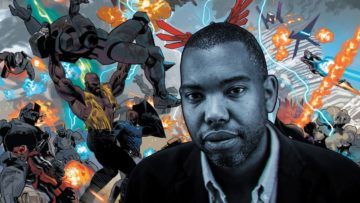 Coates made his name as a journalist and commentator at The Atlantic, writing articles and essays that explored how America’s history of systemic racism continues to affect politics, housing, and other aspects of American life. Marvel reached out to him with the opportunity to write Black Panther in 2015, and those initial scripts would become the first fictional work he’d publish. (He’d been working on his novel,
  A co-worker accuses you of lying during an important client meeting, and you’re furious because you didn’t lie. Expressing that anger, however, isn’t the best way to prove your innocence, according to new research.
 It is the oldest profession, I say. No, someone reminds me, hunting is the oldest profession. Exactly. But if the quarry is willing, is the hunt ethical? I cannot decide. Does a woman have the right to sell her body freely and legally? Models do. Lady Gaga sells her vocal cords. LeBron James sells his height. In a world that tells us to forge a personal brand and sell ourselves, surely a woman skilled in the art of physical pleasure ought to be able to use that talent to make a living?
 W
W We’ve all felt the fog come over us when we mistake someone’s name right after being introduced, fail to remember where we left our car in the parking lot or tell a friend the same story twice. Our memory is rarely as reliable as we’d like. But at times, it also surprises us. We may somehow remember family stories told to us long ago, the names of our middle school teachers or trivia facts buried deep in back of our brain. Despite the standard glitches, our memory can retain far more than either experts or we expect. Conclusions about its reliability vary tremendously. Some studies conclude that memory is extremely accurate, whereas others conclude that it is not only faulty but utterly unreliable. Even memory experts can struggle to predict how accurate our recollections are. In a recent study at the University of Toronto, such experts were asked to
 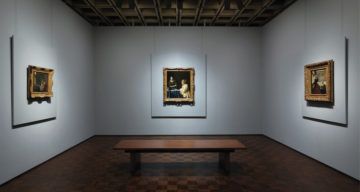 Yet the overarching impact of the Breuer installation is one of pictorial rather than historical logic. The relocation from one setting to the other has made the paintings close to unfamiliar. For those long used to visiting the Frick Collection, the change is transformational. Three paintings by Vermeer, for example, are displayed on three adjacent walls, an arrangement that is discreetly formal but otherwise without ceremony. The effect is heart-stopping. This sensation derives not from the utmost rarity of the works (only thirty-four paintings by the artist are known to exist), something of which the visitor may even be unaware, but from a naked intensity of pictorial encounter. In particular, the storied qualities of the painting Mistress and Maid, ca. 1666–67—optical precision, consummate painterly control, and the suspended animation of the two figures, who pass a letter between them, spotlit against the impenetrable darkness of an unknowable space—now project with startling immediacy. The installation supports a salience, a hereness, that intensifies the ritualized intimacy of the depiction of gesture and glance.
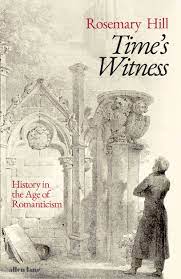 We still tend to dismiss the antiquary as the kind of uninspired collector of information embodied by George Eliot’s ossified Casaubon. To the gentlemen historians of the Enlightenment, they were tasteless provincial nobodies (in other words, they lacked the means for a grand tour), whose interest in the material remains of the past ranged from the dull to the downright insanitary. To the 19th-century professionals who succeeded them, they were an amateurish embarrassment, whose contributions to knowledge were rarely acknowledged, even (or especially) when they provided the basis for later work. In Time’s Witness, a history of history in the Romantic age, Hill launches a rehabilitation. Taking her ‘impetus’ from Hugh Trevor-Roper’s implication in ‘The Romantic Movement and the Study of History’ that the development of the discipline fell into abeyance between the towering figures of the 18th century (Hume, Gibbon, Robertson) and the 19th (Macaulay, Michelet, Ranke), she contends that the study of the past during those years was stewarded by exactly these much-maligned endeavourers.
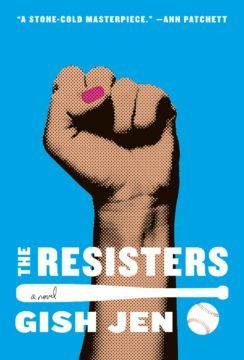 For more than thirty years now, Gish Jen has been writing fiction that explores the American landscape while ranging across any boundaries expectations about literary fiction might try to impose: her five novels and many short stories are literary and entertaining; funny and serious; rich in characters with stories to tell. Whether she’s writing from the point of view of a Chinese American teenager in a primarily Jewish suburb, as in Mona in the Promised Land (1996), or the sharply observant and comic Hattie Wong in World and Town (2010), Jen creates characters who explore not just what it is to be American, but what it is to be human.
 The challenge to a theoretical physicist pushing beyond our best current theories is that there are too many ways to go. What parts of the existing paradigm do you keep, which do you discard, and why make those choices? Among today’s theorists, Lee Smolin is unusually reflective about what principles should guide us in the construction of new theories. And he is happy to suggest radical revisions to well-established ideas, in areas from the nature of time to the workings of quantum mechanics. We talk about time, the universe, the role of philosophy, a new picture of spacetime, and the future of physics.
 The first time I drank alcohol, it was red rum straight from a quarter bottle – riding pillion as my boyfriend took us around a secluded part of the city of Lucknow, in provincial northern India. It was spring 2010, I was in the third year of law school, and
 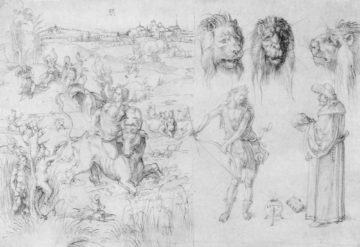 Does anything in this sprawling catalog of rewritten myth redeem the figure of Europa, for our purposes? Will these contradictory lineages be summoned, however dimly, in our readers’ minds? Stuart Hall acknowledged that the myth could be read in emancipatory or pluralistic ways, but was anyone really doing it? “The figure is certainly not being used,” he concluded, “to remind contemporaries that much of what we now think of as Europe’s achievements were originally external to Europe and had non-European, Asian, African and Islamic roots.” Yet Hall’s critique is itself canonical now, at least in some circles, and the myth can be activated accordingly. In Citizens of Nowhere: How Europe Can Be Saved from Itself (2018), Lorenzo Marsili and Niccolo Milanese can invoke a postcolonial, postnational Europa as a matter of course.
 I
I