
Animals
At night a knot of sea-lions lies off the shore
In the slow swell between the rock and the cliff,
Sharp flippers lifted, or great-eyed heads, as they roll in the sea,
Bigger than draft horses, and barking like dogs
Their all-night song. It makes me wonder a little
That life near kin to human, intelligent, hot-blooded, idle and
… singing, can float at ease
In the ice-cold midwinter water. Then, yellow dawn
Colors the south, I think about the rapid and furious lives
… in the sun:
They have little to do with ours; they have nothing to do with
… oxygen and salted water; they would look monstrous
If we could see them : the beautiful passionate bodies of living
… flame, batlike flapping and screaming,
Tortured with burning lust and acute awareness, that ride the
… storm-tides
Of the great fire-globe. They are animals as we are. There are
… many other chemistries of animal life
Besides the slow oxidation of carbohydrates and amino-acids.
by Robinson Jeffers
from News of the Universe—
… Poems of Twofold Consciousness chosen by Robert Bly
Sierra Club Books, 1995
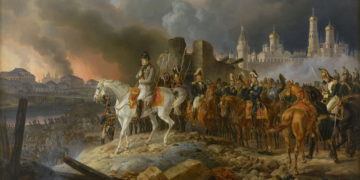 It would take Tolstoy some time to sound the alarm that humanitarianism could entrench war. On the way to doing so, he had one of his most famous characters embrace the inverse proposition: brutality can make it rare.
 Books that I feel drawn to and reread, War and Peace among them, are full of uncommon sense and common nonsense. (Uncommon nonsense makes exhilarating literature, too, in Lewis Carroll’s case, but uncommon nonsense does better to stay uncommon: in less skillful hands, it becomes caprice or parody.)
 It’s a truism that language is integral to identity. So when our relationship with it changes, complications quickly accrue: Do we become someone different in another tongue? Is that all down to culture and context, or is there something inherent in a language that affects who we feel ourselves to be? And what happens when we start our lives speaking one language but then switch to another?
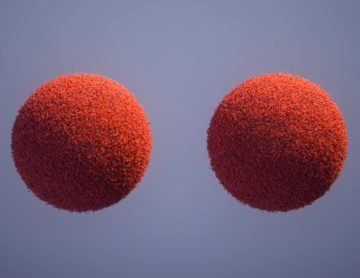 Imagine two friends hiking in the woods. They grow hungry and decide to split an apple, but half an apple feels meager. Then one of them remembers one of the strangest ideas she’s ever encountered. It’s a mathematical theorem involving infinity that makes it possible, at least in principle, to turn one apple into two.
 The world is only starting to grapple with how profound the artificial-intelligence revolution will be. AI technologies will create waves of progress in critical infrastructure, commerce, transportation, health, education, financial markets, food production, and environmental sustainability. Successful adoption of AI will drive economies, reshape societies, and determine which countries set the rules for the coming century.
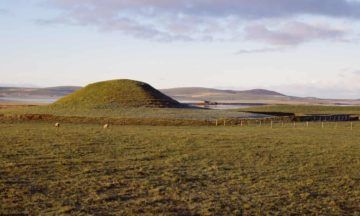 Throughout history, the idea of islands where women rule has been part mythological wish fulfilment, part male fantasy – and part cultural-geographical reality. In 2017 I moved to Orkney, an archipelago still dominated, as all of Britain once was, by its monumental neolithic architecture. Early one spring morning I visited the chambered
  “I
“I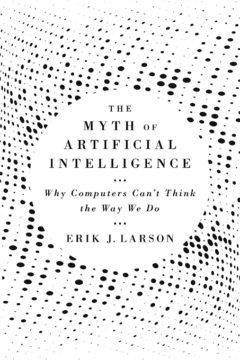 To be even remotely plausible, a computer model of the human mind must warp — and restrict — our commonsense definitions of intelligence, knowledge, understanding, and action. Larson discusses the renowned computer scientist Stuart Russell, who
 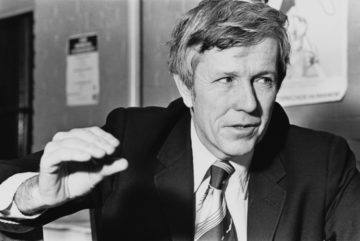 “We never said the welfare state is a substitute for socialism.” This staple of Harrington’s lecture tours had a flipside, his retort to old-school socialists: “Any idiot can nationalize a bank.” He said both things frequently after Mitterrand retreated. Harrington relied on his core message: bureaucratic collectivism is an unavoidable reality. The question is whether it can be wrested into a democratic and ethically decent form. Freedom will survive the ascendance of globalized markets and corporations only if it achieves economic democracy. Harrington had long argued that the market should operate within a plan, but in the mid-1980s his actual position shifted to the opposite. He conceived planning within a market framework on the model of Swedish and German social democracy—solidarity wages, full employment, co-determination, and collective worker funds. To many critics that smacked of selling out socialism. He replied: “To think that ‘socialization’ is a panacea is to ignore the socialist history of the twentieth century, including the experience of France under Mitterrand. I am for worker- and community-controlled ownership and for an immediate and practical program for full employment which approximates as much of that ideal as possible. No more. No less.”
 In April, the New York Times
 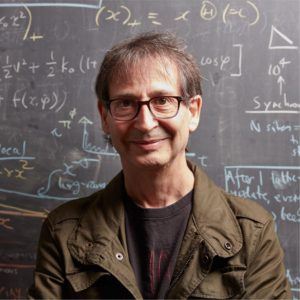 Physics is extremely good at describing simple systems with relatively few moving parts. Sadly, the world is not like that; many phenomena of interest are complex, with multiple interacting parts and interesting things happening at multiple scales of length and time. One area where the techniques of physics overlap with the multi-scale property of complex systems is in the study of phase transitions, when a composite system transitions from one phase to another. Nigel Goldenfeld has made important contributions to the study of phase transitions in their own right (and mathematical techniques for dealing with them), and has also been successful at leveraging that understanding to study biological systems, from the genetic code to the tree of life.
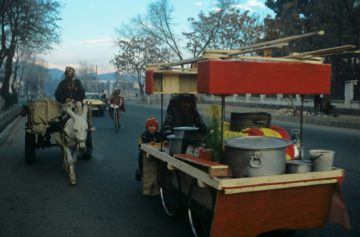 Salar Abdoh: I’ve read my share of books and articles over the years about Afghanistan and talked to people who spent stretches of time there, but it’s no exaggeration to say that I’ve never come across one person who has more in-the-field experience than you have about a land that few understand but many weigh in on, far too irresponsibly.
 JÓZEF CZAPSKI was a reserve officer in the Polish army when German and Soviet forces invaded his country in September 1939. His unit surrendered to the Soviets toward the end of that month. In “Memories of Starobielsk,” the 40-page essay that gives this collection, translated by Alissa Valles, its title, Czapski tells how he and his comrades were deceived by the promise that they would be sent through neutral territory to France, from where they could continue the fight against the Germans. Instead, they were marched eastward as prisoners of war, over the Soviet frontier: