
Azza and I Share a Cup of Tea
We find a perfect piece of shade underneath the warm sun,
and Azza pours the tea before she speaks
Azza never looks the same.
Each time you get close enough, each time you think you know her,
she reveals another surface
If you don’t pay attention, you might almost miss it
the way her crisp white toub falls gracefully on her shoulders,
how the gold crescent in her nose accentuates her face tenderly
Azza is timid, but captures your attention
She is not a mere stop on your destination
So, plan to stay awhile.
Listen to the way she uses language to weave stories full of heart
Pay attention to how she sings songs of love
Count the scars and ask her how many battles she has fought
You will be surprised to learn how many of them she’s won.
Sip your tea slowly and know that she will offer you a place to stay
Let her soft voice trickle into your ears, and
Let the cool breeze touch your skin
No need for formalities,
Azza has no care for them
She has no need for ceremony nor procedure
She takes big leaps, wanders on the dangerous route
She fears nothing, and is ready to risk it all
She is fearless, but never reckless
Beautiful, but never boastful
Smart, and always dreaming
She paints pictures of hopes and what-ifs
See how her eyes light up when she talks of future
Notice when she smiles
Because it does not happen often
Savor the moment,
Ask her the questions
Listen to the answers
Sip your tea slowly
by Leena Badri
from Pank Magazine, 2020
 Early evening in late summer, the golden hour in the village of East Hampton. The surf is rough and pounds its regular measure on the shore. At the last driveway on a road ending at the beach, a cortège of cars—S.U.V.s, jeeps, candy-colored roadsters—pull up to the gate, sand crunching pleasantly under the tires. And out they come, face after famous face, burnished, expensively moisturized: Jerry Seinfeld, Jimmy Buffett, Anjelica Huston, Julianne Moore, Stevie Van Zandt, Alec Baldwin, Jon Bon Jovi. They all wear expectant, delighted-to-be-invited expressions. Through the gate, they mount a flight of stairs to the front door and walk across a vaulted living room to a fragrant back yard, where a crowd is circulating under a tent in the familiar high-life way, regarding the territory, pausing now and then to accept refreshments from a tray.
 Researchers at the DZNE and the University Medical Center Göttingen (UMG) have identified molecules in the blood that can indicate impending dementia. Their findings, which are presented in the scientific journal EMBO Molecular Medicine, are based on human studies and laboratory experiments. University hospitals across Germany were also involved in the investigations. The biomarker described by the team led by Prof. André Fischer is based on measuring levels of so-called microRNAs. The technique is not yet suitable for practical use; the scientists therefore aim to develop a simple blood test that can be applied in routine medical care to assess dementia risk. According to the study data, microRNAs could potentially also be targets for dementia therapy.
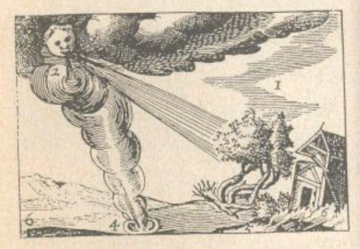 What is weather? Its etymology is not, as one may have hoped, connected to “whether”, as in “that which may be either one way, or the other” —“Whether the picnic is on or not depends on whether it rains”—, though both words have equally fascinating Germanic pedigrees. The modern German Wetter originally described the sort of ferocious wind you might encounter at a mountain peak, and later took on the primary connotation of “bad weather”, or, as is said in German, Unwetter, where the prefix that ordinarily signifies negation or absence, Un-, comes instead to indicate intensification (as in Untier — seemingly “non-animal” but literally “monster”, or Unkraut — seemingly “non-herb” but literally “weed”). At the outset then we may say that weather, strangely, is something the negative instances of which are also its paradigm instances. Yet the German and English words for “weather” are outliers among European languages, while far more commonly the term that is used is the same as the word for “time”: French le temps, Romanian timpul (or the variant Slavic-rooted vremea); even the Finno-Ugric pocket of Hungary calls both time and weather by the same word: idő. Already from this lexical tour we may infer that at some earlier stage what we today call “weather” was conceptualized primarily in a phenomenological sense, as the most basic experience of “in-the-world-ness”. Yet the overlapping history of these two concepts, time and weather, should only make us wonder at the profoundly different connotations each would come to have in late modernity.
 It is more than 150 years since scientists proved that
  Whenever there’s a leak of documents from the remote islands and obscure jurisdictions where rich people hide their money, such as this week’s release of the
  Hip-hop artist Childish Gambino (aka actor
 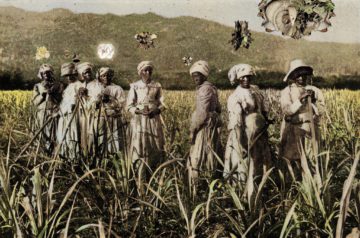 Not long after I moved into my first apartment, I started keeping an archive.
 Jonathan Franzen, the novelist who has been lauded and reviled as few figures in contemporary American letters ever are,
  Aaron Benanav in The Nation (Illustration by Tim Robinson):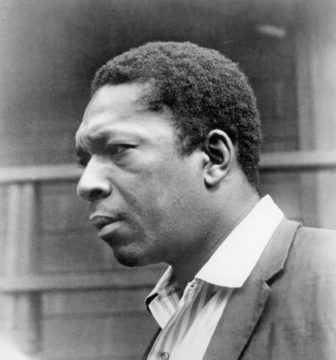
 Justin Sandefur over at the Center for Global Development:
 Yakov Feygin in Noema (image by Roman Bratschi for Noema Magazine):
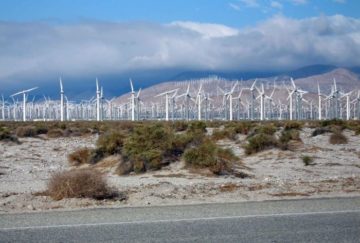 David McDermott Hughes in Boston Review:
 Afterparties is haunted by lateness, not only because it arrives after the premature death of its author, but also because it is a work of Cambodian American literature. “I very much feel that I come from a Cambodian-American world, not really an American one . . . so I find it important for my work to reflect that,” So said in a 2020 interview. In contrast to Asian American writing by those of Japanese, Chinese, and Korean descent (what So might refer to as “mainstream East Asians” in “The Shop”), Cambodian American writing is a relatively newer and more minor literature. (“We’re minorities within minorities,” goes So’s own self-description in his posthumous essay “Baby Yeah.”) There was a relative absence of Cambodian American communities until the late 1970s, following the genocide and the passage of the 1980 Refugee Act; there is now also a deficit of Cambodian writing and writers, because the Khmer Rouge annihilated Cambodian society by targeting its intellectuals and artists (libraries and schools were demolished, books burned, teachers murdered). The aftershocks of genocidal loss permeate the writing of the Cambodian diaspora, as the deliberate obliteration of their literature makes the work of contemporary writing both more necessary and difficult. For the children of Cambodian refugees, this work is even harder: How do you write the stories of those whose stories were systematically destroyed?