
Category: Recommended Reading
Tuesday Poem
Azza and I Share a Cup of Tea
We find a perfect piece of shade underneath the warm sun,
and Azza pours the tea before she speaks
Azza never looks the same.
Each time you get close enough, each time you think you know her,
she reveals another surface
If you don’t pay attention, you might almost miss it
the way her crisp white toub falls gracefully on her shoulders,
how the gold crescent in her nose accentuates her face tenderly
Azza is timid, but captures your attention
She is not a mere stop on your destination
So, plan to stay awhile.
Listen to the way she uses language to weave stories full of heart
Pay attention to how she sings songs of love
Count the scars and ask her how many battles she has fought
You will be surprised to learn how many of them she’s won.
Sip your tea slowly and know that she will offer you a place to stay
Let her soft voice trickle into your ears, and
Let the cool breeze touch your skin
No need for formalities,
Azza has no care for them
She has no need for ceremony nor procedure
She takes big leaps, wanders on the dangerous route
She fears nothing, and is ready to risk it all
She is fearless, but never reckless
Beautiful, but never boastful
Smart, and always dreaming
She paints pictures of hopes and what-ifs
See how her eyes light up when she talks of future
Notice when she smiles
Because it does not happen often
Savor the moment,
Ask her the questions
Listen to the answers
Sip your tea slowly
by Leena Badri
from Pank Magazine, 2020
Paul McCartney Doesn’t Really Want to Stop the Show
David Remnick in The New Yorker:
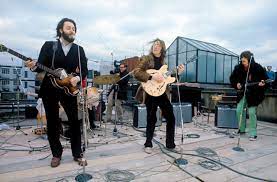 Early evening in late summer, the golden hour in the village of East Hampton. The surf is rough and pounds its regular measure on the shore. At the last driveway on a road ending at the beach, a cortège of cars—S.U.V.s, jeeps, candy-colored roadsters—pull up to the gate, sand crunching pleasantly under the tires. And out they come, face after famous face, burnished, expensively moisturized: Jerry Seinfeld, Jimmy Buffett, Anjelica Huston, Julianne Moore, Stevie Van Zandt, Alec Baldwin, Jon Bon Jovi. They all wear expectant, delighted-to-be-invited expressions. Through the gate, they mount a flight of stairs to the front door and walk across a vaulted living room to a fragrant back yard, where a crowd is circulating under a tent in the familiar high-life way, regarding the territory, pausing now and then to accept refreshments from a tray.
Their hosts are Nancy Shevell, the scion of a New Jersey trucking family, and her husband, Paul McCartney, a bass player and singer-songwriter from Liverpool. A slender, regal woman in her early sixties, Shevell is talking in a confiding manner with Michael Bloomberg, who was the mayor of New York City when she served on the board of the Metropolitan Transportation Authority. Bloomberg nods gravely at whatever Shevell is saying, but he has his eyes fixed on a plate of exquisite little pizzas. Would he like one? He narrows his gaze, trying to decide; then, with executive dispatch, he declines.
McCartney greets his guests with the same twinkly smile and thumbs-up charm that once led him to be called “the cute Beatle.” Even in a crowd of the accomplished and abundantly self-satisfied, he is invariably the focus of attention. His fan base is the general population. There are myriad ways in which people betray their pleasure in encountering him—describing their favorite songs, asking for selfies and autographs, or losing their composure entirely.
This effect extends to friends and peers. Billy Joel, who has sold out Madison Square Garden more than a hundred times, has spent Hamptons afternoons over the years with McCartney. Still, Joel told me, “he’s a Beatle, so there’s an intimidation factor. You encounter someone like Paul and you wonder how close you can be to someone like that.”
More here.
Warning signs for dementia found in the blood
From Phys.Org:
 Researchers at the DZNE and the University Medical Center Göttingen (UMG) have identified molecules in the blood that can indicate impending dementia. Their findings, which are presented in the scientific journal EMBO Molecular Medicine, are based on human studies and laboratory experiments. University hospitals across Germany were also involved in the investigations. The biomarker described by the team led by Prof. André Fischer is based on measuring levels of so-called microRNAs. The technique is not yet suitable for practical use; the scientists therefore aim to develop a simple blood test that can be applied in routine medical care to assess dementia risk. According to the study data, microRNAs could potentially also be targets for dementia therapy.
“When symptoms of dementia manifest, the brain has already been massively damaged. Presently, diagnosis happens far too late to even have a chance for effective treatment. If dementia is detected early, the odds of positively influencing the course of the disease increase,” says André Fischer, research group leader and spokesperson at the DZNE site in Göttingen and professor at the Department of Psychiatry and Psychotherapy at UMG. “We need tests that ideally respond before the onset of dementia and reliably estimate the risk of later disease. In other words, tests that give an early warning. We are confident that our current study results pave the way for such tests.”
More here.
Sunday, October 10, 2021
On the Winds: Climate Change, Weather, and Time
Justin E. H. Smith in his Substack newsletter Hinternet:
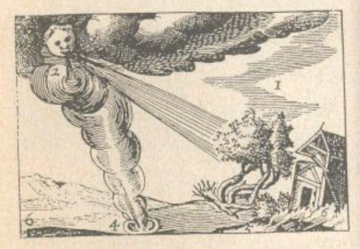 What is weather? Its etymology is not, as one may have hoped, connected to “whether”, as in “that which may be either one way, or the other” —“Whether the picnic is on or not depends on whether it rains”—, though both words have equally fascinating Germanic pedigrees. The modern German Wetter originally described the sort of ferocious wind you might encounter at a mountain peak, and later took on the primary connotation of “bad weather”, or, as is said in German, Unwetter, where the prefix that ordinarily signifies negation or absence, Un-, comes instead to indicate intensification (as in Untier — seemingly “non-animal” but literally “monster”, or Unkraut — seemingly “non-herb” but literally “weed”). At the outset then we may say that weather, strangely, is something the negative instances of which are also its paradigm instances. Yet the German and English words for “weather” are outliers among European languages, while far more commonly the term that is used is the same as the word for “time”: French le temps, Romanian timpul (or the variant Slavic-rooted vremea); even the Finno-Ugric pocket of Hungary calls both time and weather by the same word: idő. Already from this lexical tour we may infer that at some earlier stage what we today call “weather” was conceptualized primarily in a phenomenological sense, as the most basic experience of “in-the-world-ness”. Yet the overlapping history of these two concepts, time and weather, should only make us wonder at the profoundly different connotations each would come to have in late modernity.
More here.
Alzheimer’s: The heretical and hopeful role of infection
David Robson at the BBC:
 It is more than 150 years since scientists proved that invisible germs could cause contagious illnesses such as cholera, typhoid, and tuberculosis. The role of microbes in these diseases was soon widely accepted, but “Germ Theory” has continued to surprise ever since – with huge implications for many apparently unrelated areas of medicine.
It was only in the 1980s, after all, that two Australian scientists found that Helicobacter Pylori triggers stomach ulcers. Before that, doctors had blamed the condition on stress, cigarettes and booze. Contemporary scientists considered the idea to be “preposterous”, yet it eventually earned the Nobel Prize for Physiology or Medicine in 2005.
The discovery that the human papillomavirus can cause cervical cancer proved to be similarly controversial, but vaccines against the infection are now saving thousands of lives. Scientists today estimate that around 12% of all human cancers are caused by viruses.
We may be witnessing a similar revolution in our understanding of Alzheimer’s disease.
More here.
George Monbiot: Trashing the planet and hiding the money isn’t a perversion of capitalism, It is capitalism
George Monbiot in The Guardian:
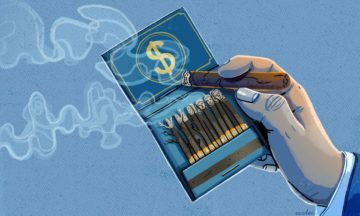 Whenever there’s a leak of documents from the remote islands and obscure jurisdictions where rich people hide their money, such as this week’s release of the Pandora papers, we ask ourselves how such things could happen. How did we end up with a global system that enables great wealth to be transferred offshore, untaxed and hidden from public view? Politicians condemn it as “the unacceptable face of capitalism”. But it’s not. It is the face of capitalism.
Capitalism was arguably born on a remote island. A few decades after the Portuguese colonised Madeira in 1420, they developed a system that differed in some respects from anything that had gone before. By felling the forests after which they named the island (madeira is Portuguese for wood), they created, in this uninhabited sphere, a blank slate – a terra nullius – in which a new economy could be built. Financed by bankers in Genoa and Flanders, they transported enslaved people from Africa to plant and process sugar. They developed an economy in which land, labour and money lost their previous social meaning and became tradable commodities.
More here.
Hit songs rely on increasing “harmonic surprise”
Jennifer Ouellette in Ars Technica:
 Hip-hop artist Childish Gambino (aka actor Donald Glover) made a splash in 2018 with the release of his Grammy-winning hit single, “This Is America.” With its stark, sudden shifts between choral melodies in major chords and menacing percussive elements drawn from the trap subgenre, the song constantly defies the listener’s expectations throughout.
That’s why “This is America” also tops the list of pop songs rich in so-called “harmonic surprise,” or points when the music deviates from listener expectations. This is according to a recent study published in the journal Frontiers in Human Neuroscience that analyzes Billboard hits from 1958 to 2019. And it’s no coincidence that the tune is among the most recent: the study also found that harmonic surprise in popular music has been increasing over the decades—a phenomenon the authors have dubbed “inflationary surprise.”
More here.
Sunday Poem
Plans for Altering the River
Those who favor our plan to alter the river
raise your hand. Thank you for your vote.
Last week, you’ll recall, l spoke about how water
never complains. How it runs where you tell it,
seemingly at home, flooding grain or pinched
by geometric banks like those in this graphic
depiction of our plan. We ask for power:
a river boils or falls to tum our turbines.
The river approves our plans to alter the river.
Due to a shipwreck downstream, I’m sad to report
our project is not on schedule. The boat
was carrying cement for our concrete rip rap
balustrade that will force the river to run
cast of the factory site through the state-owned
grove of cedar. Then, the uncooperative
carpenters union went on strike. When we get
that settled, and the concrete, given good weather
we can go ahead with our plan to alter the river.
We have the injunction. We silenced the opposition.
The workers are back. The materials arrived
and everything’s humming. l thank you
for this award, this handsome plaque I’ll keep
forever above my mantle, and I’ll read
the inscription often aloud to remind me
how with your courageous backing l fought
our battle and won. I’ll always remember
this banquet this day we started to alter the river.
Flowers on the bank? A park on Forgotten Island?
Return of cedar and salmon? Who are these men?
These Johnnys-come-lately with plans to alter the river?
What’s this wild festival in May
celebrating the runoff, display floats on fire
at night and a forest dance under the stars?
Children sing through my locked door, ‘Old stranger,
we’re going to alter, to alter, alter the river.’
Just when the water was settled and at home.
by Richard Hugo
from: Making Certain it Goes On: The Collected Poems of Richard Hugo
W.W. Norton Company, 1984
Augmented Reality
Andre Bagoo in The White Review:
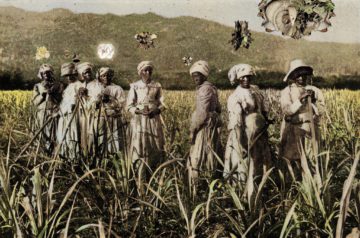 Not long after I moved into my first apartment, I started keeping an archive.
By ‘archive’ I mean a shoebox under the bed. Those were days when it was hard to believe anyone would ever care who I was, where I had come from, or where I was going. I had quit my day job as a journalist and decided to devote myself completely to my life as a poet and a writer, but, unsurprisingly, the path was far from straightforward. For a long time, the box stayed empty, collecting dust as, night after night, I dreamt in the bed above. One day all that changed, when I was commissioned to write about Caribbean writers and their literary archives. The project showed me how the most meaningful things in life can be fragile and ephemeral, and that, without a record somewhere, all of that substance can vanish like a forgotten memory.
The shoebox filled. Then it was replaced with a plastic container I got from Excellent City Centre on Frederick Street, Port of Spain, Trinidad. Soon, one container was not enough: I got three more. I started to keep everything: books, printed programmes, flyers. I had a boyfriend who would make jokes about this. One day I drank a bottled water at a literary panel at a university. He kept the bottle and later said, ‘For the archive?’ We broke up not long after.
Anybody who was interested in art in Port of Spain during this period – the late 2000s to the late 2010s – would have encountered my friend Rodell Warner.
More here.
Richard H. Kirk (1956 – 2021) electronic music pioneer
The rise and fall and rise again of Jonathan Franzen
Constance Grady in Vox:
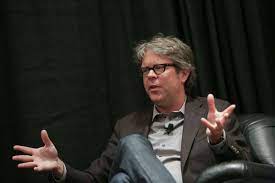 Jonathan Franzen, the novelist who has been lauded and reviled as few figures in contemporary American letters ever are, has a new book out. Which means it is time, once again, for one of the book world’s favorite pastimes: disseminating Jonathan Franzen thinkpieces. Jonathan Franzen has flourished crankily under controversy since 2001, when two big things happened to him. First, he released his breakout novel The Corrections and became known as one of the most important American writers of his generation. Second, he said he was uncomfortable with Oprah selecting The Corrections for her book club because she’s picked a lot of schmaltz, and became synonymous with the worst of elitist white male snobbery.
Since then, Franzen has been named, variously, the Great American Novelist, a noted crank, a human Banksy installation, and simply kind of a prick. He has been embroiled in fights about Twitter (he says it is everything he opposes), birds (he likes them), and conjunctions (pro-and, anti-then). The internet domain ciswhitemale.com redirects to Franzen’s Facebook page. He’s released some of the most celebrated novels of the 21st century so far, and some of the most despised essays, too. He is singular: a novelist-slash-public intellectual, and very much deliberately so, in a time when that career path doesn’t seem to exist for many people anymore. Here is a history of Jonathan Franzen’s career of controversy in four book releases — and why the release of his new novel is poised to meet a more welcoming atmosphere than the one that met his last.
…What was so impressive about The Corrections for many readers was the way Franzen managed to marry pyrotechnic literary ambitions to an immersive, highly readable family saga. It was a strategy Franzen had famously argued in a 1996 essay in Harper’s was the best possible step forward for the novel. TV had made the big novel of social consciousness redundant, Franzen said, and the serious post-modern novelists like Thomas Pynchon and Don DeLillo were rapidly becoming irrelevant. To write a novel that mattered in the fast-approaching 21st century, he concluded, a novelist would have to “connect the personal and the social” by rooting social critique in psychologically compelling characters.
There are basically two opposing models of the novel, Franzen would later elaborate in a much-celebrated 2002 essay for the New Yorker. There’s the Status model, in the tradition of Flaubert, in which if a book is great then it’s high art, and if the public doesn’t get it, well, that’s because they’re philistines, isn’t it. Then there’s the Contract model, in which the author is understood to have made a contract with the reader: In exchange for the reader’s attention, the author gives pleasure. If the public “doesn’t get” a Contract book, then it doesn’t matter whether it’s high art or not; the Contract book has failed. Franzen, nervously, could not seem to quite decide which model he aligned with. He sort of seemed to want to do both. With The Corrections, the critical consensus was that Franzen had pulled it off.
More here.
George Frayne (1944 – 2021) alt-country musician
Lonnie Smith (1942 – 2021) organist
Saturday, October 9, 2021
Making a Living
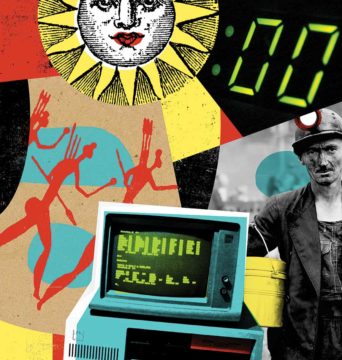 Aaron Benanav in The Nation (Illustration by Tim Robinson):
We have named the era of runaway climate change the “Anthropocene,” which tells you everything you need to know about how we understand our tragic nature. Human beings are apparently insatiable consuming machines; we are eating our way right through the biosphere. The term seems to suggest that the relentless expansion of the world economy, which the extraction and burning of fossil fuels has made possible, is hard-wired into our DNA. Seen from this perspective, attempting to reverse course on global warming is likely to be a fool’s errand. But is unending economic growth really a defining feature of what it means to be human?
For the longest part of our history, humans lived as hunter-gatherers who neither experienced economic growth nor worried about its absence. Instead of working many hours each day in order to acquire as much as possible, our nature—insofar as we have one—has been to do the minimum amount of work necessary to underwrite a good life.
This is the central claim of the South African anthropologist James Suzman’s new book, Work: A Deep History, From the Stone Age to the Age of Robots, in which he asks whether we might learn to live like our ancestors did—that is, to value free time over money. Answering that question takes him on a 300-millennium journey through humanity’s existence.
More here.
Coltrane’s New ‘Love Supreme’
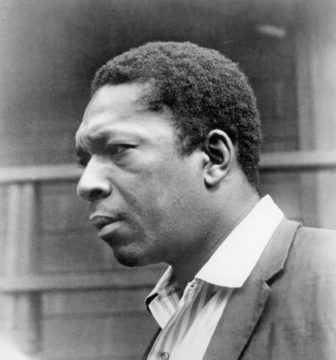
Adam Shatz in the NY Review of Books:
At a press conference in Tokyo in July 1966, a Japanese jazz critic asked John Coltrane what he would like to be in ten years. “I would like to be a saint,” he replied. Coltrane, who died the following July of liver cancer, at forty, reportedly laughed when he said this; but among his followers, he was already considered a spiritual leader, even a prophet. His reputation rested not merely on his musicianship, but on the example he set, the self-renunciation and good works required of every saint. Unlike the alto saxophonist Charlie Parker, who launched the bebop revolution with the trumpeter Dizzy Gillespie, Coltrane was not a fully formed virtuoso when he first emerged, but rather a committed and tireless student of the horn—a hardworking man who arrived at his sound through a practice regime of almost excruciating discipline. “He practiced like a man with no talent,” his friend the tenor saxophonist Benny Golson remembered. The saxophonist Archie Shepp, one of Coltrane’s many protégés, exaggerated only slightly when he remarked that he never saw him take the sax from his mouth. The trumpeter Miles Davis, in whose mid-Fifties quintet Coltrane first rose to prominence, made the same observation, though more in exasperation than worship.
Early in his career, Coltrane had succumbed to the temptations of the jazz life, but by 1957 he had kicked the habits of both needle and bottle, devoting himself to his music, and to God. The religion he embraced was ecumenical: an eclectic mixture of Christianity, Hinduism, Buddhism, and Sufi Islam—“I believe in all religions,” he said. Self-effacing and humble, he paid generous tribute to his influences—Lester Young, Ben Webster, Dexter Gordon, Sonny Rollins, John Gilmore—and helped younger musicians land contracts with his own label, Impulse Records. Coltrane, whose command of the tenor was unmatched (except, perhaps, by Rollins), even took lessons with free jazz artists like Ornette Coleman and Albert Ayler, whom other musicians of his stature derided as charlatans, adapting their innovations to his purposes. In his lifestyle, Coltrane stood apart for his indifference to the scene.
More here.
The Data Manipulation Scandal That Could Topple the Heads of the World Bank and IMF, Explained
 Justin Sandefur over at the Center for Global Development:
As the annual meetings of the World Bank and the International Monetary Fund kick off next week, the Bretton Woods institutions are mired in scandal. On September 15, the World Bank published an independent investigation led by former US Attorney for Washington D.C. Ronald Machen and the law firm WilmerHale into the involvement of senior World Bank management in data manipulation.
The report alleges Bank officials altered data to benefit both China and Saudi Arabia in its flagship Doing Business report, which ranks countries on their business regulations. The allegations cover incidents spanning the tenures of two World Bank presidents, Obama-nominee Jim Kim and Trump-nominee David Malpass, with a leading role for Kristalina Georgieva who now runs the IMF.
Major shareholders including the US and UK have expressed concern. The Economist magazine has called for Georgieva to step down, and numerous op-eds have stressed the damage to the Bank and the Fund’s credibility.
This saga requires all sides to set aside some ideological prejudices. Doing Business has been the darling of right-wing economists and business-oriented authoritarian governments for nearly two decades. Progressives cheered when the Bank temporarily suspended the index after the first audit reports of data manipulation emerged. Now as it looks like blame may fall on Kristalina Georgieva, who’s been pushing the Fund to do more on climate and more for developing countries, the tables have turned. Eminent progressive economists have labeled this “a coup attempt at the IMF” (Joe Stiglitz) due only to “anti-China hysteria” (Jeff Sachs); Georgieva has won the endorsement of 16 African finance ministers, while big-name conservative economists like Anne Krueger have called for her resignation.
Meanwhile, World Bank President David Malpass has virtually escaped scrutiny, deepening suspicions among Georgieva’s supporters that a plot is underway to scapegoat the progressive woman leading the Fund while Trump’s man at the Bank skates away.
More here.
How To Put The Genie Of Inflation Back Into The Bottle
 Yakov Feygin in Noema (image by Roman Bratschi for Noema Magazine):
As President Joe Biden’s administration and its progressive allies push to pass an ambitious social spending bill, moderate Democrats are worried. They point to rising prices and postulate that we are facing an era of high inflation. Wouldn’t more spending after an already large pandemic stimulus make matters worse?
Those voices should consider what John Maynard Keynes said in a 1933 letter to President Franklin D. Roosevelt during the worst year of the Great Depression. First, he argued, the president should boost consumer spending and convince businesses to get back to what they do best: making and selling things. Then, once things were up and running again, he could pursue economic reform to fix the systemic problems preventing the economy from meeting its potential. Then, as now, many conflated the ideas of “economic recovery” and “economic reform.” The purpose of economic recovery is to spend to prevent a crisis from spiraling. The purpose of reform is to spend so that we do not have these problems in the first place.
The U.S. economy is facing inflationary pressures not because of too much government spending but because, for almost two decades, there has not been enough. Our country simply does not have the kind of productive capacity that can create high, widespread growth without some inflation. We need to spend on building up that capacity so the economy can run at peak performance in normal times — and so it can be more resilient through future crises.
More here.
Sacrificing for the Climate
 David McDermott Hughes in Boston Review:
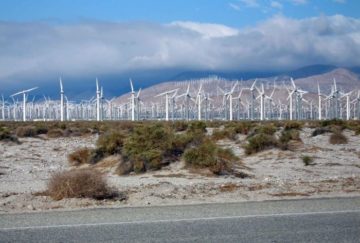
Renewable energy seems set to repeat many of the mistakes of fossil fuels. Though wind and solar power will not degrade the conditions for life on planet earth, the geography and corporate structure of these industries concentrate benefits and exclude communities in the style of Big Oil. The neighbors tend to notice—and to complain. So-called “renewable energy rebels” want a slice of revenues, or wind farms that are smaller or farther away. These “not-in-my-backyard” protests are delaying and blocking projects from Spain to Germany to the United States. To the extent that these movements succeed, they undercut the planet-saving ideal these technologies promised to all of us.
A Spanish village I will call Sereno, possibly the most turbine-surrounded community in the world, exemplifies this lesson. In 2006 residents rebelled against plans for hundreds of turbines to be installed only hundreds of meters from them. They anticipated ugly sights and sounds: ninety-meter steel towers and sixty-meter fiberglass blades bristling and pulsating above wheat and cattle. Their protest failed, but—alongside similar movements elsewhere and the economic crisis of southern Europe—it effectively slowed the construction of new turbines in the entire autonomous region of Andalusia. Meanwhile, the residents—with whom I shared many drinks while visiting as an anthropologist—nurse their old grudges and discover new ones: bird kill, the absence of jobs in turbine maintenance, lack of once-anticipated tourism jobs, and deals whereby landowners collect royalties from each wind turbine. Some of these problems can be solved: a wind commons, for example, would take power away from the handful of old families who control those wheat fields and pastures. The 800 landless residents of Sereno—many of whom are poor and technically squatters—might then collect revenue and support the energy transition. This is worth fighting for.
More here.
Michael Davies – The French Revolution