
Yascha Mounk in Persuasion:
Yascha Mounk: I’ve just read a draft of your next book. Though there have been many defenses of liberalism in the last few years, there haven’t been any so far which I felt made the thoughtful but also full-throated defense of liberalism that we need. But in my opinion, your book succeeds.
What is this tradition called liberalism?
 Francis Fukuyama: It’s a really old doctrine. And I think there are several reasons that it’s been around for such a long time: A pragmatic, political reason; a moral reason; and then there’s a very powerful economic one.
The practical one, I think, is one that we’ve lost sight of, which is that liberalism is really a doctrine meant to deal with diversity. When people really don’t agree on some fundamental issues, how do you get them to live peacefully with one another? That’s related to liberalism’s origin: It came out of the wars of religion in Europe following the Protestant Reformation, when Protestants and Catholics spent 150 years killing each other. And the founders of liberalism basically said, “Look, if we’re going to base a society on some religious doctrine of some particular sect, we’re never going to live in peace, because nobody agrees on those. And so let’s detune politics and agree that we all need to live together and push religion into the private sphere. So you can worship whatever you want, but you’re not going to impose it on anyone else.”
More here.
 The life and work of Stephen Crane derived gravity from brevity. Not one of his novels is much more than a hundred pages long, and they and his short stories strip language to its potent minimum. Crane’s short but prodigious life—he died, of tuberculosis, five months before his 29th birthday—observed the same concision. His hold on the public imagination has also lacked longevity. Crane’s most famous novel, The Red Badge of Courage (1895), is no longer required reading in American schools, and his other greatest hits—Maggie: A Girl of the Streets (1893), “The Open Boat” (1897), The Monster (1898), “The Bride Comes to Yellow Sky” (1898), and “The Blue Hotel” (1898)—have fallen out of the cultural conversation.
 “Many of his poems are at best rococo vases of an eighteenth century artificiality, insisted on in our strenuous age though thrones go toppling down.” Such was
  I
I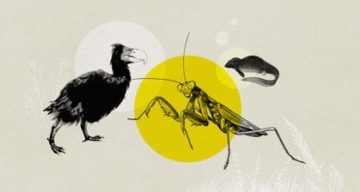 While it can sometimes seem like humanity is hell-bent on environmental destruction, it’s unlikely our actions will end all life on Earth. Some creatures are sure to endure in this
  T
T Czesław Miłosz, one of the greatest poets and thinkers of the past hundred years, is not generally considered a Californian. But the Polish-Lithuanian Nobel laureate spent four decades in Berkeley—more time than any other single place he lived. His debut collection in America, a short Selected Poems in 1973, was published by a small New York house, Seabury Press. Introduced by Kenneth Rexroth, the collection of about fifty poems included many from Ocalenie, the book that had appeared in Warsaw in 1945.
 Tickled by sunlight, life teems at the ocean surface. Yet the influence of any given microbe, plankton, or fish there extends far beyond this upper layer. In the form of dead organisms or poop, organic matter rains thousands of feet down onto the seafloor, nourishing ecosystems, influencing delicate ocean chemistry, and sequestering carbon in the deep sea.
 It’s not surprising that the narrative we’ve heard a lot lately is that such theories exploded over the past 18 months. It’s common to see headlines
 On July 8, 1962, just after 11 pm, the sky over Hawaii turned, in a moment, from black to blazing. Streetlights went out, all at once; radios stopped working. For several minutes, a red orb, edged in purple, surrounding a luminous yellow core, made the night as bright as day. It then dimmed, slowly, receding into color-changing auroras. When these lights faded, they left behind a spectral glow that persisted for hours and could be seen throughout the Pacific.
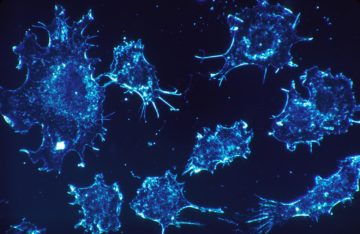 Immunotherapy is a promising strategy to treat cancer by stimulating the body’s own immune system to destroy tumor cells, but it only works for a handful of cancers. MIT researchers have now discovered a new way to jump-start the immune system to attack tumors, which they hope could allow immunotherapy to be used against more types of cancer.
 Teaching writing, unlike most other kinds of teaching, is an intervention, closer to therapy than to any transmissible instruction. But with all the fussing about craft — anyone who teaches has a personal punch-list — we almost never hear about or get close to the real business, the meld. Maybe because each teacher is different and each interaction draws on a unique set of human variables.
 In an increasingly data-driven world, mathematical tools known as wavelets have become an indispensable way to analyze and understand information. Many researchers receive their data in the form of continuous signals, meaning an unbroken stream of information evolving over time, such as a geophysicist listening to sound waves bouncing off of rock layers underground, or a data scientist studying the electrical data streams obtained by scanning images. These data can take on many different shapes and patterns, making it hard to analyze them as a whole or to take them apart and study their pieces — but wavelets can help.