
Alexander Sorondo at The Metropolitan Review:
 Alan Moore is 72 years old now. Since the 1980s, he’s been celebrated as the greatest writer in comics history. But he’s done with all that. Full-time novelist now. Finally. Spends his days at home just writing, reading, and smoking “frightening,” “staggering,” “saturating” amounts of weed.
“I use it to work,” as he told Alex Musson. “Always have done.”
Except these days he does it without the weekly deadlines, the phone always ringing, questions and chitchat with illustrators, coauthors, publishers, press — none of it.
Life of a novelist now. Solitude.
And he’s embarked on something new: a five-novel series called The Long London. It might not seem like a huge venture, given that Book One, The Great When (2024), reads as a fairly straightforward fantasy story, just about 300 pages, self-contained, quick-moving, irreverent.
But it marks a big change for Moore.
There’s no illustrator for this series. No coauthor. No photos to pair with the text.
More here.
Enjoying the content on 3QD? Help keep us going by donating now.
 While AI bubble talk
 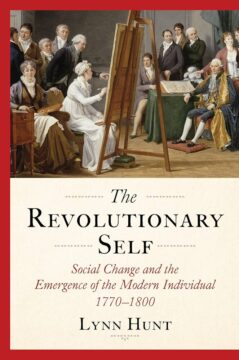 In that classic of Western cinema, Monty Python’s Life of Brian, the title character addresses a crowd in Jerusalem that has mistaken him for Jesus Christ. “You’ve got it all wrong,” he pleads. “You don’t need to follow me. You don’t need to follow anybody. You’ve got to think for yourselves. You’re all individuals!” The crowd chants back, in unison, “Yes, we’re all individuals!” “You’re all different!” Brian protests. “Yes, we’re all different!” the crowd responds (though one lone voice insists, “I’m not”).
 Last summer, a few American writer friends and I traveled across China on a self-organized tour of AI labs, factories, and industrial clusters. Among them was Aadil, a twenty-two-year-old Bay Area engineer who loves the Cantonese rapper
 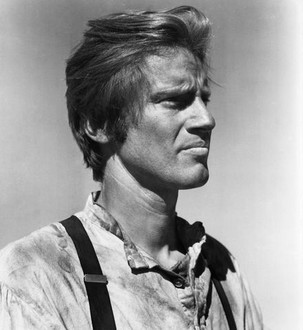 Two actors are wriggling across the stage on their bellies. They’re earthworms, or maybe simply brothers, Cricket and Coyote, who want to become earthworms. They’re planning to write a screenplay together, and one suggests making their movie about worms. But “I thought we were writing something about what it means to come from the same root,” the other brother complains. “A movie, a Western, brothers killing men and running amuck in the desert.”
 From her early documentary Indian Cabaret (1985), which follows strippers through Mumbai, to her first feature film, Salaam Bombay (1988), which centers the lives of street children, to Mississippi Masala (1991), which explores prejudice between Black and Indian communities in the U.S., to Queen of Katwe (2016), which gives a glimpse into the life of Ugandan chess prodigy Phiona Mutesi, Nair has built a career on surfacing brilliant, if often overlooked, stories. Her devotion to getting into the particularities and specificities of culture, for not being swayed by an invisible audience that executives insist might not get it, has earned her a loyal following. It’s also gotten her an Academy Award nomination and the Cannes Prix d’Or and Audience Award for Salaam Bombay, the Golden Lion award for Monsoon Wedding at the Venice Film Festival, and many other prizes. It is no surprise to any of us that a son raised in her household would engender the same loyalty.
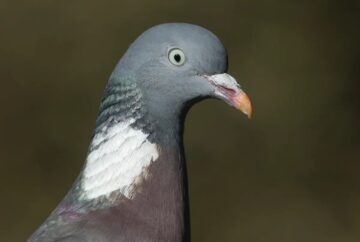 The names ‘dove’ and ‘pigeon’ can be deceptive. Scientifically speaking, neither of them carry much merit. All the birds we know as either pigeons or doves belong to the same family, Columbidae. This large group of often plump, slender-billed birds encompasses around 350 species, with five regularly found in the UK.
 In 1907, US historian Henry Adams first started circulating a memoir that would go on to be a smash hit in 1919: The Education of Henry Adams. Given Adams’s illustrious family – both his grandfather and great-grandfather were presidents – you might expect it to be a self-congratulatory tale of the wonders of US education.
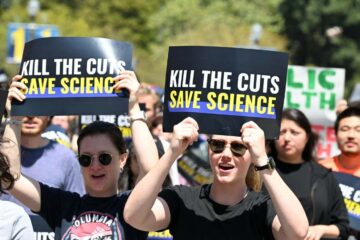
 The development of better and more reliable artificial intelligence (AI) technologies has immense applications in the field of scientific research. AI has become a powerful extra set of eyes and hands for scientists: It can sift through heaps of data in seconds, guide experiments, and help write better manuscripts. “We’re seeing the emergence of subdisciplines that are AI plus X, where X is essentially every field of science. Neuroscience is no exception,” said
  Hal Hartley does have a new movie out. His first feature since Ned Rifle (2014), the conclusion of the Henry Fool trilogy. Did you know that? I suspect that either you did not know that or have known it for so long that you now suspect I am a poser. (That’s what shibboleth-speakers call people who have gained, but not earned, access to the shibboleth. Tedious, but it comes with the territory.) It’s called Where to Land, he paid for it via Kickstarter—as he has for his projects since Ned Rifle—and I doubt a large audience will see it. Hartley produces and sells his own box-sets and offers his movies via streaming on his
  Recently, I read “
 The Christian case against pacifism is more convoluted, given the tension with the New Testament and early tradition. Yet in essence, it’s an appeal to common sense. While Jesus’s teachings may guide private life, this view holds, to apply them to public life is grossly irresponsible, since that would prevent Christians from defending the innocent or serving the state. After its legalization by Constantine in 313 CE, Christianity accepted a role in maintaining social order in the Roman Empire. Accordingly, bishops such as Ambrose and Augustine allowed Christians to participate in just wars and capital punishment. (They maintained the church’s ban on gladiatorial games, abortion and infanticide.) These churchmen didn’t deny Jesus’s teachings—they just made room for exceptions. To this end, they drew creatively on the Old Testament and philosophers like Cicero, or expanded on the apostle Paul’s dictum that government is ordained by God. Augustine, for example, reasoned that a soldier who slays on his superior’s orders doesn’t violate the prohibition on killing because he “does not himself ‘kill’—he is an instrument, a sword in its user’s hand.” Augustine thus offered Christians the kind of work-around that would enable them to punish and wage war with a good conscience.
 In 2023, a mathematician named