
Elizabeth Gibney in Nature:
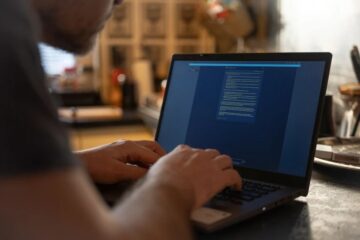 Researchers have been sneaking secret messages into their papers in an effort to trick artificial intelligence (AI) tools into giving them a positive peer-review report.
The Tokyo-based news magazine Nikkei Asia reported last week on the practice, which had previously been discussed on social media. Nature has independently found 18 preprint studies containing such hidden messages, which are usually included as white text and sometimes in an extremely small font that would be invisible to a human but could be picked up as an instruction to an AI reviewer.
Authors of the studies containing such messages give affiliations at 44 institutions in 11 countries, across North America, Europe, Asia and Oceania. All the examples found so far are in fields related to computer science.
More here.
Enjoying the content on 3QD? Help keep us going by donating now.
 The press cycle preceding Lorde’s new album, Virgin, was one of the most scrutinized of its kind in some time. She has been pressed, during junkets, for more information after saying she doesn’t feel like a man or woman. Fans, editors, and news aggregators gobble up the two or three throwaway lines published in short profiles in magazines like Rolling Stone, Vogue, and GQ. No one mentions the journalists soliciting these quotes—unless fans take them to task for portraying their idols in a negative light. Hero worship can easily obscure the dirt beneath the mythology of a pop star.
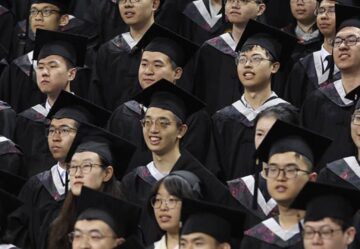 Around the world, governments are racing to build world-class universities. From Germany’s Exzellenzinitiative to India’s “Institutes of Eminence,” the goal is the same: to cultivate institutions that attract and nurture top global talent, conduct cutting-edge research, and drive innovation and growth. But the stakes are particularly high in the United States and China, given the escalating competition between the world’s two largest economies.
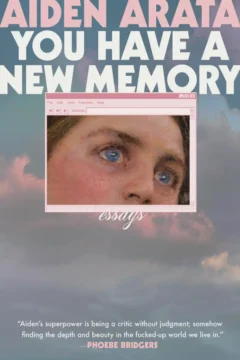 My faith first wavers
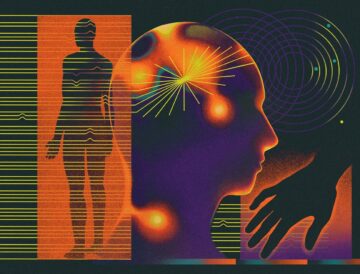 Keith Krehbiel lived with Parkinson’s disease for nearly 25 years before agreeing to try a brain implant that might alleviate his symptoms. He had long been reluctant to submit to the surgery. “It was a big move,” he says. But by 2020, his symptoms had become so severe that he grudgingly agreed to go ahead.
 Not long ago, Dr. Richard Menger, a neurosurgeon, was ready to operate on a 16-year-old with complex scoliosis. A team of doctors had spent months preparing for the surgery, consulting orthopedists and cardiologists, even printing a 3D model of the teen’s spine. The surgery was scheduled for a Friday when Menger got the news: the teen’s insurer, Blue Cross Blue Shield of Alabama, had denied coverage of the surgery.
 “It appears early life got trapped in a minima of metabolic efficiency. Everything on that planet is starving. Meaning they can’t run their brains for a full day-night cycle. So they just… turn themselves off. Their consciousness dies. Then they reboot with the same memories in the morning. Of course, the memories are integrated differently each time into an entirely new standing consciousness wave.”
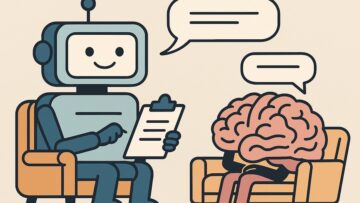 Recently, I found myself pouring my heart out, not to a human, but to a chatbot named Wysa on my phone. It nodded – virtually – asked me how I was feeling and gently suggested trying breathing exercises.
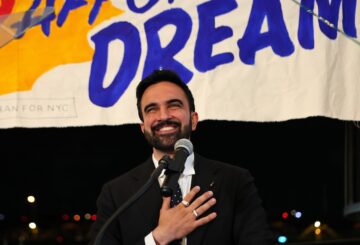 The Democratic Party is in crisis, and it goes far beyond the stereotypical “Dems in Disarray” headlines. The party’s popularity numbers are abysmal: a
 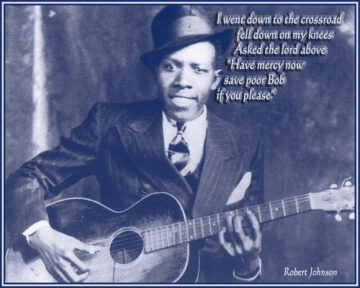 As it emerged after the overthrow of Reconstruction, when black voices were again being silenced in public and civic spheres, the blues became an alternative form of communication. As Shelby “Poppa Jazz” Brown reminded the noted folklorist William Ferris,
 I
I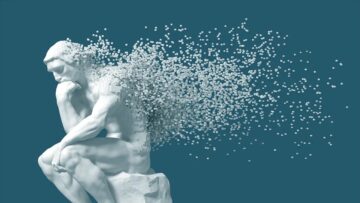 In this wide-ranging interview, Paul Bloom explores how our best qualities, reason, morality, and compassion, can be paradoxically undercut by the very forces meant to protect them. Looking at his work on Perversity, he reveals the tightrope between chaos and autonomy, making human goodness not just aspirational but fragile, easily distorted, often misunderstood, and vulnerable to both logic and emotion when taken to extremes.
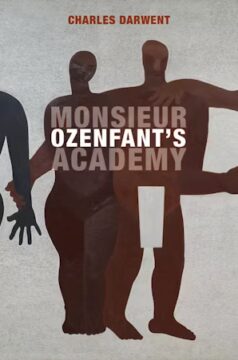 Purism was intended as a way of uniting the rigours of classicism with the modernity of the machine age. Flat planes of colour were combined with a highly symbolic visual language. Its most famous adherent was Fernand Léger. At the Ozenfant Academy, this slightly chilly left-brain philosophy of art existed alongside a dictatorial regime. Students were instructed in drawing with unforgiving hard pencils and giant sheets of paper, and encouraged towards exactness of line – sketching was a dirty word. They drew the same model, who held the same pose for two weeks. The actress Dulcie Gray, who attended the school, recalled that in the winter, the side of the model nearest the stove turned scarlet, while the other side was blue with cold. If the morning’s drawings passed muster, students were permitted to paint. A chart on the wall showed the colours they were allowed to use; the paint was to be applied according to an approved technique which yielded a consistent finish.
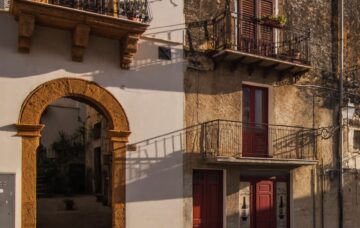 We’d heard about the “€1 house” programme in which poor, depopulating towns put their abandoned or unused buildings up for sale. The programme, I soon learned, was actually a loose collection of schemes that economically struggling towns used to lure outside investment and new residents. The campaigns seemed to me to have been largely successful – some towns had sold all their listed properties. I pored over dozens of news articles that had served as €1 house promotion over the years. By attracting international buyers to a house that “costs less than a cup of coffee”, as one piece put it, some of Italy’s most remote towns now had new life circulating through them. Many local officials had come to see €1 house experiments as their potential salvation.