Alison Flood in The Guardian:
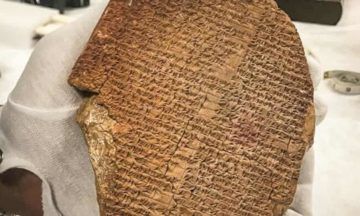 A 3,600-year-old tablet showing part of the Epic of Gilgamesh will be formally handed back to Iraq by the US on Thursday.
The tablet, known as the Gilgamesh Dream Tablet, shows parts of a Sumerian poem from the Epic of Gilgamesh, one of the world’s oldest known religious texts. It is believed to have been looted from a museum in Iraq in 1991, and “fraudulently” entered the US in 2007, according to Unesco, the United Nations’ cultural body. It was acquired by Christian arts and crafts retailer Hobby Lobby for display in its museum of biblical artefacts in 2014, and seized by the US Department of Justice in 2019.
The formal handover ceremony will take place at the Smithsonian Institution in Washington DC on 23 September. “This exceptional restitution is a major victory over those who mutilate heritage and then traffic it to finance violence and terrorism,” said Unesco director-general Audrey Azoulay, who will speak at the Washington ceremony. “By returning these illegally acquired objects, the authorities here in the United States and in Iraq are allowing the Iraqi people to reconnect with a page in their history.”
More here.
 Allison Draper loved anatomy class. As a first-year medical student at the University of Miami, she found the language clear, precise, functional. She could look up the Latin term for almost any body part and get an idea of where it was and what it did. The flexor carpi ulnaris, for instance, is a muscle in the forearm that bends the wrist — exactly as its name suggests. Then one day she looked up the pudendal nerve, which provides sensation to the vagina and vulva, or outer female genitalia. The term derived from the Latin verb pudere: to be ashamed. The shame nerve, Ms. Draper noted: “I was like, What? Excuse me?”
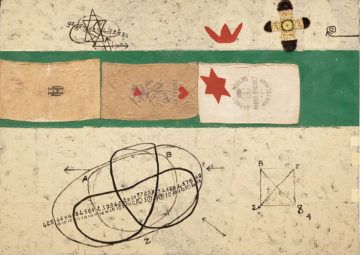 MYTHOLOGIES RARELY SERVE the artists who inspire them. Ouattara Watts has now entered his fifth decade of painting. His oeuvre consists of the large-to-monumental canvases he has been making prodigiously for forty-five years, alongside lesser-known watercolors, gouaches, drawings, and collages. Over time, he has developed an expansive and wildly complex visual language. It is also unabashedly joyful, even beautiful, insisting on a universal purpose for painting. More than a body, his is a forest of works, too vast, dense, and important to be detoured by an origin story. And yet the origin story persists, making a circuitous route around but rarely through the work and confounded, perhaps, by some minor confusion over the artist’s name: He was born Bakari Ouattara (in the Ivorian capital Abidjan), nicknamed Ouatts (in his youth) and later Ouatt (in Paris), became known as Ouattara Watts (in New York), and is referred to (almost everywhere) as simply Ouattara.
 W
W Recently I was sent an article about “
 Humans have long wondered why we sleep. A well-rested prehistoric mind probably pondered the question, long before Galileo thought to predict the period of the pendulum or to understand how fast objects fall. Why must we put ourselves into this potentially endangering state, one that consumes about a third of our adult lives and even more of our childhood? And we don’t do it grudgingly – why do we, along with dogs, lions and virtually every other animal, apparently enjoy it? Unlike measuring the period of the pendulum, scientists would have to wait much longer to obtain reliable answers, since it’s not so easy to sleep while strangers watch. Doing so involves building sleep disorder clinics for humans and elaborate structures such as platypusariums to observe the REM (rapid eye movement) repose of platypuses.
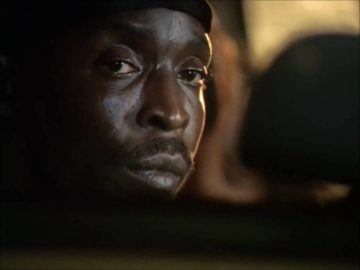 It’s not often that a shotgun-wielding thief and killer comes to be seen as possessing a moral core. But then it’s not often that you have a character like Omar Little. Or an actor like Michael K Williams to bring him to life. Or a TV series like The Wire that allowed both character and actor to breathe.
 When I left Stanford to join Google as an AI research scientist, I “went across the street,” as the saying went. I had been a young assistant professor, first at Georgia Tech and then at Stanford, doing research that was partially funded by the Defense Advanced Research Projects Agency (DARPA). At one point, I brought up the ethical issues of researching surveillance technology with the DARPA program manager, but frankly, raising ethical concerns in such a competitive environment felt a bit like labeling myself a troublemaker.
 For almost two decades, I have been attempting to understand the origins and drivers of the
 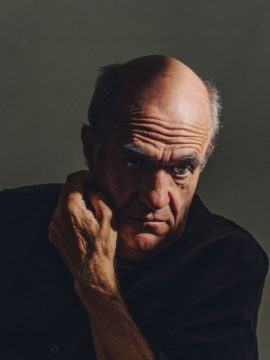 The Irish writer Colm Tóibín is a busy man. Since he published his first novel, “
 Micah L. Sifry in The New Republic:
 Mariana Mazzucato, Rainer Kattel, and Josh Ryan-Collins over at Boston Review: