
My Friends the Pigeons
The American Experiment has entered
yet another critical phase.
My friends the pigeons, who rent
a ledge in the nine hundred block
of St. Louis, seem painfully aware of this.
I hope I am not merely projecting
my own dread onto them, but if I am
I do so with trepidation,
for pigeons are, by their very nature,
conduits of urban grief, though if
studied with an open, critical mind,
refract anemic sentiments. Oh sage
pigeons of the nine hundred block
of St. Louis Street . . . Will the crowds
cease to laugh at them?
A blight on the day the happy crowds
no longer laugh at them!
A blight on the idiocy of the Christian Right!
I have watched them on television
and shivered with grief.
They are forcing me to embrace
what otherwise I might shun,
such as ugly, mite-infested pigeons,
surrogate angels for those
never told their bodies were evil.
I thank my sweet, dead mother
for never telling me my body was evil,
and for laying a big, dirty feather
on my pillow one Christmas Eve.
by Richard Katrovas
from New American Poets of the ‘90s
publisher, David R. Godine, 1991
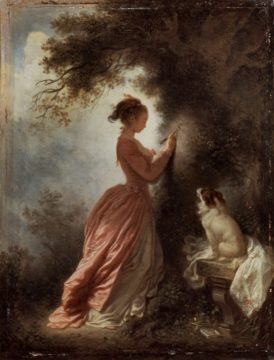
 At 13, Arnie got a paper route. The work troubled him, however — and not in the usual way a kid might worry about their first adult responsibility. He could never be sure the papers had actually been delivered. “After Arnie had finished a block, he had to go back to be sure that there was a paper on each and every doorstop,” Judith L. Rapoport wrote in
  W
W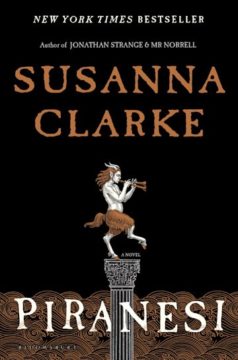 In Susanna Clarke’s fantasy novel
 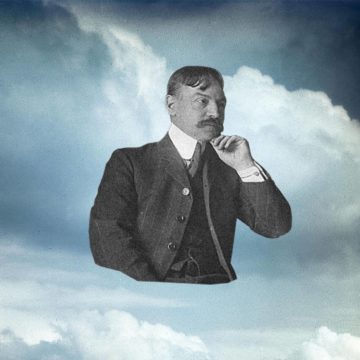 Certain books never live up to their memorable titles. Others do, but not in the way their authors might have anticipated. Julien Benda’s The Treason of the Intellectuals, an essential intervention in 20th-century debates about intellectual responsibility, is the second sort of book. Cast into the agitated waters of European politics between the two world wars, it still floats ashore every decade or so, attracting readers with its stirring call to the independent life of the mind, free from the lures of power and authority. It is essential reading. Ever since the book’s publication in 1927, its argument has been taken up by writers of very different political stripes in very different historical circumstances. In the 1930s communist intellectuals denounced their fascist counterparts as traitors to the truth; liberals levied the same charge against communists and fellow travelers during the Cold War, only to find themselves then put in the dock by progressives and neoconservatives and now populists. Treason is one of those books that serve both as a lens for discerning the present and a mirror reflecting the image of those who appeal to it.
 Lisa Dang wasn’t even born when astronomers started planning the most ambitious and complex space observatory ever built. Now, three decades later, NASA’s James Webb Space Telescope (JWST) is finally about to launch, and Dang has scored some of its first observing time — in a research area that didn’t even exist when it was being designed.
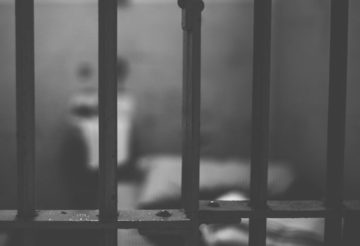 Nearly every state in the country has a statute—often called a “board bill” or “pay-to-stay” bill—that charges people for time served. In Missouri and Oklahoma—and in states on both coasts and in the Deep South—these pay-to-stay bills follow defendants arrested initially for small offenses like petty theft or falling behind in child support. Nearly 80 percent of these defendants live below the federal poverty line, meaning they make less than $12,880 a year if they are single, or $21,960 if they are a family of three.
 2021 is the 6th year we’re approaching experts and asking them to recommend the best books published in their field, whether it’s history or historical fiction, science or science fiction, math or
 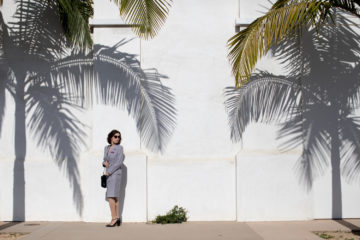 The family has been an infinite well of inspiration for photographers for as long as the medium has existed. From Larry Sultan’s Pictures From Home to LaToya Ruby Frazier’s The Notion of Family, the family unit has proved a conduit for explorations of belonging, identity, strife, place, connection, injustice and more. Photographers have both worked behind the camera and stepped into the frame in order to capture the most universal of subjects, the complications and connections to those we love.
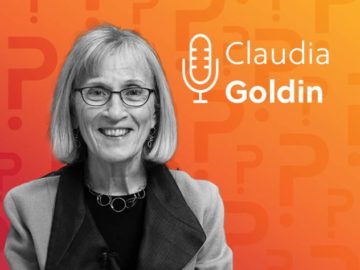 Claudia Goldin, Henry Lee professor of economics, shares the reason why working mothers still earn less and advance less often in their careers than men: time. Even with antidiscrimination laws and unbiased managers, certain professions pay employees disproportionately more for long hours and weekends, passing over women who need that time for family care. Goldin also discusses how COVID-19’s flexible work policies may help close the gender earnings gap.
 Cora Currier in The Nation:
 In the L.A. Review of Books:
 Henry Farrell and Glen Weyl in Boston Review:
 Ian McEwan in New Statesman:
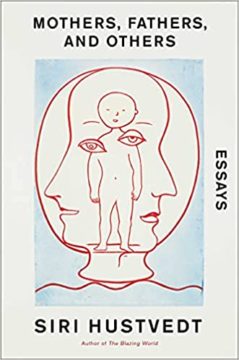 When Hustvedt returns to the idea of what’s missing, her writing takes off. In “Both-And,” an essay on Bourgeois, she offers the concept of intercorporeality from French philosopher Maurice Merleau-Ponty: “that human relations take place between and among bodies, that we perceive and understand others in embodied ways that are not conscious.” What could be more loaded than the mother’s body, a body that is not one, but two? A body that is no longer hers alone? “The artist sees the object unfold, a thing that rises out of you, is related to you, but is not you either,” Hustvedt writes about Bourgeois’ work. But this easily applies to birth and mothering.