Gary Shteyngart and Justin Jordan in The Guardian:
 I do not write historical fiction. But I envy those who do. I can picture them sitting in the lamp-lit halls of the New York Public Library on 42nd Street, thumbing through fraying, early 20th‑century telephone directories or spinning the roulette of the microfiche machine, or meeting at a nearby coffee dispensary with fellow history-minded wordsmiths in the wee hours of the day, like hunters getting ready to put a bullet through the heart of a wildebeest. The best are able to address the current moment through deft metaphysical journeys between the present and the past, to illuminate our wayward realities by reminding us that it has ever been so, that the past is not even the past, or whatever Faulkner said.
Personally, I have trouble building a literary time machine. A decade ago, when I wrote a memoir set primarily in the 1980s, all I could remember of that era was Michael J Fox running around in a varsity jacket. The rest of my memories were just volumes of mist that sometimes trickled out of my minor brain holes, tantalising but highly suspect emissions that bore news of events which may or may not have been. When one’s teenage years are a distant Greek island, imagine trying to write a novel about the romantic entanglements of the Italian futurists or the political cataclysms of Meiji-era Japan, or anything at all about the ancient Egyptians.
More here.
 “I
“I  One of the greatest physicists of the last century, Paul Dirac, had no use for emotions. “My life is mainly concerned with facts, not feelings,” he declared. He loved his emotion-free existence, or so it seemed, until he met a vivacious woman who was his exact opposite — impulsive and ardent. She became his wife and not only made him a happy man but also dramatically changed his personality. He became a feeling human being, which in turn affected his science. Yes, physics! If being logical and rational were all that mattered, we wouldn’t need actual physicists. The job could be done by computers. Later in life, Dirac became so convinced that knowledge needs to be combined with intuitions, crazy hunches and irrational perseverance that whenever he was asked about the secret to his success, he stressed that one needs to be guided above all by one’s emotions.
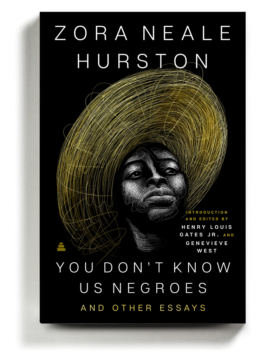 Zora Neale Hurston’s best-known sentence, judging by its appearance on coffee mugs and refrigerator magnets, is this one: “No, I do not weep at the world — I am too busy sharpening my oyster knife.”
 A couple of months ago, when I gave a talk about my forthcoming book
 Silicon Valley has no shortage of big ideas for transportation. In their vision of the future, we’ll hail driverless pods to go short distances – we may even be whisked into a network of underground tunnels that will supposedly get us to our destinations more quickly – and for intercity travel, we’ll switch to pods in vacuum tubes that will shoot us to our destination at 760 miles (1,220 km) per hour.
 B
B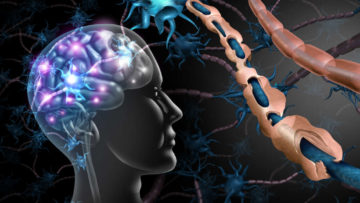 Multiple sclerosis
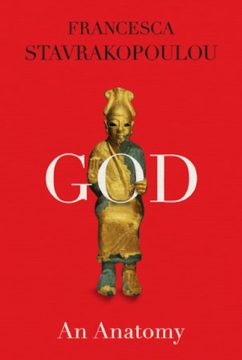 As an undergraduate, Francesca Stavrakopoulou observed to her theology professor that “lots of biblical texts suggest that God is masculine, with a male body,” and was told, to her evident frustration, that these texts were metaphorical, or poetic. “We shouldn’t get too distracted by references to his body,” her professor asserted, because to do so would be “to engage too simplistically with the biblical texts.” Anything but distracted by biblical references to God’s body, Stavrakopoulou is aesthetically entranced by them and programmatically attentive to their iconographic and literary contexts, from ancient Southwest Asia in the fourth millennium BCE to Christian and Jewish Europe as late as the 16th century. Her work, true to its subtitle, is anatomically organized into five parts plus an epilogue: I, “Feet and Legs”; II, “Genitals”; III, “Torso”; IV, “Arms and Hands”; V, “Head.” Each of these five major parts comprises three or four chapters, and each chapter has its own fresh emphasis and coherence. “Head,” for example, has separate chapters for ears, nose, and mouth.
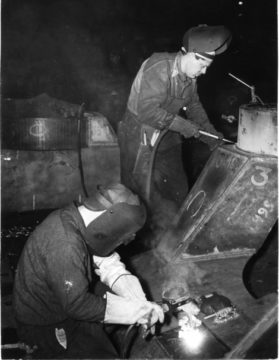 To think about the semantics of Smith’s work is above all to consider the labor that went into it, in the process informing how it was made. In this regard Smith’s story is well known. He famously welded steel, but also bent, pierced and cut it, lifted and placed it, often singlehandedly; in other words, he worked steel and iron directly, rather than turning to assistants to do the heavy lifting his art required.
 Novak Djokovic, the world’s top-ranking tennis player, has just been granted a
 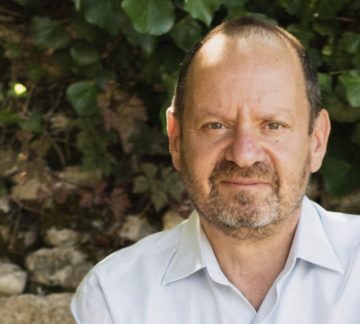 The British lawyer is flush with energy, despite being at the tail end of a week-long visit with clients on the island nation of Mauritius. His casual black jacket, navy blue scarf, and black boots give him the appearance of a relaxed college professor. But his furrowed face and sharp gaze are those of a man who sees the world with a certain type of intensity.