
The Stranger
A man came up to me as I was walking home from the pharmacy: “Are you Jose Hernandez Diaz?” “Yes,” I said, “who’s asking?” “Do you enjoy sipping tea before bedtime?” “Well, I do, but what is it to you?” I asked. “In the ninth grade, did you get cut from the basketball team?” “I did, in fact, get cut from the team.” “Do you sometimes wonder what life would’ve been like had you married Margot Cisneros?” “Maybe, sometimes, yes,” I said. “Are you afraid of small talk and long walks in the city?” “I’m just a little introverted,” I said. “Does the night sky resemble a dragon of your dreams?” “Yes, thank you for asking,” I said. “Did you cry when Muncy hit that home run in the World Series?” “I did cry at that moment. Proud of it!” “Were you born and raised back and forth between L.A. and Orange County?” “Story of my life; yes,” I said. “Does the night sky resemble a dragon of your dreams?” “Yes, thank you for asking. Yes!”
by Jose Hernandez Diaz
from the Yale Poetry Review, 3/9/22
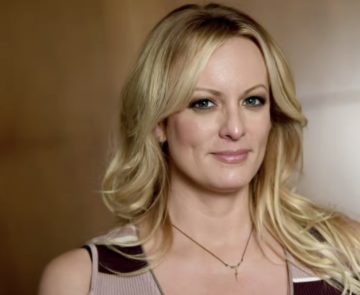 Like much of the world, I’ve been captivated by adult film actress turned director Stormy Daniels—but not for the usual reasons. Her encounter with former President Donald Trump is the least interesting thing about this otherwise brilliant, original, and deeply fascinating person whose single-minded pursuit to defend her dignity is mostly lost amid a rage of salacious headlines.
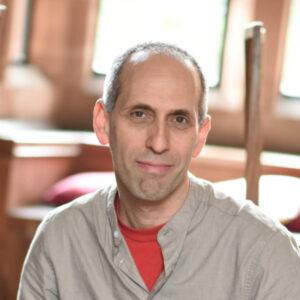 If extraterrestrial life is out there — not just microbial slime, but big, complex, macroscopic organisms — what will they be like? Movies have trained us to think that they won’t be that different at all; they’ll even drink and play music at the same cafes that humans frequent. A bit of imagination, however, makes us wonder whether they won’t be completely alien — we have zero data about what extraterrestrial biology could be like, so it makes sense to keep an open mind. Arik Kershenbaum argues for a judicious middle ground. He points to constraints from physics and chemistry, as well as the tendency of evolution to converge toward successful designs, as reasons to think that biologically complex aliens won’t be utterly different from us after all.
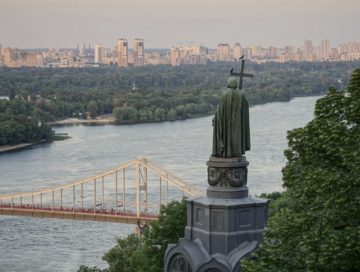 The Russo-Ukrainian War is the most severe geopolitical conflict since World War II and will result in far greater global consequences than September 11 attacks. At this critical moment, China needs to accurately analyze and assess the direction of the war and its potential impact on the international landscape. At the same time, in order to strive for a relatively favorable external environment, China needs to respond flexibly and make strategic choices that conform to its long-term interests.
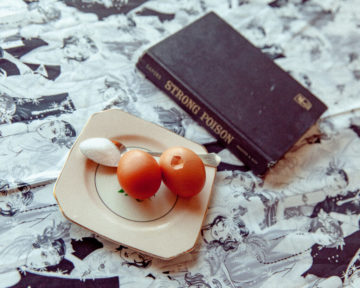 Dorothy Sayers’s Strong Poison opens with a description of a man’s last meal before death. The deceased, Philip Boyes, was a writer with “advanced” ideas, dining at the home of his wealthy great-nephew, Norman Urquhart, a lawyer. A judge tells a jury what he ate: the meal starts with a glass of 1847 oloroso “by way of cocktail,” followed by a cup of cold bouillon—“very strong, good soup, set to a clear jelly”—then turbot with sauce, poulet en casserole, and finally a sweet omelet stuffed with jam and prepared tableside. The point of the description is to show that Boyes couldn’t have been poisoned, since every dish was shared, with the exception of a bottle of Burgundy (Corton), which he drank alone. The judge’s oration is another strike against the accused, a bohemian mystery novelist named Harriet Vane, who saw Boyes on the night he died, and had both motive and opportunity to poison him. Looking on from the audience, the famous amateur detective Lord Peter Wimsey writhes in misery; he believes Harriet Vane is innocent, and he has fallen suddenly and completely in love with her.
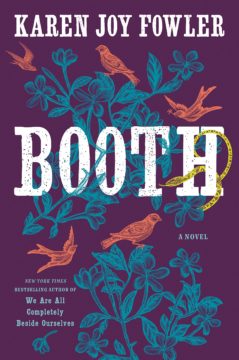 On 14 April 1865, less than a week after Confederate General Robert E Lee surrendered his army in Virginia and effectively ended the American Civil War, John Wilkes Booth gained entry to the private box at the theatre in Washington, DC, where Abraham Lincoln and his guests were watching a performance of Our American Cousin and shot the president in the head. Lincoln was pronounced dead the next morning. His assassination thrust much of the country into fresh despair and prompted the largest manhunt in American history.
 O
O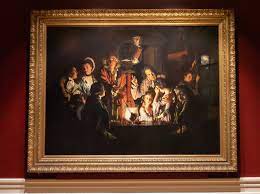 Two beloved paintings have swapped locations for a while. One went from California to London; the other, from London to California. No passports were involved. But the two museums where the paintings are housed — the Huntington Art Museum near Los Angeles, and London’s National Gallery — are welcoming visitors to see these masterpieces. The best known is a portrait of a rosy-cheeked fellow, maybe 15 years old, in a blue satiny suit with matching blue bows on his shoes.
 Today’s ‘stack will principally involve “housekeeping”. I said explicitly a week ago that the war in Ukraine has left me literally speechless, and I meant it. I was able to squeeze out some speech a week ago nonetheless, mostly by soldering together various fragments already written, by descending into mean-spiritedness in a vain effort to be funny, by “just saying whatever”. I can’t rely on the strategy of gonzo bricolage week to week, and so today I can only confess the stubborn silence of my “inner voice”, the homunculus who lives inside me and, when things are going right, dictates what I have to say.
 In a foundational
 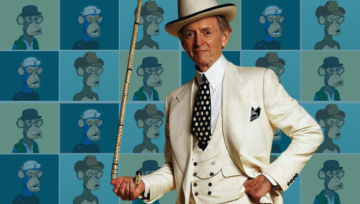 We are approaching the first anniversary of a landmark event in the art world. Although it seemed shockingly new last year, it represents the culmination of a trajectory described by Wolfe half a century ago: the de-materialization of art. On March 11th, 2021, a momentous auction was held by Christie’s. It was a dramatic departure from precedent, partly because
 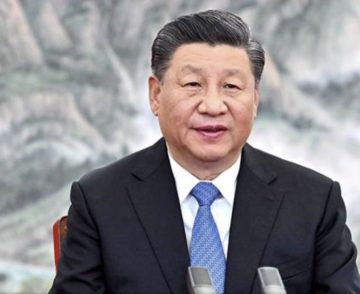 China can take the initiative in three key areas. For starters, Chinese President Xi Jinping should call for an emergency summit of G20 leaders, focused on achieving an immediate and unconditional ceasefire in this conflict and developing an agenda for a negotiated peace. The G20 is now the recognized forum for global action in the midst of crisis, having galvanized support among the world’s leading economies in
 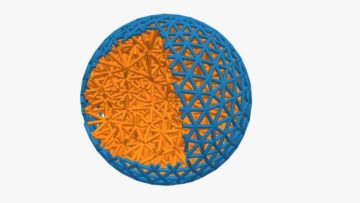 Physicists have discovered a new way to coat soft robots in materials that allow them to move and function in a more purposeful way. The research, led by the UK’s University of Bath, is described today in Science Advances. Authors of the study believe their breakthrough modeling on ‘active matter’ could mark a turning point in the design of robots. With further development of the concept, it may be possible to determine the shape, movement and behavior of a soft solid not by its natural elasticity but by human-controlled activity on its
 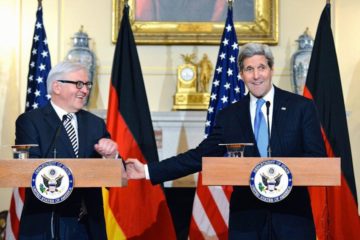 Nobody is talking about the blame that must be shouldered by the German government for the crisis and humanitarian disaster in Ukraine.