
Customs
The second farthest place that I have been
from anything that you will ever know is
in love. Like this, I mean. Like how when
condors fledge, they leap from icy cliffs then
fly. They ask: Destination? Purpose? I say, Yes,
I wish to have one. Let’s say “South.” Ushuaia,
the land of lagooned mountains, turquoise in
the snow. Let’s say I have a backup answer, but
we will never hear it because I’ll go and I’ll be
gone, like how you went, too—became a time
lapse of the clouds over El Chaltén: just some slow
recording on my phone. That was supposed to be
the time of my life. That was supposed to be when
we got closer. What even is the word explore? Flamingoes
in their craning lines, pink perforations in the sky and salt. Ñandu.
Receding glaciers. Perhaps we should just accept climate change
as a liberation of the water. We’re its savior, returning it to
its rightful salten home. And who was Magellan,
anyway? There are penguins with his name, but
only in colonial tongues, and I call them that. And
you sent me here to learn what a disaster the world is—
has always been because of men like me. See it
all, you said; and I signed on without considering
the finest print: sure to witness disaster. We’ll be
fighting over love and water in our lifetimes.
We’ll squander them like years, but
faster. And even when we have
none left, we’ll still believe
we have the answers.
by Benjamin Faro
from the Ecotheo Review
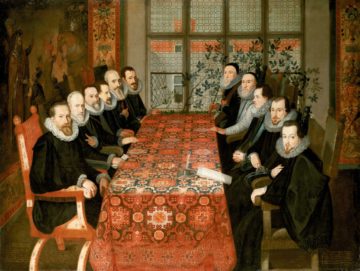
 Esfandyar Batmanghelidj in War on the Rocks:
 Ron Ivey in American Affairs Journal:
 I
I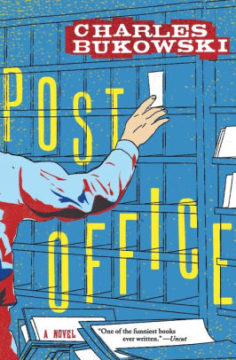 HALF A CENTURY AFTER the publication of Post Office (1971), how should we understand Charles Bukowski’s literary achievement? His publisher predicted that Bukowski would never reach a mainstream audience. And yet his books, including his poetry, have sold millions of copies in more than a dozen languages. Writing for The New Yorker in 2005, Adam Kirsch
  “Living in America during the Reagan years had the same disorientation as a texture dream,” writes David Wojnarowicz in
  One summer afternoon when I was 23 — this was in 1987 — I was twiddling the dial on the radio in the apartment I was subletting on 114th St. when I stumbled on a station that was unlike anything that I had ever heard before. They were in the middle of a story about the Appalachian Trail, profiling some of the people who were hiking its two thousand miles that year. The reporting was calm, patient, intelligent, allowing the subject to find its own shape, unfolding slowly, minute after minute, like the trail itself.
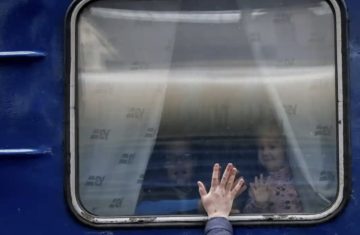 Here we are, in our ringside seats at a bloody circus, watching on TV and Twitter, trapped between infinite pity and rational self-interest. The tension between two opposing forces is unbearable. Pulling from one side, our horror at a senseless invasion, our wonder at the Ukrainian resistance, the unarmed villagers mobbing a Russian tank or feeding a
 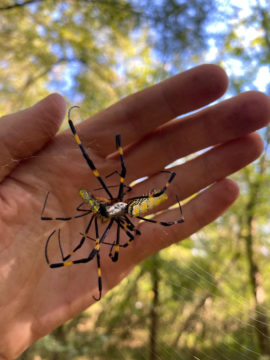 New research, published Feb. 17 in the
 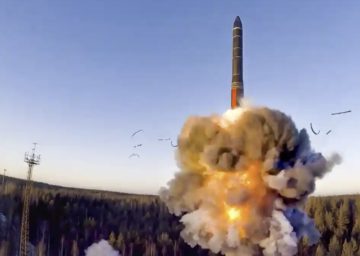 From 2012 to 2017, I worked as a US air force nuclear missile operator. I was 22 when I started. Each time I descended into the missile silo, I had to be ready to launch, at a moment’s notice, a nuclear weapon that could wipe a city the size of New York off the face of the earth.
 WHAT, THOUGH, IF
 THERE IS AN ALMOST CHARMING
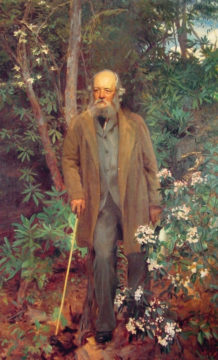 What would Frederick Law Olmsted (1822–1903) make of his works today, in the bicentennial year of his birth? No doubt he would be delighted by the survival and continued popularity of so many of his big-city parks, particularly Central Park and Prospect Park, but also parks in Boston, Chicago, and Montreal, as well as Buffalo, Detroit, Rochester, and Louisville. He might be surprised by the bewildering range of activities these parks now accommodate—not only boating and ice-skating, as in his day, but exercising, jogging, picnicking, and games, as well as popular theatrical and musical events. I don’t think this variety would displease him. After all, it was he who introduced free band concerts in Central Park, over the objections of many of his strait-laced colleagues. He would be pleased by the banning of automobiles; his winding carriage drives were never intended for fast—and noisy—traffic.
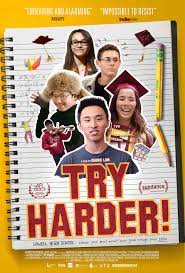 These anxieties about status are acutely felt among a cohort for whom going to college can seem a foregone conclusion. Asian Americans are often held up as a “model minority,” a group whose presence on campuses like Harvard or M.I.T., where forty per cent of incoming first-years self-identify as Asian American, far outpaces their percentage of the U.S. population. The figure of the model minority emerged in the fifties, a reflection of Cold War-era policies that were designed to attract highly educated immigrants from Asia. Over time, this stereotype ossified. American meritocracy held up the immigrant as proof that its rules were fair, and many high achievers were flattered to play along. Even though many of the gains for Asian Americans could be explained through policy—and even as studies showed how entire swaths of the community were left behind in poverty—the experience of being Asian in America has been rigidly defined by a framework of success and failure. As the scholar erin Khuê Ninh argues in “