
Sam Lansky in Time Magazine:
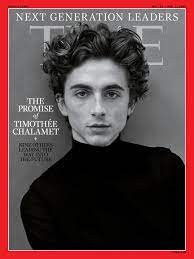 If Chalamet—whom most people call, affectionately, Timmy—sees himself as off-center, so far it’s working. He’s back in New York for the Met Gala, which he’s co-chairing alongside Billie Eilish, Naomi Osaka and Amanda Gorman. (He walked the red carpet in a Haider Ackermann satin tuxedo jacket and sweatpants.) On Oct. 22, he’ll appear in two films released on the same day. There’s Wes Anderson’s ensemble The French Dispatch, which earned raves out of Cannes, in which Chalamet appears opposite Frances McDormand as a revolutionary spearheading a student liberation movement. He also stars as royal Paul Atreides in Denis Villeneuve’s towering sci-fi epic Dune, an adaptation of Frank Herbert’s beloved 1965 novel, budgeted at a reported $165 million and slated for a massive worldwide release.
This makes it a big moment for Chalamet, who is not just an actor who works often, although he does, and not just a celebrity, although he is one, but a movie star in the old-fashioned sense of the word. (More on this later.) He’s now the rare performer who, at 25, studios are betting can help launch a blockbuster franchise and a festival hit on the same day, with a pandemic still rumbling out of view. With great power, of course, comes great responsibility—including a spotlight on everything from his personal life (he’s been linked to actor Lily-Rose Depp) to his activism (he’s outspoken on climate change) to what he wears, whether on a red carpet or dashing to the bodega. The latter runs the gamut from embroidered joggers to tie-dye overalls to space-age suiting—or, say, a Louis Vuitton hoodie spangled with 3,000 Swarovski crystals. (All this has led GQ to crown him one of the best-dressed men in the world.)
More here.
 Konstantin Olmezov in n+1:
 Rajan Menon in Boston Review:
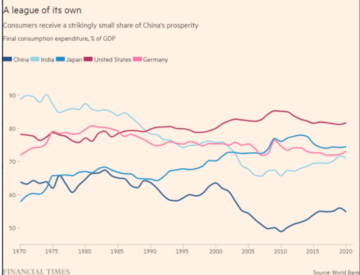 Adam Tooze debates Robert Armstrong and Ethan Wu on whether China can make the adjustments necessary to sustain growth.
  James Meadway in Sidecar:
 But as Green says, and his book splendidly demonstrates, “what has disappeared beneath sea can rebuild itself in the mind”. Since the 13th century, when the Suffolk coastline by Dunwich began to be seriously gnawed by the waves, thousands of settlements have disappeared from our maps. It is the untold story of these lost communities – “Britain’s shadow topography” – that has become Green’s obsession. He disinters their rich history and reimagines the lives of those who walked their streets, revealing “tales of human perseverance, obsession, resistance and reconciliation”. By doing so, he makes tangible the tragedy of their loss and the threat we all face from the climate crisis on these storm-tossed islands.
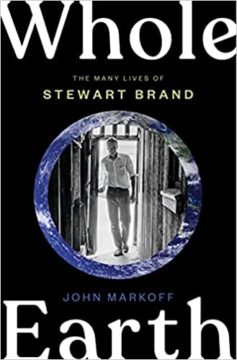 In 1966, Stewart Brand was an impresario of Bay Area counterculture. As the host of an extravaganza of music and psychedelic simulation called the Trips Festival, he was, according to
 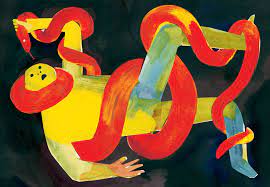 Carl Erik Fisher’s new book, “The Urge: Our History of Addiction,” follows two journeys: One is a memoir of his own addiction to alcohol (he grew up with two alcoholic parents), and the other is a detailed overview of the approaches that have been used to understand, control and treat addiction over time. This last includes the relatively contemporary idea of “recovery,” which suggests that it is possible, with the right medications, such as naloxone, buprenorphine or methadone, and thoughtful care, to break its hold.
 Think about a time when you changed your mind. Maybe you heard about a crime, and rushed to judgment about the guilt or innocence of the accused. Perhaps you wanted your country to go to war, and realise now that maybe that was a bad idea. Or possibly you grew up in a religious or partisan household, and switched allegiances when you got older. Part of maturing is developing intellectual humility. You’ve been wrong before; you could be wrong now.
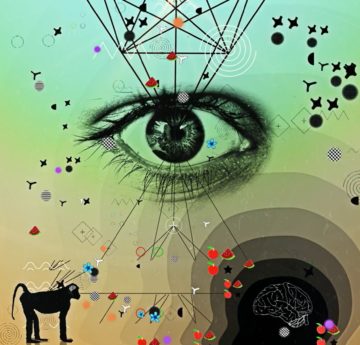 During a workshop last fall at the Vatican, Stanislas Dehaene, a cognitive neuroscientist with the Collège de France, gave a presentation chronicling his quest to understand what makes humans — for better or worse — so special.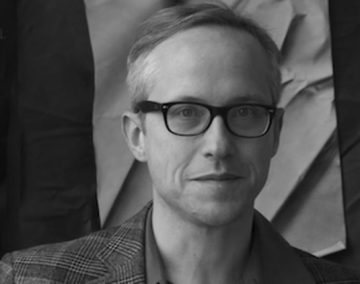
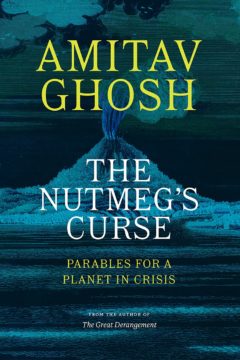 What often gets left out of chronicles about the Banda Islands, of which there are not many to begin with, are the perspectives of Bandanese survivors of the 1621 genocide, and their efforts to remember the past through stories and song. As Ghosh writes, ‘the modern gaze sees only one of the nutmeg’s two hemispheres… [it] is merely an inert object, a planet that contains no intrinsic meaning, and no properties other than those that make it a subject of science and commerce.’ THE NUTMEG’S CURSE shows us the hemisphere cast in a penumbra. Throughout the book, the chiaroscuro effect is extended to certain words as well, like ‘nature’, whose Western conception, Ghosh observes, ‘is the key element that simultaneously enables and conceals the true character of biopolitical warfare.’ The Bandanese have a very different relationship to nature, they view their islands as ‘places of dwelling that were enmeshed with human life in ways that were imaginative as well as material.’ Ghosh quotes the Indigenous thinker Max Liboiron, for whom land is ‘the unique entity that is the combined living spirit of plants, animals, water, humans, histories, and events.’ This is a ‘vitalist’ way of seeing the world that recognises the agency of material things. It’s also a view that any reader of Ghosh’s work implicitly senses. For those new to his writing, THE NUTMEG’S CURSE is not just a ‘parable for planetary crisis’, but also, albeit to a lesser extent, a kind of onboarding manual for his Ibis triple-decker.
 Let me start by asking, Why a perfume? Why not several? A lot of people have perfume wardrobes. You can have a depersonalized relationship to perfume and just ask, How do I want to smell, in a performative way?
 AS PRIVATE SPACE
  All pandemics end eventually. But how, exactly, will we know when the COVID-19 pandemic is really “over”? It turns out the answer to that question may lie more in sociology than epidemiology.