
Tanya Lewis in Scientific American:
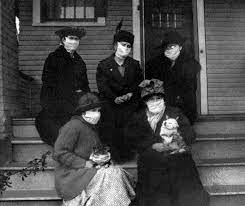 All pandemics end eventually. But how, exactly, will we know when the COVID-19 pandemic is really “over”? It turns out the answer to that question may lie more in sociology than epidemiology.
As the world passes the second anniversary of the World Health Organization’s declaration of the COVID pandemic, things seem to be at a turning point. COVID cases and deaths are seeing sustained declines in much of the world, and a large percentage of people are estimated to have some immunity to SARS-CoV-2, the virus that causes the disease, through infection or vaccination. The Centers for Disease Control and Prevention has released new risk metrics that suggest people in many parts of the U.S. no longer need to wear a mask, and mayors, governors and other officials have been dropping mask and vaccine mandates in a push to get back to normal. Although the COVID-causing virus, SARS-CoV-2, is likely to always circulate at some level, there is a growing belief among some people—though not all—that the pandemic’s acute phase may be subsiding.
“I believe that pandemics end partially because humans declare them at an end,” says Marion Dorsey, an associate professor of history at the University of New Hampshire, who studies past pandemics, including the devastating 1918 influenza pandemic. Of course, she notes, there is an epidemiological component, characterized by the point at which a disease still circulates but is no longer causing major peaks in severe illness or death. This is sometimes referred to as the transition from a pandemic disease to an endemic one. But for practical purposes, the question of when this transition occurs largely comes down to human behavior.
More here.
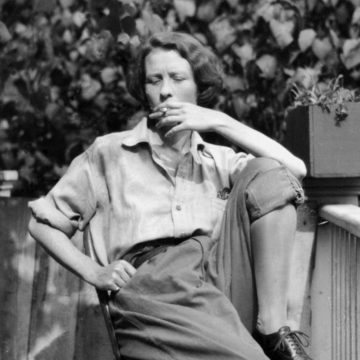 On July 19, 1923, before
 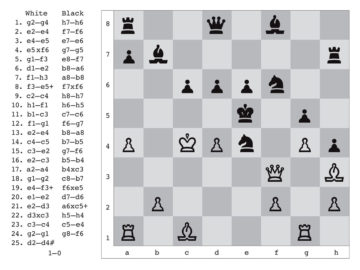 Stimulated by Levi’s juxtaposition, and motivated by the possibilities of extending an Oulipian sensibility into the sphere of literary criticism (OuCriPo?), the authors set out to develop a means by which a given novel could express itself as a game of chess. Initial success here led to expanded ambition, since there was nothing to stop us from elaborating our modest analytic protocol into a full-fledged “engine” that would permit works of literature to confront one another on the chess board. We have advanced this project to what we think of as a workable tool for a certain sort of ludic literary investigation, and we present it here for the first time, together with some preliminary results drawn from several thousand games we have run to date. The current version of the program is playable on the Cabinet website [see end of article—Eds.], and we would be delighted if it proved useful to those wishing to pursue this or related lines of inquiry.
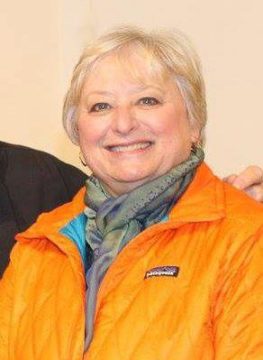 Ella Davis Hudson remembers stacking bricks to make a kitchen to play house. The next thing she knew, the 9 year old was running down the driveway, blood streaming from the gash above her eye.
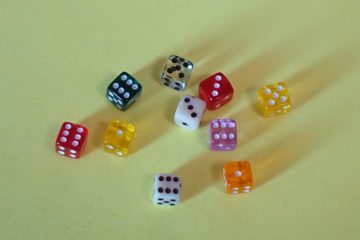 The classic explanation of the gambler’s fallacy, proposed exactly fifty years ago by Amos Tversky and Daniel Kahneman, describes the fallacy as a cognitive bias resulting from the psychological makeup of human judgment. We will show that the gambler’s fallacy is not in fact a psychological phenomenon, but has its roots in the counter-intuitive mathematics of chance.
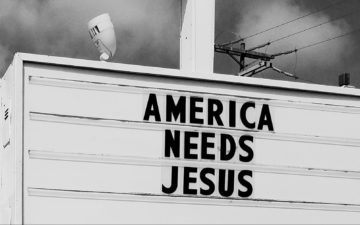 On August 20, 2020, the last day of the Democratic National Convention, Sister Simone Campbell, the executive director of NETWORK Lobby for Catholic Social Justice, delivered a
  Dear Elena Ferrante, In your first essay/lecture you twice describe yourself as timid, but your work is extremely brave. I assume this is because the “I” that you describe as timid or lacking courage disappears and becomes many other “I”s as you write. You quote from a conversation between
  Almost one-third of more than 1,000 bodies taken to a morgue in Lusaka in 2020 and 2021 tested positive for SARS-CoV-2, implying that many more people died of COVID-19 in Zambia’s capital than official numbers suggest
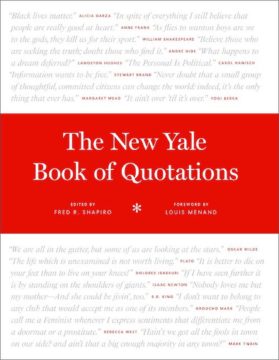 What are the most authoritative quotation books? Two come immediately to mind: Bartlett’s Familiar Quotations (17th ed. 2002), to be released in an 18th edition later this year; and The Oxford Dictionary of Quotations (eighth ed. 2014).
 In the United States more than 90 percent of federal voting districts have been drawn in such a way that their election outcomes are more or less predetermined. Only
  Six boxes of wheat seed sit in our cold store. This is the first time in a decade that my team has not been able to send to Ukraine the improved germplasm we’ve developed as part of the Global Wheat Program at the International Maize and Wheat Improvement Center in Texcoco, Mexico. International postal and courier services are suspended. The seed had boosted productivity year on year in the country, which is now being devastated by war.
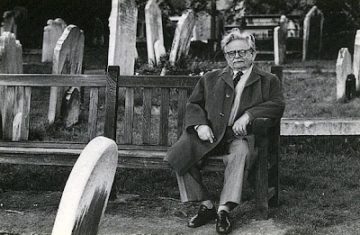 Today I decided that I will record thoughts against death as they happen to occur to me, without any kind of structure and without submitting them to any tyrannical plan. I cannot let this war pass without hammering out a weapon within my heart that will conquer death. It will be tortuous and insidious, perfectly suited to it. In better times I would wield it as a joke or a brazen threat. I think of the act of slaying death as a masquerade. Employing fifty disguises and numerous plots is how I’d do it. But now death has switched masks yet again. No longer content with its ongoing daily victory, death grabs whatever it can. It riddles the air and the seas; whether the smallest or the largest, it doesn’t matter, for it wants it all, and it has no time for anything else. Nor do I have any time. I have to nab it wherever I can, nail it here and there in first-rate sentences. At the moment I cannot house it in any coffins, much less embalm it, much less lay the embalmed to rest in a gated mausoleum.
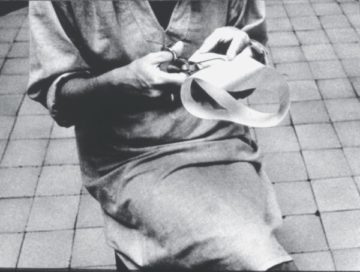 It is interesting to see how insistently Clark describes her artistic practice as oriented toward an “ethico-religious” goal—and not just to the making of “one surface or another”—as there are few signs of that central preoccupation in her earlier writings. This confession, I think, should be read as an exercise in self-criticism. In confronting Mondrian, Clark appears to be confronting herself, although at the same time she seems to expect recognition from a person she considers to be a kindred spirit—another mystic. To describe Mondrian as a mystic is of course not uncommon. Yet the term has been used rather loosely, either to refer to Mondrian’s interest in esotericism (especially the Theosophical teachings of Madame Blavatsky) or, more generally, to the sense of spirituality that infused many early projects of abstraction. In her letter, however, Clark invokes a rather different notion of mysticism. Neither school nor doctrine is involved in it but rather a particular kind of experience.
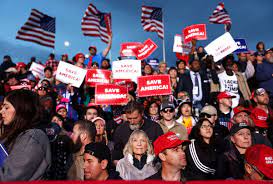 As the new Faith in America survey by Deseret News & Marist College highlights, the basic understanding of the role of religion in a secular democracy has become so polarized that 70% of Republicans believe that religion should influence a person’s political values, where as only 28% of Democrats and 45% of independents share that view. Republicans and Democrats, liberals and conservatives, also do not consume the same sources of information about news and politics. Conservatives now inhabit their own self-created media echo chamber, which functions as a type of lie-filled and toxic closed episteme and sealed-off universe. The creation of such an alternate reality is an important attribute of fascism, in which truth itself must be destroyed and replaced with fantasies and fictions in support of the leader and his movement.