
Enjoying the content on 3QD? Help keep us going by donating now.
Category: Recommended Reading
Monday, July 28, 2025
When Fact-Checking Meant Something
Susan Choi in The Yale Review:
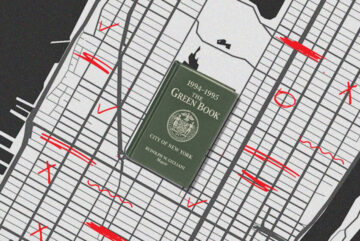 What i always say is that I wasn’t a very good checker. I don’t mean I made mistakes—mistakes being, in fact-checking, failing to catch someone else’s mistakes. I mean that the things I checked weren’t serious or difficult, that generally, the bar was pretty low. This was at Tina Brown’s New Yorker in the mid-1990s, a time when the magazine was trying to raise its own heart rate. The idea was to make headlines, not just cultural history. But when we had a piece whose publication might result in a lawsuit or an international incident, or a person’s vindication or ruination, or a significant and unanticipated paradigm shift on a matter of collectively agreed-upon importance, such as the Holocaust or Shakespeare, I wasn’t the first checker anyone thought of. My boss—a brilliant, kind, and fair man I still count as a friend—tended to pitch me softballs, an expression I’ve never understood because I didn’t check sports articles either, being equally ignorant about every sport. I tended to check culture pieces: reconsiderations of, say, Maria Callas, for which there was no “peg”—an occasion in the real world that dictated when it should publish—beyond the opera-loving author’s strong feeling that Callas was owed some attention. This was the sort of piece that might long remain in unscheduled limbo, allowing me to bone up on Callas, about whom I knew nothing.
More here.
Enjoying the content on 3QD? Help keep us going by donating now.
AI Comes Up with Bizarre Physics Experiments, But They Work
Anil Ananthaswamy in Quanta:
 It took months of effort to understand what the AI was doing(opens a new tab). It turned out that the machine had used a counterintuitive trick to achieve its goals. It added an additional three-kilometer-long ring between the main interferometer and the detector to circulate the light before it exited the interferometer’s arms. Adhikari’s team realized that the AI was probably using some esoteric theoretical principles that Russian physicists had identified decades ago to reduce quantum mechanical noise. No one had ever pursued those ideas experimentally. “It takes a lot to think this far outside of the accepted solution,” Adhikari said. “We really needed the AI.”
If the AI’s insights had been available when LIGO was being built, “we would have had something like 10 or 15% better LIGO sensitivity all along,” he said. In a world of sub-proton precision, 10 to 15% is enormous.
More here.
Enjoying the content on 3QD? Help keep us going by donating now.
How do AI images/videos actually work?
Enjoying the content on 3QD? Help keep us going by donating now.
Unmasking the CIA
John Simpson in The Guardian:
 In 1976 when we were both based in Brussels, my BBC mentor, the great Charles Wheeler, came back to the office from a grand US embassy party one evening and remarked: “The cleverest and most entertaining people at these things are always CIA. Makes it all the harder to understand why they get everything wrong.” An exaggeration, of course, but one with a degree of truth to it. Why has an organisation with huge amounts of money at its disposal, a record of recruiting the brightest and the best, and the widest of remits, failed to notch up a better record? It’s true that we may not know about many of the CIA’s successes. But we know about a lot of its failures, and some of them have marked US history ineradicably.
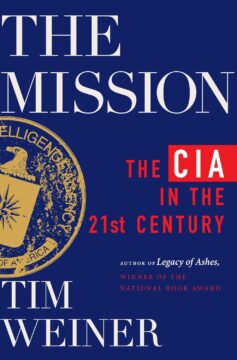
In The Mission, Tim Weiner, whose reporting on the CIA in the New York Times was always essential reading, and whose subsequent books on the US intelligence community have a place on the shelves of anyone interested in international affairs, provides a variety of answers to this essential question.
More here.
Enjoying the content on 3QD? Help keep us going by donating now.
Fiction and the Fantastic: ‘Frankenstein’ by Mary Shelley
Enjoying the content on 3QD? Help keep us going by donating now.
Svetlana Alpers: Is Art History?
Julia Friedman at The Hedgehog Review:
 Published by Hunters Point Press last year, the writings collected in Is Art History? cover seven decades of Alpers’s prolific professional life. Arranged chronologically, from a long scholarly article first published in 1960 to a book review that came out in 2023, the compilation offers a long-distance view of a storied career. The book is clearly a labor of love. It is hefty, at 420 pages of text plus color plates, complete with a red cloth cover with embossed gold lettering and a silky gray ribbon bookmark. The margins are extra wide (a rarity today). In addition to the color plates compiled at the end of the volume, there are black-and-white illustrations in the margins, for quick reference. This is one of many nods to the classic art history texts of yore. The foreword is by Barney Kulok, a young photographer who collaborated with Alpers, and the introduction is by her former student, now professor of art history at Stanford University, Richard Meyer. The absence of contributions by her colleagues, friends, or coauthors (who included the likes of John Berger, Michael Podro, Richard Wollheim, and Michael Baxandall), is a sad reminder that, as Alpers remarks: “Everyone I would have written for is dead.”
more here.
Enjoying the content on 3QD? Help keep us going by donating now.
Malcolm-Jamal Warner and the Lessons of Theo Huxtable
Vinson Cunningham at The New Yorker:
 You could say all of this in another way: Theo Huxtable was a nicely realized character but also a lofty ideal. What he meant was too much for any real person to carry around. Malcolm-Jamal Warner seemed miraculously able to pull it off. He’d been famous and highly visible at an alarmingly young age, but, unlike many other former child stars, he never seemed to feel much rancor about the experience, or resentment about lugging pure-minded Theo around with him for the rest of his life.
When he played roles in shows like “Suits,” “The Resident,” and “Malcolm and Eddie,” you couldn’t help but think about Theo. But that wasn’t a bad thing: it only meant that the archetype that the earlier character had prodded into being was now commonplace in all kinds of representations of reality—that Theo had done the impossibly difficult cultural work of affixing a face upon a new, then suddenly ubiquitous, kind of person.
Warner helped this process along by always comporting himself with an ambassadorial cheer. He knew what he meant. One of “The Cosby Show” ’s unspoken assertions—now much more controversial than in the eighties, when the show premièred—was that polished personal presentation was part of a Black man’s arsenal of tools to survive an unpredictable world.
more here.
Enjoying the content on 3QD? Help keep us going by donating now.
RNA Is the Cell’s Emergency Alert System
Dan Samorodnitsky in Quanta:
 When the sun shines on your skin, what does it hit? When it causes a burn, what went wrong?
Underneath that pain is your cells’ emergency response to DNA damage. When a hazard, such as ultraviolet light, ionizing radiation or certain chemicals, damages DNA, the cell needs to respond at breakneck speed. Ideally it either repairs the damage to its genomic information repository, or else sacrifices itself through a controlled cell death process. If it doesn’t move fast enough, it risks the more dangerous outcome of death by necrosis — an explosive, uncontrolled death that damages its neighbors — or passing mutated DNA to its descendants, which could develop into cancer.
More here.
Enjoying the content on 3QD? Help keep us going by donating now.
Smart Biology on a Budget: Why Researchers Should Leverage AI to Rethink Experimental Design
Alpita Kulkarni in The Scientist:
 Most biology labs today—particularly smaller or early-career groups and those outside major funding hubs—face a tough reality: shrinking budgets, rising costs, limited access to cutting-edge technologies, and mounting pressures to publish. The challenge isn’t just keeping pace with innovation—it’s staying in the game at all. In this climate, simulation-first approaches are a powerful equalizer. By allowing scientists to test biological hypotheses computationally before committing to costly experiments, these tools enable smart science even on a tight budget.
Constraint often drives creativity. One strategy gaining momentum is AI-guided predictive modeling, which relies on data-driven tools that simulate biological behavior to unlock new insights. Built using advanced techniques like generative modeling (which simulates how a cell might respond to genetic or environmental changes) and probabilistic inference (which estimates the likelihood of different outcomes), these models are reshaping how we interpret complex data.
More here.
Enjoying the content on 3QD? Help keep us going by donating now.
Sunday, July 27, 2025
Rebuilding the Kingdom
Colin Powers in Phenomenal World:
Saudi Arabia’s Crown Prince Mohammed bin Salman first announced Saudi Vision 2030 (SV2030), an economic diversification-cum-social reform plan, during an interview with Al Arabiya in April 2016. SV2030 vowed to transform Saudi Arabia, proposing fantastical ventures into the future while aggressively deploying capital abroad and opening the domestic economy up via debt issuance, investment code reform, contracting, and capital market reform. Knock-on effects for the world economy were imminent.
Facing volatility in the commodities market and growing financial vulnerabilities, the oil-dependent nation has since embarked on an effort to remake itself as a global economic powerhouse. Alongside ever expanding flows of crude to the east and deepening investment ties with China, Saudi Arabia’s moves on the home front looked primed to tilt the axis of global capital accumulation. The nine years since SV2030’s announcement have seen gains across a number of domains. The country has already cleared original targets for female labor-force participation and tourism. It is also likely to meet its goals in the capital markets. Courtesy of Aramco’s limited IPO, the Saudi Exchange now ranks as the ninth largest stock market in the world by market capitalization and the third largest among emerging markets.
SV2030 has also prompted an enormous wave of construction in its bid to reshape the country’s built environment. Despite its population of just 30 million, Saudi Arabia is poised to host the largest construction market in the world by 2028. Neom—the Giga Project being conjured out in the western province of Tabuk along the northern shores of the Red Sea—is alone absorbing 20 percent of the global steel supply. The plan’s housing program aims to achieve 70 percent Saudi national home ownership in 2030; as of 2024, official statistics estimate ownership in the range of 62–65 percent, up from 47 percent in 2016. Most importantly as pertains to SV2030’s overarching goals, the non-oil economy has expanded at a greater pace than the oil economy in recent years.
More here.
Enjoying the content on 3QD? Help keep us going by donating now.
Why Israel’s starvation of Gaza is exceptional in a global context
Adam Tooze in Chartbook:
For many months, it has been beyond reasonable doubt that the Israeli government, the Israeli military, sections of Israeli politics and society as well as their aiders and abetters abroad, have been deliberately starving the population of Gaza with a view to forcing the population either to flee or to face intensifying misery and ultimately an agonizing death. There is clear evidence of deliberate intent going back to 2023. This clearly warrants charges of genocide.
Those who style themselves “defenders of Israel” will be quick to insist that, in fact, there is a feeding operation in Gaza. But, as the famine historian and aid expert Alex de Waal demonstrates in powerful piece in the Guardian, “Israel’s food points are not just death traps – they’re an alibi … The Gaza Humanitarian Foundation system is like standing at the edge of a big pond and feeding the (starving) fish by throwing breadcrumbs. Who gets to eat its rations?” Air drops of food, are simply more of the same.
Ethnic cleansing by means of starvation is the actual policy.
Anyone interested in the history of famine as a political weapon would do well to consult de Waal’s harrowing history on the the topic.
As he shows, deliberate starvation, which was at the heart of Raphael Lemkin’s original discussion of genocide, born out of the Nazi occupation of Poland in the 1940s, was subsequently marginalized in our understanding of 20th-century horror.
More here.
Enjoying the content on 3QD? Help keep us going by donating now.
The General Theory of Enshittification
Paul Krugman in his newsletter:
Everyone loves enshittification. Not the thing itself, of course. But Cory Doctorow’s neologism was an instant hit, neatly encapsulating the public’s growing disappointment, sometimes bordering on rage, with what was happening to internet platforms. His pithy summary of the process was also brilliant:
Here is how platforms die: first, they are good to their users; then they abuse their users to make things better for their business customers; finally, they abuse those business customers to claw back all the value for themselves. Then, they die.
I argued earlier this week that enshittification has a lot to do with the way the tech industry has fallen out of public favor:

Source: Gallup
And the increasingly anti-democratic rage of tech bros is, I’d argue, in part driven by their awareness that people don’t love and admire them the way they used to, and their belief that they should still be the culture heroes they once were.
But without detracting from the brilliance of Doctorow’s discussion, I’ve become convinced that his analysis is too narrow, focusing only on certain kinds of social platforms. In fact, the basic logic of enshittification — in which businesses start out being very good to their customers, then switch to ruthless exploitation — applies to any business characterized by network effects.
More here.
Enjoying the content on 3QD? Help keep us going by donating now.
Peter Phillips (1939 – 2025) Pop Artist
Enjoying the content on 3QD? Help keep us going by donating now.
Chuck Mangione (1940 – 2025) Flugelhorn Player and Composer
Enjoying the content on 3QD? Help keep us going by donating now.
Erica Chenoweth’s data shows how—and when— authoritarians fall
Lydialyle Gibson in Harvard Magazine:
 In the weeks and months after Donald Trump’s second inauguration, the number “3.5 percent” kept showing up—like a mantra, or maybe a prayer—in different corners of the internet. It was repeated in social media posts, long Reddit threads, online newsletters, political podcasts, videos, and the websites of activist organizations. “The Hopeful Math for Saving Democracy,” proclaimed a headline in Ms. Magazine. In his newsletter, independent journalist Dan Froomkin asked, “Is there a magic number for the resistance?”—and answered with that familiar figure.
A decade ago, academic research found that authoritarian governments around the world have almost always been forced to yield when mass-resistance campaigns manage to mobilize 3.5 percent of a country’s population during a “peak” event. In the activist community, one organizer told me, it’s become “kind of a golden rule.”
More here.
Enjoying the content on 3QD? Help keep us going by donating now.
The Best and Worst Things to Say to Someone Just Diagnosed With Cancer
Angela Haupt in Time Magazine:
 When Katie Thurston was diagnosed with Stage IV metastatic breast cancer earlier this year, at age 34, people kept telling her they knew someone with the same diagnosis. Solidarity, you might think. A helpful way to relate. Not exactly: Their friend or family member had died. This scenario is “pretty recurring,” says Thurston, who starred on season 17 of The Bachelorette, and while people have good intentions—they want you to know they have experience with what you’re going through—the remark doesn’t land well. “We understand that death is a possibility in this diagnosis,” she says. “I don’t need to hear that.”
Thurston has been on the receiving end of a lot of outreach and opinions since she shared her breast cancer diagnosis—from strangers online, as well as people she knows in real life. While death-related stories are particularly painful, there are plenty of other comments that fall short of helpful. Communication slip-ups in this area are common, experts say. When a loved one is diagnosed with cancer, people often struggle to figure out how to express their support, leading them to trip over their words or hold back from saying anything at all.
More here.
Enjoying the content on 3QD? Help keep us going by donating now.
Cleo Laine (1927 – 2025) Singer and Actor
Enjoying the content on 3QD? Help keep us going by donating now.
Hulk Hogan (1953 – 2025) Professional Wrestler
Enjoying the content on 3QD? Help keep us going by donating now.
Gilda Cruz-Romo (1940 – 2025) Opera Soprano
Enjoying the content on 3QD? Help keep us going by donating now.