
Paulina Rowińska in Quanta:
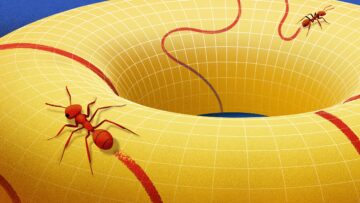 Standing in the middle of a field, we can easily forget that we live on a round planet. We’re so small in comparison to the Earth that from our point of view, it looks flat.
The world is full of such shapes — ones that look flat to an ant living on them, even though they might have a more complicated global structure. Mathematicians call these shapes manifolds. Introduced by Bernhard Riemann in the mid-19th century, manifolds transformed how mathematicians think about space. It was no longer just a physical setting for other mathematical objects, but rather an abstract, well-defined object worth studying in its own right.
This new perspective allowed mathematicians to rigorously explore higher-dimensional spaces — leading to the birth of modern topology, a field dedicated to the study of mathematical spaces like manifolds. Manifolds have also come to occupy a central role in fields such as geometry, dynamical systems, data analysis and physics.
More here.
Enjoying the content on 3QD? Help keep us going by donating now.
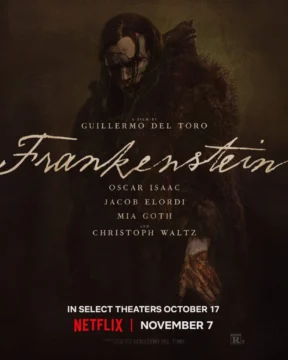 GUILLERMO DEL TORO
 From the sparse scatter of documents testifying to the life of Vermeer, many of them forbiddingly brief or boring or purely legal, Graham-Dixon constructs a compelling story. But it is a story – like those fictions which Vermeer’s paintings, with that mysterious charge of meaningfulness, have frequently inspired. Here, narrative drive is supplied by Vermeer’s supposed enmity with his mother-in-law, Maria Thins, a Catholic woman who, though she at first refused to condone her daughter’s marriage to a Protestant, thawed sufficiently to allow him and his family to live in her house. Facts which suggest Vermeer accommodated himself to the Catholic faith, an assumption which has informed much recent scholarship, are explained away as the triumphs of Maria. Two of the Vermeers’ many children were called Ignatius and Franciscus and another sent away to train for the priesthood – Graham-Dixon sees this as ‘a resounding victory’ for Maria’s ‘militant Catholicism’ over Vermeer’s Collegiant will. The accoutrements of a Catholic household chapel which appear in the inventory of his goods drawn up after his death were only acquired ‘through gritted teeth’. Early modern confessional hostilities are still being fought in the book’s prose: the Catholics ‘were all in it together’; Vermeer was ‘living in a nest of Jesuits’.
 Twenty years ago, in November of 2005, Duke University Press published my first book: “
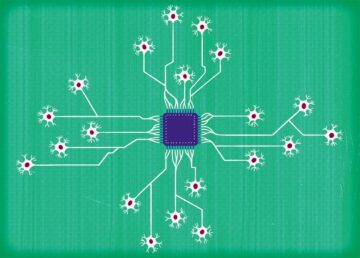 In a town on the shores of Lake Geneva sit clumps of living human brain cells for hire. These blobs, about the size of a grain of sand, can receive electrical signals and respond to them — much as computers do. Research teams from around the world can send the blobs tasks, in the hope that they will process the information and send a signal back.
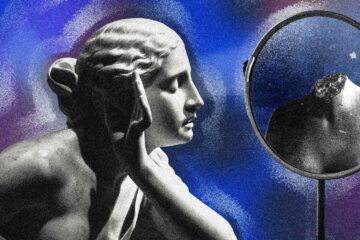 Turning to philosophy to learn how to live is nothing new, of course. But the explicitly inspirational and instructional valence of much that appears today under that heading, even from academic presses, is striking — as is the apparent consensus that the central task of philosophy is to guide seekers to a greater acceptance of imperfection and insignificance. Sometimes these books focus on a particular school of philosophy, giving readers an “-ism” — existentialism, Buddhism, Taoism, and above all Stoicism, now practically a genre unto itself — with which to identify. Others staple together eclectic smatterings of received ideas into less partisan surveys on how to cope with failure and disillusionment.
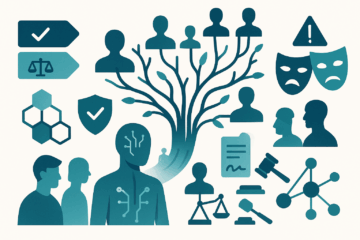 The emergence of agentic Artificial Intelligence (AI) is set to trigger a “Cambrian explosion” of new kinds of personhood. This paper proposes a pragmatic framework for navigating this diversification by treating personhood not as a metaphysical property to be discovered, but as a flexible bundle of obligations (rights and responsibilities) that societies confer upon entities for a variety of reasons, especially to solve concrete governance problems. We argue that this traditional bundle can be unbundled, creating bespoke solutions for different contexts. This will allow for the creation of practical tools — such as facilitating AI contracting by creating a target “individual” that can be sanctioned — without needing to resolve intractable debates about an AI’s consciousness or rationality. We explore how individuals fit in to social roles and discuss the use of decentralized digital identity technology, examining both “personhood as a problem”, where design choices can create “dark patterns” that exploit human social heuristics, and “personhood as a solution”, where conferring a bundle of obligations is necessary to ensure accountability or prevent conflict. By rejecting foundationalist quests for a single, essential definition of personhood, this paper offers a more pragmatic and flexible way to think about integrating AI agents into our society.
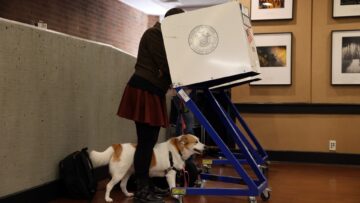 Questions about voting patterns have long been the object of inquiry from thinkers across a breadth of fields, and especially in social science domains like
 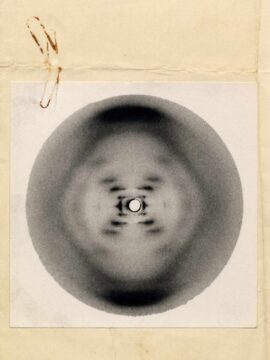 The discovery of the structure of DNA in the early 1950s is one of the most riveting dramas in the history of science, crammed with brilliant research, naked ambition, intense rivalry and outright deception. There were many players, including Rosalind Franklin, a wizard of X-ray crystallography, and Francis Crick, a physicist in search of the secret of life. Now, with
  A couple of weeks before his
 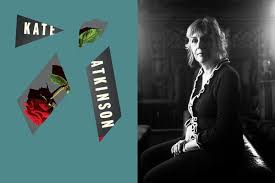 You know instantly when you’re in Kate Atkinson’s world. It’s dark, slightly Gothic, mordantly funny, keenly observed, highly textured and always full of surprises. Atkinson my not be easy to characterize — she’s a master of every genre she tries — but one thing’s for sure: You’ll be completely absorbed.