
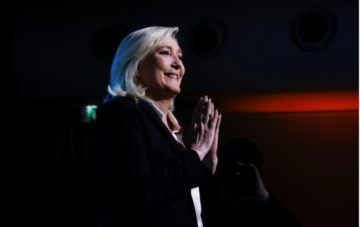
 James McAuley in The New Yorker (Photograph by Rit Heize / Xinhua / Getty):
In the early spring of 2017, before France’s previous Presidential election, I took a taxi from my apartment in Paris to Saint-Cloud, a wealthy suburb to the west of the city. I remember the feeling of dread as the car crossed the Seine, the quaint church set into a hillside overlooking the urban sprawl below. I was a twenty-eight-year-old reporter, and Jewish, about to visit the home of Jean-Marie Le Pen, one of the country’s most notorious Holocaust deniers and far-right agitators.
Jean-Marie’s daughter, Marine, was running in the French Presidential election for the second time that year, and I was there to profile him for the Washington Post. On April 24th, she will again face off against Emmanuel Macron, in the final round of the vote. The two sparred in a lengthy debate on April 20th, during which Macron hammered Marine for her admiration of Vladimir Putin and reliance on a Russian bank, and she attacked him for ignoring the plight of ordinary citizens. The far right has not been this close to power in France since 1944. Marine has styled herself as a candidate of almost grandmotherly compassion, focussing on the rising cost of living and posing for photos with her cats. Although she is likely to lose, she has already won the battle for legitimacy: polls project her winning forty-four per cent of the vote, which would be her highest share in any of her three Presidential campaigns. She is increasingly popular with working-class and lower-middle-class voters, who say that she has listened to their economic concerns while Macron, preoccupied by the war in Ukraine, has barely bothered to campaign.
More here.
 Alex Yablon , Nicholas Mulder, Javier Blas in Phenomenal World:
 In “Indelible City,” Louisa Lim charts how her own identity as a Hong Konger had never been so clear until China’s brutal attempts to crush pro-democracy protests in 2019. She had been feeling increasingly alienated from a densely populated place where extreme inequality, soaring costs and shrinking real estate made “the very act of living” — even for “still very privileged” people like her — completely exhausting. Lim’s experience as a reporter amid a swell of protesters changed that. She could feel her face flush and her throat well up — not from the tear gas, of which there was plenty, but from a surge of emotions: “I’d fallen in love with Hong Kong all over again.”
 JS: What do you see as the differences between academic writing and other forms of writing?
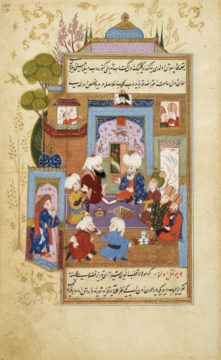 The notion of fana’, commonly translated from Arabic as annihilation or obliteration, provides a potential point of contact between Sufi practices and Buddhist notions of nirvana, a word which, in Sanskrit, derives from the type of extinction one sees when one snuffs out the flame of a candle. Are there similarities between these notions, ones which might be constructed without radically oversimplifying the issues at hand? On the surface, ‘annihilation’ and ‘extinction’ might seem similar. But what a Buddhist extinguishes is craving, while what a Sufi annihilates is themselves before God. And yet, as will become clear, there are crucial parallels that can help us see the ways in which what these traditions have to teach us today have crucial resonances within and through their very real differences.
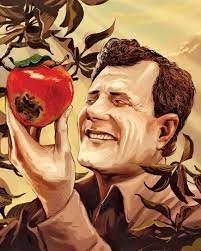 By the time I arrived in Yamhill, Oregon,
  Over the last few years, an
 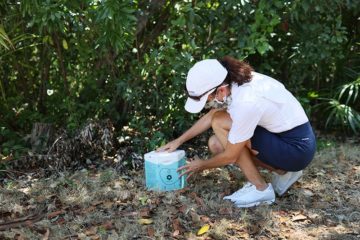 Researchers have completed the first open-air study of genetically engineered mosquitoes in the United States. The results, according to the biotechnology firm running the experiment, are positive. But larger tests are still needed to determine whether the insects can achieve the ultimate goal of suppressing a wild population of potentially virus-carrying mosquitoes.
 The war has exposed Russia as a conventional also-ran bristling with 4,500 nuclear warheads, but not a great power. The war has also unleashed a number of complications: it has heightened the dependency of Russia’s economy on energy exports; jeopardized those exports to the lucrative European market; affected Russia internally by making it more autocratic and opening a new brain drain; generated remarkable solidarity in the West, including a probable further expansion of NATO in the Nordic region and deployments of military assets to eastern members; and led those democracies to impose severe economic sanctions on Russia, including a freeze on Russia’s sovereign wealth deposits in their banks and a disabling of Russian banks from using the SWIFT system. Dozens of Western companies, under societal pressure, have closed down or suspended operations in Russia. (By “the West,” I mean, following convention, not only North America and Europe but also other wealthy democracies including Japan, South Korea, Australia, and New Zealand, all of which thus far have joined the sanctions against Russia.)
 What makes Puerto Rico and the Marshall Islands attractive to crypto-entrepreneurs is how islands offer spaces where “empathy and control are simultaneously possible. … All that exists, whether cultural, economic or physical, can be observed and regulated, qualities that have ensured that islands have been both seen and used as laboratories and which have implied that, in isolation, utopian communities might exist, be established and evolve there.” Entrepreneurs and crypto-friendly politicians can present their fintech solutions as a form of benevolent capitalism, one that promises not only to fast-track the integration of Small Island Developing States in the global economy, but to create new wealth—magic internet money—that could be used to address complex socioeconomic issues and the existential threat of climate change. These ventures’ marketing typically implies that islanders’ way of life somehow prefigured the development of blockchain technology, which is then marketed as a logical next-step in the fight against climate change and cultural survival for these island nations.
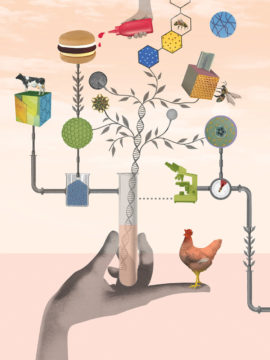 Even the most ardent carnivore might struggle to argue that meat is a force for good today. The global livestock industry produces more greenhouse gases than the exhaust from every form of transport on the planet combined. While doctors try to curb the prescription of antibiotics to slow the emergence of medicine-resistant superbugs, 80 per cent of the antibiotics used in the US are administered to healthy food-producing animals to minimise infections on crammed farms. Industrial animal agriculture is a major cause of deforestation, water waste, water pollution, eutrophication and outbreaks of diseases such as E coli and salmonella, not to mention a significant contributor to new zoonotic diseases and global pandemics. Every year, 70 billion animals are slaughtered to satisfy the global appetite for meat, their lives often miserable and artificially accelerated.
 I
I Every few months, like clockwork, hundreds of videos promising tips and tricks to “hack” your gut flood TikTok. In March, influencers pushed shots of aloe vera juice: “My digestive system, like my gut health? Never been better,” one gushed in
 JH: What was Philadelphia like when you first arrived?
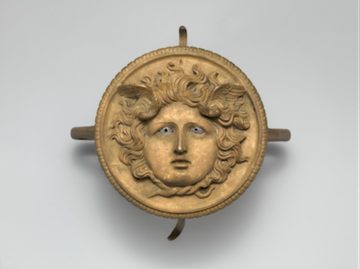 FEW MONSTERS HAVE had as many revamps as Medusa. For many, our first encounter with the gorgon was the fiery stare of Ray Harryhausen’s snake-bodied stop-motion creature, as Harry Hamlin’s Perseus took her head in 1981’s Clash of the Titans. Despite becoming a cultural touchstone for representations of Medusa, Harryhausen’s creation was innovative, a far cry from ancient depictions of Perseus’ prey in presenting a predatory gorgon who attacked back. But Medusa continues to be resurrected in new and varied forms, and the contemporary pop-culture Medusa has herself moved on from her depiction in Clash of the Titans. Shucking her monstrous form, she has been the subject of considerable feminist revision. This feminist vision recasts her as a quite human victim of patriarchy and rape culture. In the most well-known ancient versions of the myth, the mortal Medusa is raped by Poseidon in Athena’s temple, resulting in her punishment by monstrous transformation. This first injustice is then compounded by Perseus’ quest for her head. Following these tales from antiquity, many of which are deeply steeped in misogyny, feminist retellings have rehabilitated the gorgon by bestowing upon her agency expressed through anger.