
 Gary Younge in The Nation:
When I first moved to the US from London, I asked an American journalist what kind of reception I might expect as a Black Briton. “Well, when they hear an English accent, Americans usually add about 20 points to your IQ,” he said. “But when they see a Black face, they usually don’t.” Recalling that the authors of the book The Bell Curve had claimed that Black people have an IQ 15 points lower than whites, I figured that, at the very least, I would still come out at least five points ahead.
There were moments during my 12 years as the US correspondent for The Guardian when I needed all the help I could get. It could be a particular challenge when reporting from Republican events. Englishness, the American journalist had made clear, carried cultural cachet; Blackness did not. The two arriving in the same body could mess with some people’s heads. When I introduced myself as a British journalist, I was occasionally subjected to an interrogation of my credentials. “Were you born there?” they’d ask. “I don’t hear an accent.” (I sound like Ricky Gervais, with nary a hint of a transatlantic twang.)
But my point here is not partisan. Republicans could be, as it happens, ruder than most. But despite Oscar-winning director Steve McQueen, acclaimed author Zadie Smith, and actors Idris Elba, David Oyelowo, and Thandie Newton—to name but a few—the general American image of Britain (particularly outside the big cities) remains ossified in a time before the large-scale migration of Black people to Britain following the Second World War. (My parents came from Barbados in the early 1960s.) When I wrote an article for The Washington Post about being Black and British in the US, it ran alongside a picture of a Black man in a bowler hat carrying an umbrella in one hand and a cup of tea in the other.
More here.
 Adam Tooze over at his substack Chartbook:
 A
A 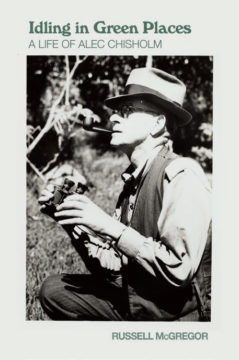 Natural history is deeply rooted in, and benefits from, connections between the personal and the scientific. There is a blog called ‘
 Gabriel García Márquez would not sleep in a house if someone had died in it. Colette was passionate about dowsing. James Merrill had his Ouija board. Ted Hughes taught Sylvia Plath to read horoscopes. Robert Graves believed in ghosts. If Edmund Wilson had a dream about you, he’d call you to mull it over.
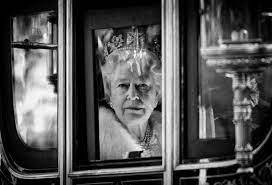 The Queen is the only royal who actually matters or does anything. That’s not fair, of course, but the monarchy is unfairness personified and glorified, long to reign over us. Naturally, the rest of the Royal Family—the heirs; the spares; Princess Michael of Kent, whose father was in the S.S. and whom Diana nicknamed the Führer; Princess Anne, Charles’s younger sister, who’s known to feed the chickens in a ballgown and Wellington boots after a night at the palace—are all busy. They have numberless engagements and causes, which fill their identical, repeating years, but they exist only as heralds for the magical authority of the Crown, which resides in the Queen and nobody else. “They are high-born scaffolding,” as Tina Brown, a former editor of The New Yorker, writes in “
 Let’s start with something everyone agrees on: the world’s fertility rate has declined. Whether you’re in a low-, middle-, or high-income country, with few exceptions the “total fertility rate”—the number of children per woman—
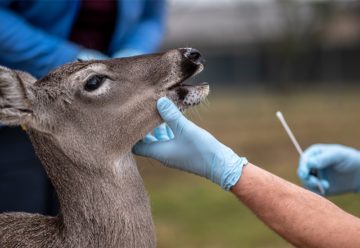 Researchers have worked with hunters for decades as part of regular wildlife surveillance to manage deer populations and track the spread of infectious diseases, such as chronic wasting disease and bovine tuberculosis. But these days, the scientists are also looking for the virus that causes COVID-19 in humans.
 I have no special love for the SAT. Aside from the fact that my test came back with a big, red, “NO HARVARD FOR YOU, DUMMY” stamped on it, it always seemed a bit arbitrary. After all: Why should my eligibility for college depend on knowing words like “nefarious” and “egregious”? That seems…there must be a better word for this…crappy. We know that SAT scores correlate with household income, and evidence suggests that studying
  Like German author Judith Schalansky, I like paying attention to maps. They are time-stamps, relics and quantifiable measure, and, generally, works of art. Unlike Schalansky though, who wrote an entire
 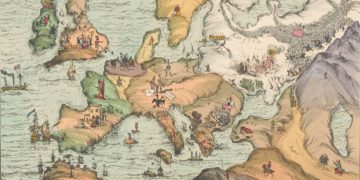 In 1816 an American lawyer named J.F. Dumoulin wrote
  Lockdown was, among other things, a sudden collective experiment in volume control. Sound waves from the regular rush-hour thrum of cities usually penetrate more than a kilometre below the Earth’s surface. When Covid-19 forced humans inside,
  Vaccines to prevent certain types of cancer already exist. They target viruses: hepatitis B virus, which can trigger liver cancer, and human papillomavirus, which causes cervical and some other cancers. But most cancers are not caused by viruses. The Lynch vaccine trial will be one of the first clinical tests of a vaccine to prevent nonviral cancers.
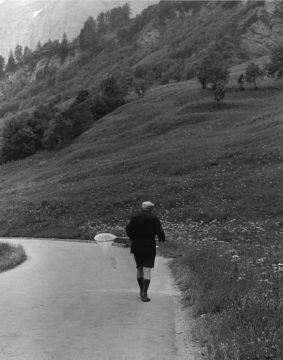 On the night of April 22, the Composer doesn’t sleep …
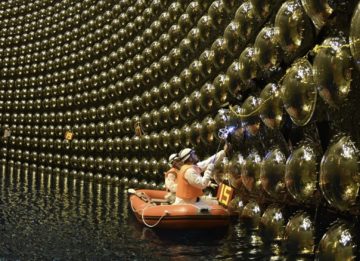 Though theorized in the 1930s and