
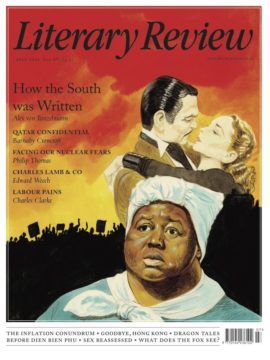
Edward Weech at Literary Review:
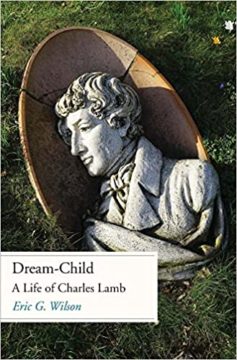 Despite being among the most entertaining and accessible of Romantic authors, Charles Lamb (1775–1834) has been out of fashion for many years. After his death, generations of Victorians and Edwardians continued to be charmed by his essays, letters and children’s books. But he exerted less lasting influence than more philosophical peers, such as Samuel Taylor Coleridge and William Wordsworth, and in the interwar period, changing tastes and Leavisite critical hostility contributed to Lamb being dropped from the popular Romantic canon. Lamb has always attracted admirers (notably in the ranks of the Charles Lamb Society) and numerous books on aspects of his life and work have been published. Yet, as Eric G Wilson observes, Dream-Child is the first full-scale biography in over a century.
Covering the gamut of Lamb’s life and literary career, Wilson aims to demonstrate that Lamb ‘speaks to our age’, highlighting his enthusiasm for ‘the grit and speed and diversity of the urban’ and his ‘fluid, collaborative vision of identity’.
more here.
 George Saunders is legendary in the literary community. He’s one of the few authors who has made a name for himself almost entirely on short stories, a feat all the more impressive considering how unmarketable story collections are. He now teaches at a highly respected MFA program at Syracuse, but in the bio of his first book, CivilWarLand in Bad Decline (1996), it says that he “works as a geophysical engineer” and that “he has explored for oil in Sumatra, played guitar in a Texas bar band, and worked in a slaughterhouse.” He was 38. In the 26 years since his debut, Saunders has won MacArthur and Guggenheim fellowships, the Story Prize, the Folio Prize, the Booker Prize, a World Fantasy Award, and four National Magazine Awards.
 For many last week, their engagement with Google’s LaMDA—and its
  Ukraine has unleashed an incredible influence campaign in Washington. There’s a lag to the filing of lobbying disclosures. But even in the lead-up to
 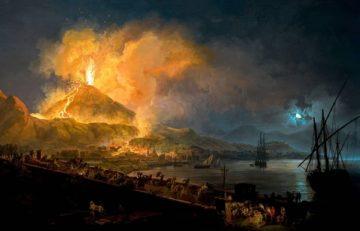 Naples, the tatterdemalion capital of the Italian south, is said to be awash with heroin. Chinese-run morphine refineries on its outskirts masquerade as ‘legitimate’ couture operations that transform bolts of Chinese silk into contraband Dolce & Gabbana or Versace. The textile sweatshops are controlled by the Neapolitan mafia, or Camorra. All this was exposed by the Italian journalist Roberto Saviano in his scorching reportage, Gomorrah. Published in Italy in 2006, Saviano’s was nevertheless a partial account, in which the carnival city of mandolins and ‘O Sole Mio’ was overrun by Armani-coutured killer-capitalists.
 American Renaissance: Art and Expression in the Age of Emerson and Whitman
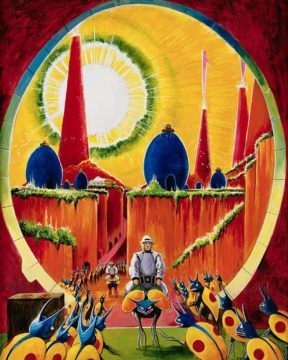 It is 1919, and a young astronomer turns a street corner in Pasadena, California. Something seemingly humdrum on the ground distracts him. It’s an ant heap. Dropping to his knees, peering closer, he has an epiphany – about deep time, our place within it, and humanity’s uncertain fate.
 T
T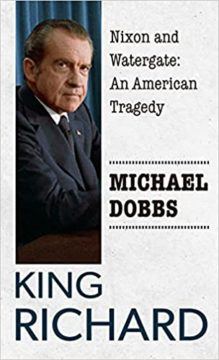 Why, from the get-go, did Nixon do the very thing that could bring him down? Why didn’t he condemn the burglary, claim he knew nothing about it (which was factually true), and fire those responsible? He had the nation on his side. He had worked well with Congress. He was odds-on favourite to win a second term. With Henry Kissinger, he had set a foreign policy agenda of unprecedented ambition: that February, he’d been the first US president to visit the People’s Republic of China and in May he was the first president to set foot in Moscow. Vietnam notwithstanding, he had created a legacy of international success that he believed would make him one of history’s great peacemakers. He had much to lose.
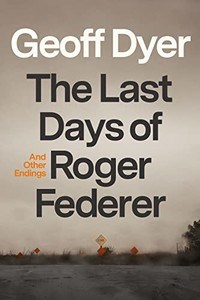 ASAD RAZA: Your new book, The Last Days of Roger Federer (Farrar, Straus and Giroux, $28), is in part a meditation on the tennis great and his retirement. It’s also about the late careers of other athletes, writers, artists, and musicians—Bob Dylan, Eve Babitz, Beethoven, to name a few. In this sense, you are writing about time, and this is reflected in the book’s unique formal structure. Can you tell me how that came about?
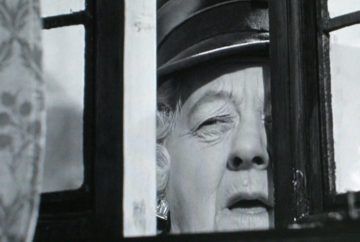 Unlike Agatha Christie’s best known novels, At Bertram’s Hotel (1965) barely has a plot. Its one murder takes place almost three-quarters of the way through the book, and it is solved more through intuition than detection. Though Miss Marple is present, she has little to do beyond eating muffins and shopping for tea towels—or, as she calls them, “glass cloths.”
 Clearly, to conclude that we will be able to achieve decarbonization anytime soon, effectively, and on the required scale runs against all past evidence.
 The violence of the irony: Those Supreme Court justices hand-picked by Mitch McConnell’s dark-money donors oversaw the evisceration of Roe v. Wade only days after
  Apparently, humans aren’t the only animals going