
License to Kill
Man thinks ’cause he rules the earth he can do with it as he please
And if things don’t change soon, he will
Oh, man has invented his doom
First step was touching the moon
Now, there’s a woman on my block
She just sit there as the night grows still
She say who gonna take away his license to kill?
Now, they take him and they teach him and they groom him for life
And they set him on a path where he’s bound to get ill
Then they bury him with stars
Sell his body like they do used cars
Now, there’s a woman on my block
She just sit there facin’ the hill
She say who gonna take away his license to kill?
Now, he’s hell-bent for destruction, he’s afraid and confused
And his brain has been mismanaged with great skill
All he believes are his eyes
And his eyes, they just tell him lies
But there’s a woman on my block
Sitting there in a cold chill
She say who gonna take away his license to kill?
Ya may be a noisemaker, spirit maker
Heartbreaker, backbreaker
Leave no stone unturned
May be an actor in a plot
That might be all that you got
’Til your error you clearly learn
Now he worships at an altar of a stagnant pool
And when he sees his reflection, he’s fulfilled
Oh, man is opposed to fair play
He wants it all and he wants it his way
Now, there’s a woman on my block
She just sit there as the night grows still
She say who gonna take away his license to kill?
Bob Dylan
© 1983 by Special Rider Music
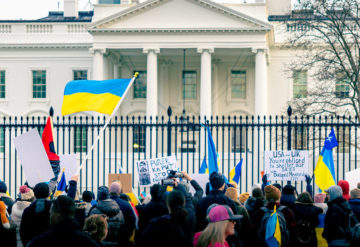 In announcing that Russia would intensify its eight of years aggression against Ukraine in the interests of “denazification” and protecting oppressed Russian speakers (read: pro-Moscow separatists), Vladimir Putin has offered the thinnest pretext for cross-border war since the 2003 U.S. invasion of Iraq. And yet, the
  S
S When a Venus flytrap snaps its fleshy lobes around an unsuspecting insect, it’s game over for the prey. The plant’s unusual habit of snacking on animals has captured the imagination of people ranging from Charles Darwin to playwright Howard Ashman and composer Alan Menken (the latter two created the 1982 musical Little Shop of Horrors, which stars a human-eating plant). Now, in an experiment that might seem straight out of a pulp science-fiction novel, scientists have
 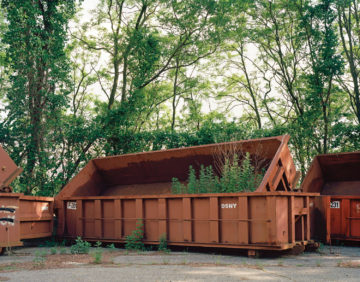 Jade Doskow’s extraordinary photographs of Freshkills Park, a “wilderness area” created on the site of Staten Island’s notorious landfill, offer us a new, unsettling approach to the pastoral in the twenty-first century. In this jarringly beautiful sequence of images, she presents us with a discomfiting environmental vision that interrogates what it means to be wild in a human-impacted world.
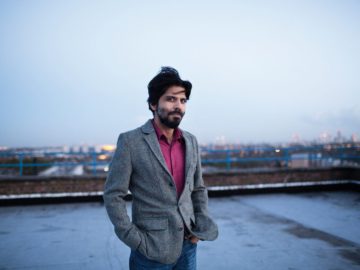 One thing Pankaj Mishra seems certain of is that humans are uncertain creatures, but uncertain in a notably coherent way. “Human identity,” Mishra wrote in the prologue to Age of Anger (2017), is “manifold and self-conflicted”. He thus feels “unqualified regard for a figure like Montaigne”, for he recognised “the acute self-divisions of individual selves”. Mishra is hardly alone in emphasising human ambivalence, but his is a rather spruce, even schematic vision of perplexity: we are less awash in inarticulate doubt or disarrayed by our unconscious than intelligibly sundered between our “inner and public selves”.
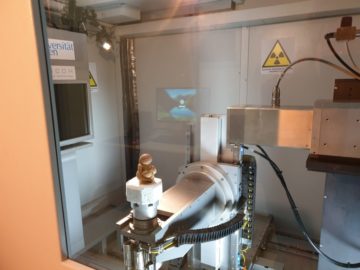 The Venus of Willendorf, estimated at between 25,000 to 30,000 years old, has long been a source of contemporary mystery and intrigue, and for good reason — little was known about its origins and purpose. The statuette, as suggested by its name, was quickly saddled with the burdens of human history, sexualized with a blithe reference to antiquity although the context of its creation in Paleolithic times remained obscure. Now, thanks to research led by anthropologist Gerhard Weber at the University of Vienna, we know that the stone used to mold the figurine originated from northern Italy, over 350 miles away from Willendorf in Austria and across a formidable mountain range, the Alps. First excavated in 1908, the statuette, which measures less than four and a half inches in height, is a prime example of portable art — objects made out of stone, ivory, and other types of animal bone that would be easily transportable for migratory people during the Paleolithic period.
 Toward the beginning of the games, NBC started to realize it had problems with its own script. The network’s carefully crafted redemption epic of the skier Mikaela Shiffrin was shifting genres into televised tragedy. Before Shiffrin competed in the giant slalom, NBC played intimate interviews of Shiffrin in her Colorado home, processing the grief of having lost her father two years ago and recalling a moment when she nearly gave up skiing. This has been a reliable formula for the network: give the home crowd the emotional backstory behind one of Team USA’s likeliest gold-medal stars, then wait for the athlete to write her own feel-good ending, turning adversity into triumph. But at the start of the giant slalom, Shiffrin skidded out at the fifth turn and missed a gate. Two days later, in the regular slalom, it happened again: having missed another early turn, Shiffrin turned uphill, took off her skis, and sat down on the snow by the edge of the course for twenty minutes with her head in her arms. Watching, one wanted desperately to look away, but the camera stayed fixed. An interviewer asked her, “What are you still processing?” Shiffrin replied, “Pretty much everything . . . makes me second-guess the last fifteen years.”
 In this article, we argue that least-developed countries (LDCs) should be treated as a distinct group from developing countries within theories of international justice generally, and theories of trade justice more specifically. While authors within the trade justice literature occasionally make passing reference to LDCs’ entitlement to special favourable treatment from other states, they say little about what form this treatment should take, and how such entitlements relate to the obligations and entitlements of their trade partners, both developed and developing. This oversight is untenable because it overlooks the significantly different needs that LDCs have compared to developing countries with respect to the economic opportunities afforded by international markets. Moreover, by grouping states into the binary categories of developed and developing (or rich and poor), trade justice theorists have ended up obscuring and passing over a fundamental conflict between least-developed and developing countries’ interests, the weighing of which should be central to any complete normative evaluation of the trade regime.
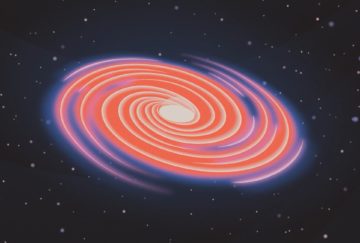 In The Structure of Scientific Revolutions, the philosopher of science Thomas Kuhn observed that scientists spend long periods taking small steps. They pose and solve puzzles while collectively interpreting all data within a fixed worldview or theoretical framework, which Kuhn called a paradigm. Sooner or later, though, facts crop up that clash with the reigning paradigm. Crisis ensues. The scientists wring their hands, reexamine their assumptions and eventually make a revolutionary shift to a new paradigm, a radically different and truer understanding of nature. Then incremental progress resumes.
 For many people, watching the Russian invasion of Ukraine has felt like a series of “He can’t be doing this” moments. Russia’s Vladimir Putin has launched the largest ground war in Europe since the Second World War. It is, quite literally, mind-boggling.