
Alex Abramovich at The New Yorker:
 When Willie Nelson performs in and around New York, he parks his bus in Weehawken, New Jersey. While the band sleeps at a hotel in midtown Manhattan, he stays on board, playing dominoes, napping. Nelson keeps musician’s hours. For exercise, he does sit-ups, arm rolls, and leg lifts. He jogs in place. “I’m in pretty good shape, physically, for ninety-two,” he told me recently. “Woke up again this morning, so that’s good.”
On September 12th, Nelson drove down to the Freedom Mortgage Pavilion, in Camden. His band, a four-piece, was dressed all in black; Nelson wore black boots, black jeans, and a Bobby Bare T-shirt. His hair, which is thicker and darker than it appears under stage lights, hung in two braids to his waist. A scrim masked the front of the stage, and he walked out unseen, holding a straw cowboy hat. Annie, his wife of thirty-four years, rubbed his back and shoulders. A few friends watched from the wings: members of Sheryl Crow’s band, which had opened for him, and John Doe, the old punk musician, who had flown in from Austin. (At the next show, in Holmdel, Bruce Springsteen showed up.) Out front, big screens played the video for Nelson’s 1986 single “Living in the Promiseland.”
more here.
Enjoying the content on 3QD? Help keep us going by donating now.
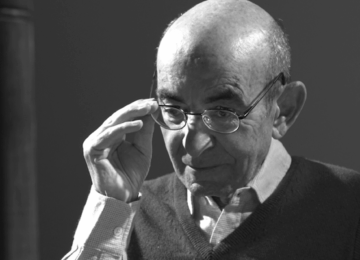 The writer, lawyer and human rights activist Raja Shehadeh, who is 74, has spent most of his life living in Ramallah, a city in the Israeli-occupied West Bank. This is where his Palestinian Christian family ended up after fleeing Jaffa, now part of greater Tel Aviv, in 1948, as Jewish paramilitary forces bombed the city. Since he was a much younger man, Shehadeh has been doggedly documenting the experience of living under Israeli occupation — recording what has been lost and what remains.
 In oncology we return, again and again, to first principles. The cell is our unit of life and of medicine. When a normal cell becomes malignant, it does not merely divide faster; it eats differently. It hoards glucose, reroutes amino acids, siphons lipids, and improvises when a pathway is blocked. We have learned to poison its DNA, to derail its signaling, to enlist T cells as sentinels. We have been slower to ask a simpler question that sits at the cell’s kitchen table: What if we change what a tumor can eat?
 As a teenager, growing up in New Jersey during the 1960s, the pianist Donald Fagen routinely took a bus into Manhattan to hear his jazz heroes in the flesh. The ecstatic improvisational rough-and-tumble of Charles Mingus, Thelonious Monk, Bill Evans, and Willie “The Lion” Smith stayed hardwired inside his brain, and soon Fagen landed at Bard College, where one day in 1967 he overheard a fellow student, Walter Becker from Queens, playing the blues on his guitar in a campus coffee shop. Fagen introduced himself and told Becker how impressed he was by his clean-cut technique. The pair struck up an immediate friendship, then five years later founded Steely Dan, a band that would become one of the defining rock groups of the 1970s.
 ‘Tis the season for overindulgence. But for people with allergies, holiday feasting can be strewn with landmines.
 Tom Wolfe was a fast talker.
  Amitava Kumar has long occupied a distinctive place in contemporary English writing. His work resists easy classification, blurring the boundaries between fiction, memoir, reportage, history and critique.
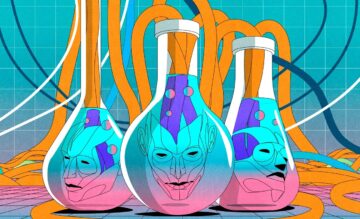 How will artificial intelligence reshape the global economy? Some economists predict only a small boost — around a 0.9% increase in gross domestic product over the next ten years. Others foresee a revolution that might add between US$17 trillion and $26 trillion to annual global economic output and automate up to half of today’s jobs by 2045. But even before the full impacts materialize, beliefs about our AI future affect the economy today — steering young people’s career choices, guiding government policy and driving vast investment flows into semiconductors and other components of data centres.
 More than international sanctions, more than its stifling theocracy, more than recent bombardment by Israel and the U.S. — Iran’s greatest current existential crisis is what hydrologists are calling its rapidly approaching “water bankruptcy.”
 Jensen Huang needs a moment.
 A
A 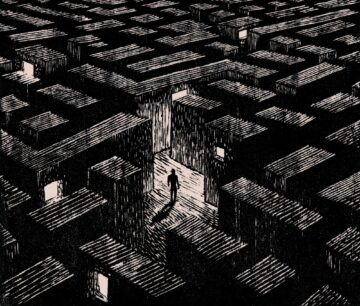 The most widely endorsed reason productivity growth has faltered is that we are running out of good ideas. As this narrative has it, the many scientific and technology advances responsible for driving economic growth in the past were low-hanging fruit. Now the tree is more barren. Novel advances, we should expect, are harder to come by, and historical growth may thus be difficult to sustain. In the extreme, this may lead to the end of progress altogether.
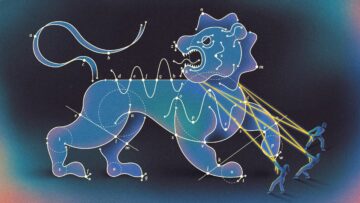 In August, a team of mathematicians posted a paper claiming to solve a major problem in algebraic geometry — using entirely alien techniques. It instantly captivated the field, stoking excitement in some mathematicians and skepticism in others.