
April White in Slate:
 Flora Bigelow Dodge had not traveled to Sioux Falls, South Dakota, in January 1903 for the same reason so many women of her acquaintance had. She did not do anything for the same reason other women did—at least not if you believed the newspapers. A fixture in the society pages, Flora was the “most daring, most original, cleverest woman in New York.” She was a wonderful musician, a graceful dancer, an expert horsewoman, and a captivating storyteller, an author of plays and short stories. She was “both courageous and imaginative.” She was witty, ambitious, generous, and beautiful, a woman of “unusual individuality” with a retinue of admirers.
She was also unhappy.
After 16 years of marriage to Charlie Dodge, son of the Dodge family, well-known for its lumber and mining fortune, 34-year-old Flora wanted a divorce—one which would be denied to her in her home state of New York unless she could furnish proof of adultery. And so she traveled west to join the “divorce colony,” as newspapermen called the sorority of dissatisfied wives who moved to South Dakota at the turn of the twentieth century to take advantage of the laxest divorce laws in the country.
More here.
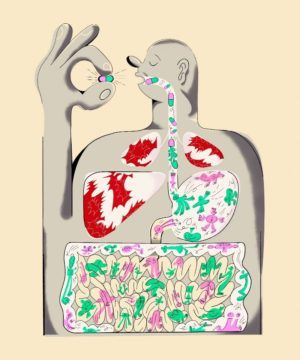 Zion Levy remembers the excitement that he and his daughter felt while poring over body scans in 2019, watching small black dots, representing melanoma metastases, shrink away and eventually vanish. They weren’t Levy’s scans. He didn’t even know who the scans came from, but he did share a connection with them.
 Published by Thunder Bay Press, The Beatles Illustrated Lyrics: 1963-1970 offers an attractive, if strangely incomplete, collection of the lyrics that John, Paul, George, and (very rarely) Ringo produced during their 1960s heyday. The brevity of the Beatles’ career—seven short years from “Please Please Me” to “The Long and Winding Road”—remains the most mystifying element of the band, of how so much music poured out of the band in a remarkably brief amount of time. The Beatles Illustrated does not offer any answers or provide any new insight on the Fab Four’s magic—the commentary is limited to Steve Turner’s one-page introduction—but instead captures the bulk of the Beatles’ lyrics alongside some great photos of the band and illustrations that nicely compliment the songs.
 With its recent
  Anita’s case was far from unique. According to hospital records, the women’s ward in Herat saw 900 such cases that April. In 2021, the facility recorded 12,678 cases, up from 10,800 cases in 2020.
 Suppose that I am polyamorous and that my mother disapproves. She tolerates my love life but thinks it’s wrong that I have not one partner but two. What her half-accepting, half-critical attitude reveals is a duality at the heart of toleration, an ambivalence that is beautifully captured by the British philosopher
 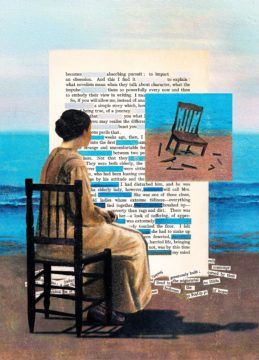 t was on a train journey, from Richmond to Waterloo, that
  If you don’t suffer from migraine headaches, you probably know at least one person who does. Nearly
  Anders Åslund, Robert D. Atkinson, Scott K.H. Bessent, Lorenzo Bini Smaghi, Josef Braml, Patrick M. Cronin, Mansoor Dailami, John M. Deutch, Mohamed A. El-Erian, Gabriel J. Felbermayr, Gary Clyde Hufbauer, Harold James, Michael C. Kimmage, Gary N. Kleiman, James A. Lewis, Jennifer Lind, Robert A. Manning, Ewald Nowotny, Thomas Oatley, William A. Reinsch, Jeffrey D. Sachs, Daniel Sneider, Atman Trivedi, Edwin M. Truman, Daniel Twining, Nicolas Véron, and Marina v N. Whitman offer views in The International Economy:
 Karmela Padavic-Callaghani in Aeon (Illustration by Richard Wilkinson):
 The American Colony, where I’m writing these lines on a table in the courtyard, is one physical incarnation of the thesis of
  The epigraph to In the Castle of My Skin (“Something startles where I thought I was safe”) comes from Walt Whitman. Lamming takes heart from Whitman’s embrace of the sometimes paradoxical multiplicity that comes with giving one another room, with hearing and assimilating others’ viewpoints: “Do I contradict myself? Very well then I contradict myself, (I am large, I contain multitudes).” There is even a subtle lesson in the names of Lamming’s first and last novels. As phrases, both In the Castle of My Skin and Natives of My Person allude to the complex interior state of the speaker. Both configure that interior as a populous place, shot through with other voices, other lives.
 Nick Fernandez was in hell — one filled with fire and skulls and the