
Chris Woolston in Smithsonian:
 It was the first in a series of “Rosie” posters of women first responders, an ongoing project that has helped Bergen calm her mind during her downtime. Ultimately, she says, the Rosies helped her withstand the stress of her job and allowed her to show up to work each day with new energy and focus. “They made it possible for me to keep going.” While workers like Bergen are responding to emergency calls and saving lives, many of us are doing things like responding to emails and saving receipts from business trips. But even for people with jobs in offices, restaurants and factories, there’s an art and a science to making the most of downtime, says Sabine Sonnentag, a psychologist at the University of Mannheim in Germany. The right approach to non-work time can help prevent burnout, improve health and generally make life more livable. “When a job is stressful, recovery is needed,” says Sonnentag, who cowrote an article exploring the psychology of downtime in the 2021 issue of the Annual Review of Organizational Psychology and Organizational Behavior.
Workers everywhere are feeling frazzled, overwhelmed and ready for the weekend. With that backdrop, researchers are doing work of their own to better understand the potential benefits of recovery and the best ways to unwind.
More here.
 Even if you do manage to pick up a book, you might feel lingering guilt if it isn’t an important book, or at least an improving one. “There is no such thing as the correct book to read,” Allison Escoto reminded me over Zoom, a bookcase looming behind her. Escoto is the head librarian and education director at the Center for Fiction in Brooklyn. The canon of “important books” — what they are, and who gets to choose them — has been in a vibrant state of reexamination and expansion in recent years, she reminded me, and that means the “notion of the correct book, or the right book, or the acceptable book is itself under scrutiny.”
 Saint Domingue was the crown jewel of the French empire in the Caribbean when its slaves rebelled in 1791. They formed the independent republic of Haiti in 1804, but the terms of the island’s separation from France was contested long thereafter, and French reconquest loomed. In 1825, in order to secure their sovereignty, the Haitians were forced (in the words of Charles X’s decree) « to compensate the former colonists who may claim an indemnity » for the human property that had been lost. The total sum of these reparations was 150 million golden francs, which the new Caribbean nation funded through a massive loan, paid back slowly over decades. Generations of Haitians – deep into the twentieth century – contributed a significant portion of their livelihood to support the descendants of those who had kidnapped their ancestors from Africa in the hundreds of thousands and forced them to labor under genocidal conditions.
 Almost as soon as it was floated in 1965 by Harvard psychiatrist Joseph Schildkraut, the serotonin hypothesis of
  Term limits or other
 Grief is painful. We all know that. But Is there a “good grief”? Eminent essayist and man of letters
 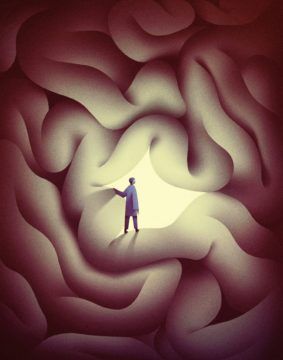 It wasn’t until my mid-forties that I began to write about the world of medicine. Before that, I was busy building a career as a hematologist-oncologist: caring for patients with blood diseases, cancer, and, later, aids; establishing a research laboratory; publishing papers; training junior physicians. A doctor’s workload tends to crowd out everything but the most immediate concerns. But, as the years pass, the things you’ve pushed to the back of your mind start to pile up, demanding to be addressed. For two decades, I had seen my patients and their loved ones face some of life’s most uncertain moments, and I now felt driven to bear witness to their stories.
 CHILE’S VILLARRICA NATIONAL PARK—
 For many generations in societies shaped by Christianity, monogamy has been the almost undisputed champion of relationship norms. In Britain and the US, it has been held up as the dominant – really the only – ideal for serious romantic partnerships, toward which all of us should always be striving. According to the authors of a 2019 article in Archives of Sexual Behavior, focused on the US context, a “halo surrounds monogamous relationships . . . monogamous people are perceived to have various positive qualities based solely on the fact they are monogamous.” Other relationship models, or even just being persistently single, have often been seen as suspect, if not morally wrong.
 Germans call it
  Published in 1953, The Captive Mind remains possibly the best book ever written about the lure and trap of totalitarian ideology. In his riveting collection of linked essays, the great poet Czesław Miłosz probed the motivations of Polish writers and intellectuals (Miłosz, at one time, included) who joined the Communist regime after World War II. The rewards of the book begin with its epigraph, which Miłosz attributes to “An Old Jew of Galicia”:
 I
I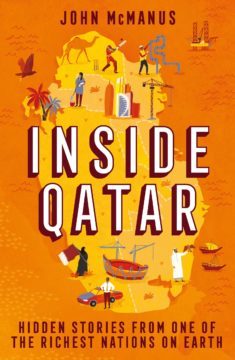 In Arabia Through the Looking Glass, when he wasn’t comparing everything to Alice in Wonderland, Jonathan Raban likened his experiences in the Gulf States at the height of the 1970s oil boom to passing through a ‘time loop’ into Britain at the heyday of the Industrial Revolution. Today – in polite academic circles, at least – it would constitute a major faux pas to compare the societies of the Middle East with those at some earlier stage of Western historical development. Yet, forty years on, one gains a strikingly similar impression from John McManus’s picture of life in 21st-century Qatar, from the outsized ambition, the extraordinary rate of economic growth and the transformation of the urban environment to the dreadful working conditions, the open racial hierarchies and the persistence of traditional rentier elites. To venture ‘inside Qatar’ in 2022, as McManus puts it, is to get a ‘glimpse of life at the coalface of globalisation’.