
Peter Bradshaw in The Guardian:
 One of the great creative bromances has flowered again: Paul Thomas Anderson and Thomas Pynchon. Having adapted Pynchon’s Inherent Vice for the screen in 2014, Anderson has now taken a freer rein with his 1990 novel Vineland, creating a bizarre action thriller driven by pulpy comic-book energy and transformed political indignation, keeping his pedal at all times welded to the metal.
It’s a riff on the now recognisable Anderson-Pynchonian idea of counterculture and counter-revolution, absorbing the paranoid style of American politics into a screwball farcical resistance, with a jolting, jangling, nerve-shredding score by Jonny Greenwood. It’s partly a freaky-Freudian diagnosis of father-daughter dysfunction – juxtaposed with the separation of migrant children and parents at the US-Mexico border – and a very serious, relevant response to the US’s secretive ruling class and its insidiously normalised Immigration and Customs Enforcement (Ice) roundups: the toxic new Vichyite Trump enthusiasm.
More here.
Enjoying the content on 3QD? Help keep us going by donating now.

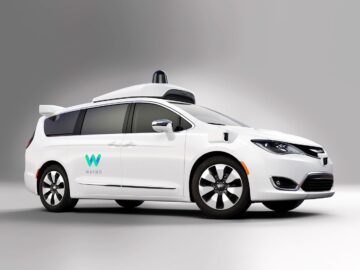 Waymo’s co-CEO Tekedra Mawakana made a striking prediction this week:
 This has been a year in which terrible ideas buried and forgotten rose from the dead and ate many brains.
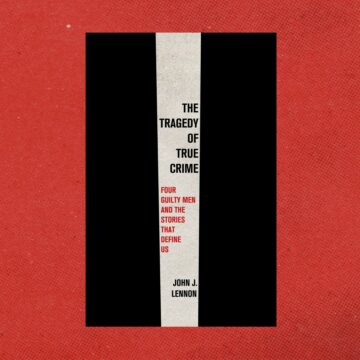 John J. Lennon is, at the moment, probably this country’s foremost imprisoned journalist. This title won’t be taken from him any time soon, not because there aren’t many talented and inquisitive people in prison but because the barriers to entry are so nearly impassible. A journalist’s life is a daunting prospect these days even to a person with freedom of movement, a real computer, the ability to make phone calls in private. Lennon’s new book, The Tragedy of True Crime, concludes with an author’s note that describes the makeshifts that he and his supporters have had to adopt so he can fulfill the most basic parts of an author’s job:
 In January this year, an announcement from China rocked the world of artificial intelligence. The firm DeepSeek released its
 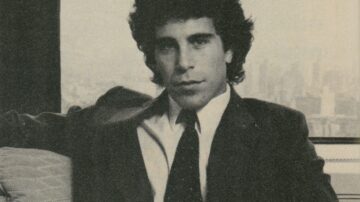 One evening in early 1976, a bushy-haired Jeffrey Epstein showed up for an event at an art gallery in Midtown Manhattan. Epstein was a math and physics teacher at the city’s prestigious Dalton School, and the father of one of his students had invited him. Epstein initially demurred, saying he didn’t go out much, but eventually relented. It would turn out to be one of the best decisions he ever made.
 In the winter
  On a cool evening in October, six weeks after Charlie Kirk was assassinated in full view of thousands at Utah Valley University, I joined
 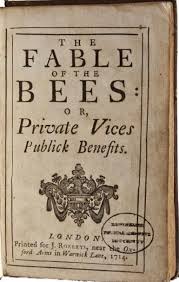 In 1714, and in an enlarged edition in 1723, Mandeville published the prose volume that made him infamous: The Fable of the Bees: Or, Private Vices, Public Benefits. The original poem was reprinted with a series of commentary essays in which Mandeville expanded upon his provocative arguments that human beings are self-interested, governed by their passions rather than their reason, and he offered an explanation of the origin of morality based solely on human sensitivity to praise and fear of shame through a rhapsody of social vignettes. Mandeville confronted his contemporaries with the disturbing fact that passions and habits commonly denounced as vices actually generate the welfare of a society.
 How many times during the past month have you gone to the dictionary, or if not the dictionary then to your computer, to look up a word? I go to mine with some frequency. Here are some of the words within recent weeks I’ve felt the need to look up: “algolagnia,” “orthoepist,” “cromulent,” “himation,” “cosplaying,” and “collocation.” The last word I half-sensed I knew but was less than certain about. I also looked up “despise” and “loath,” to be sure about the difference, if any, between them, and then had to check the difference between the latter when it has an “e” at its end and when it doesn’t. Over the years I must have looked up the word “fiduciary” at least half a dozen times, though I have never used it in print or conversation. I hope to look it up at least six more times before departing the planet. Working with words, it seems, is never done.
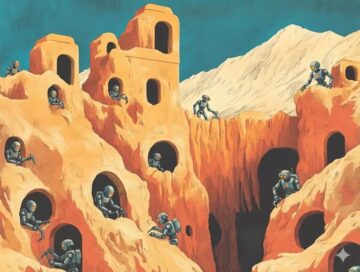 Here’s a threshold AI may be approaching: it may soon be the first technology to be more adaptable than we are. It’s not there yet, but you can see it coming – the range of problems to which early adopters are successfully applying AI is simply exploding. Past inventions had limited impact, because they could only be adapted to some uses. But AI may (eventually) adapt itself to any task. When technology makes one job obsolete, people move into another – one that hasn’t been automated yet. But at some point, AI could be retraining faster than people can.