
Laura Spinney in Nature:
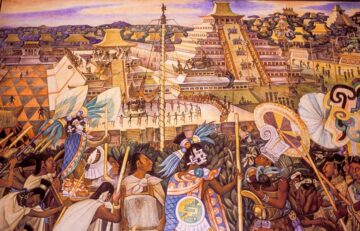 When Spanish conquistador Hernán Cortés arrived in Mexico in 1519, he found monarchs, cities, roads, markets, schools, astronomers, law courts and much else that also existed in his native Spain. Put another way, two cultural experiments had been running in parallel for 15,000 years, and when they came into contact, each recognized the other’s institutions.
It wasn’t just the civilizations of the Americas and Europe that resembled each other by that time. As biologist-turned-historian Peter Turchin observes in his tenth book, The Great Holocene Transformation, more than half of the world’s population in the sixteenth and seventeenth centuries lived in five or six large societies with political systems that were remarkably structurally similar. His argument is that this was not a coincidence; although every society is unique, they have features in common that make them comparable.
More here.
Enjoying the content on 3QD? Help keep us going by donating now.