
Time Capsule: The Fallow Deer
Reader, they have slaughtered the white deer of my childhood.
My father enchanted them into unicorns as they drifted in with the fog
that filled our valleys. They were imports, ornamental. Shipped in
by some rich eccentric for his pleasure. Reader, it’s true: they outgrew
their pen, outlived their keeper. Up close they were not white, really,
more day-old snow, their fur matted with ticks and burrs. Their horns not spiral,
but branched. Reader, they were nothing like unicorns, but I loved
to spot them from my father’s truck as we drove the tangled road
to the coast. How they came out like stars in the scrub oak.
My father kept a gun in the back seat. He kept a season for the killing,
the other three for wonder. I woke once to headlights
slashed across my bedroom window, a buck strung up
by his hind legs in the pear tree, belly split sternum to pelvis,
my father cutting him down into pieces we could swallow.
Those evenings though, my father never fired, only whistled
to startle them up from their grazing, so I could call them
by their horns: button buck, spike, doe. They called them invasive
and shot them from helicopters. Who were they, Reader, to draw
the line of belonging? The white deer were my fireflies,
my everyday magic. But who am I? In the crackle of starlight,
above dry leaves soaked silent, the dead buck shone,
nothing like a unicorn. Up close it is harder to stand what we do
with this awe, with these hands.
by Erin Rodoni
from Muzzle Magazine
 The logic behind [interest] rate rises is that making the credit of the nations’ poor more, while they are already struggling with food and fuel bills, will make them in the long run better off.
 Last year, the particle physicist
  Cities that are attacked by nuclear missiles burn at such an intensity that they create their own wind system, a firestorm: hot air above the burning city ascends and is replaced by air that rushes in from all directions. The storm-force winds fan the flames and create immense heat.
 The attack on Rushdie is a wake-up call for all of us who have a stake in free expression, which is all of us, period. While we do not yet know the motives of his attackers, it is hard to envisage a scenario in which this brazen, premeditated attack, the first in memory targeting a writer at a literary event in the United States, had nothing to do with Rushdie’s words and ideas.
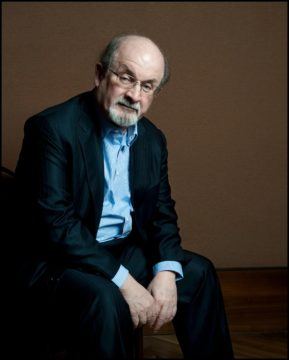 The terrorist assault on Salman Rushdie on Friday morning, in western New York, was triply horrific to contemplate. First in its sheer brutality and cruelty, on a seventy-five-year-old man, unprotected and about to speak—doubtless cheerfully and eloquently, as he always did—repeatedly in the stomach and neck and face. Indeed, we accept the abstraction of those words—“assaulted” and “attacked”—too casually. To try to feel the victim’s feelings—first shock, then unimaginable pain, then the panicked sense of life bleeding away—to engage in the most moderate empathy with the author is to be oneself scarred. (At the time of writing, Rushdie is reportedly on a ventilator, with an uncertain future, the only certainty being that, if he lives, he will be maimed for life.)
 One of the stranger sights on the University College London campus is the clothed skeleton of the utilitarian philosopher Jeremy Bentham. Stranger still is that a waxwork head sits on its shoulders, where Bentham’s own head should be, as per his will. Meanwhile, his preserved head is elsewhere – his friends thought it looked too grotesque for display, and commissioned the waxwork one instead. Legend has it that Bentham’s real head was stolen by some students from King’s College London as a prank against their University College rivals, and a ransom demanded for returning it. Apparently, this was eventually paid up, and the head was returned.
 Branko Milanovic over at his substack Global Inequality and More 3.0:
 Terry Eagleton in Sidecar [h/t: Leonard Benardo]:
 Gregg studies animal behavior and is an expert in dolphin communication. He shows how human cognition is extraordinarily complex, allowing us to paint pictures and write symphonies. We can share ideas with one another so that we don’t have to rely only on gut instinct or direct experience in order to learn. But this compulsion to learn can be superfluous, he says. We accumulate what the philosopher Ruth Garrett Millikan calls “dead facts” — knowledge about the world that is useless for daily living, like the distance to the moon, or what happened in the latest episode of “Succession.” Our collections of dead facts, Gregg writes, “help us to imagine an infinite number of solutions to whatever problems we encounter — for good or ill.”
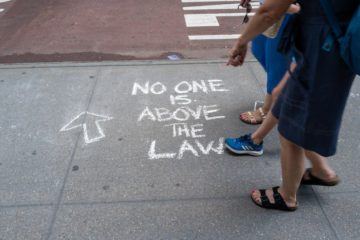 The more we learn about the FBI’s search of Mar-a-Lago, the sillier — and more sinister — the overcaffeinated Republican defenses of former president Donald Trump look. A genius-level spinmeister, Trump set the tone with a
  R
R The most famous TV ad in the Orwellian year of 1984, carefully themed to the novel named for this year, was for the