
Lisa Allardice in The Guardian:
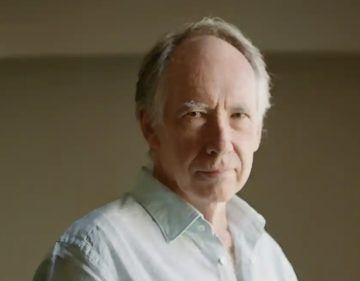 Although not originally part of the notorious gang of writers – Martin Amis, Julian Barnes and the late Christopher Hitchens – who made their names in the 70s and dominated the literary scene for much longer (too long, according to their critics), Rushdie arrived a few years later with the publication in 1981 of Midnight’s Children, which transformed both British and Indian writing, and won the Booker prize that year. “It was amazing, it expanded horizons,” McEwan says. “Salman is a great conversationalist, with a great taste for fun and mischief,” he adds. “So we all got on straight away.”
McEwan’s ambition with Lessons, his 18th novel, was to show the ways in which “global events penetrate individual lives”, of which the fatwa was a perfect example. “It was a world-historical moment that had immediate personal effects, because we had to learn to think again, to learn the language of free speech,” he says. “It was a very steep learning curve.”
More here.
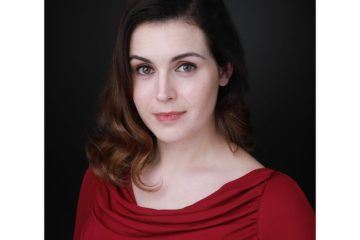 Statesman, majored in women’s studies. During her university years, she believed that hookup culture, pornography, and rough sex were all OK for consenting adults. A decade later, she’s changed her mind. Ms. Perry’s experience of working at a rape crisis center made her question the narrative she’d been taught that “rape is about power, not sex.” She then began to rethink other tenets of second-wave academic feminism.
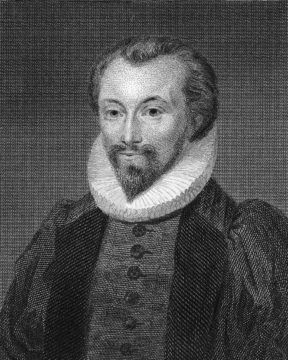 The power of John Donne’s words nearly killed a man.
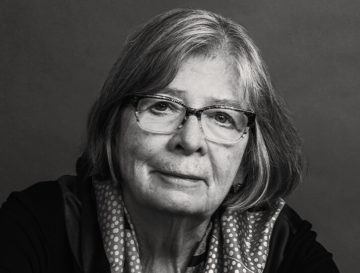 Chris Lehmann in The Baffler:
 Catarina Dutilh Novaes and Silvia Ivani in Boston Review:
 F
F Camila Vergara in Sidecar:
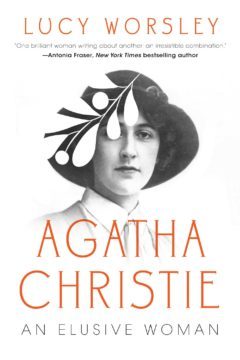 Agatha Christie’s best books have crisp dialogue and high-velocity plots. The bad ones have a Mad Libs quality: feeble prose studded with blank spots into which you can picture the prolific Christie plugging a random “BODY PART” or “WEAPON.” In a 1971 study of English crime fiction, Colin Watson snickered that Christie “seems to have been well aware that intelligence and readership-potential are quite unrelated.”
 For as long as she can remember, Kay Tye has wondered why she feels the way she does. Rather than just dabble in theories of the mind, however, Tye has long wanted to know what was happening in the brain. In college in the early 2000s, she could not find a class that spelled out how electrical impulses coursing through the brain’s trillions of connections could
  “The 140 years from 1870 to 2010 of the long twentieth century were, I strongly believe, the most consequential years of all humanity’s centuries.” So argues
  Over the past five years, I have studied the phenomenon of what I call “political overconfidence.” My work, in tandem with other researchers’ studies, reveals the ways it thwarts democratic politics.