
Arthur Brooks in The Atlantic:
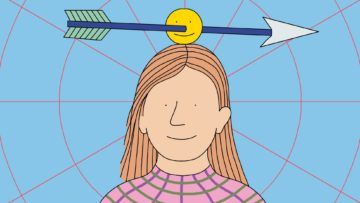 If you are a parent, your greatest fear in life is likely something happening to one of your kids. According to one 2018 poll from OnePoll and the Lice Clinics of America (not my usual data source, but no one else seems to measure this), parents spend an average of 37 hours a week worrying about their children; the No. 1 back-to-school concern is about their safety. And this makes sense, if you believe that safety is a foundation that has to be established before dealing with other concerns.
You can see the effects of all this worrying in modern parenting behavior. According to a 2015 report from the Pew Research Center, on average, parents say children should be at least 10 years old to play unsupervised in their own front yard, 12 years old to stay home alone for an hour, and 14 to be unsupervised at a public park. It also shows up in what parents teach their kids about the world: Writing in The Journal of Positive Psychology in 2021, the psychologists Jeremy D. W. Clifton and Peter Meindl found that 53 percent of respondents preferred “dangerous world” beliefs for their children.
No doubt these beliefs come from the best of intentions. If you want children to be safe (and thus, happy), you should teach them that the world is dangerous—that way, they will be more vigilant and careful. But in fact, teaching them that the world is dangerous is bad for their health, happiness, and success.
More here.
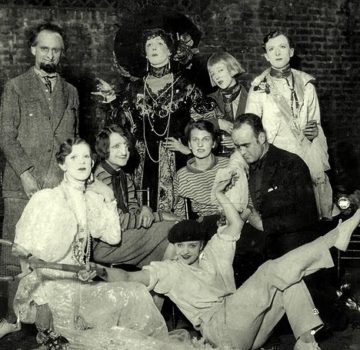 Inez Holden’s diary – a mammoth undertaking, only fragments of which have ever escaped into print – carries a rueful little entry from August 1948. “I read Brideshead Revisited by Evelyn Waugh,” the diarist writes. But the tale of Charles Ryder’s dealings with the tantalising progeny of the Marquess of Marchmain, here in an unfallen world of Oxford quadrangles and stately pleasure domes, awakens a feeling of “nostalgic depression”. This, Holden decides, is simply another of “those stories of High Life of the Twenties which everyone seemed to have enjoyed but I never did”.
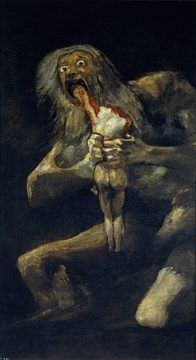 There are many complex theories about the nature and function of art; I am going to propose a very simple one. My simple theory is also broad: it applies to narrative fiction broadly conceived, from epic poems to Greek tragedies to Shakespearean comedies to short stories to movies. It also applies to most pop songs, many lyric poems and some—though far from most—paintings, photographs and sculptures. My theory is that art is for seeing evil.
 T
T A
A Speaking broadly, Leibniz’s rules fall into three basic categories: advice on how to communicate with others, advice on how to carry oneself with others, and advice on the sorts of subjects one ought to study. On the first front, Leibniz argues that effective communication requires us to engage our audience’s attention in such a way that others will feel connected to and included in our conversation. In this vein, we’re told that ‘small commonplaces’ that ‘can be told or recounted with flair’ get noticed. Later, we’re told we ought to ‘intermix some charm into business negotiations and meetings’, and that, in more casual conversations, we should make sure to give openings so that ‘every person recounts something’ and has an opportunity to speak their mind. The lesson here is that when we speak with others, we should ‘work to bring new things up’ in such a way that others are ‘drawn into conversation’.
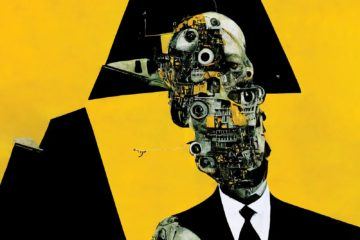 In policy circles, discussions about artificial intelligence invariably pit China against the United States in a race for technological supremacy. If the key resource is data, then China, with its billion-plus citizens and lax protections against state surveillance, seems destined to win. Kai-Fu Lee, a famous computer scientist, has claimed that data is the new oil, and China the new OPEC. If superior technology is what provides the edge, however, then the United States, with its world class university system and talented workforce, still has a chance to come out ahead. For either country, pundits assume that superiority in AI will lead naturally to broader economic and military superiority.
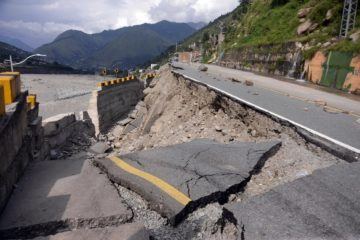
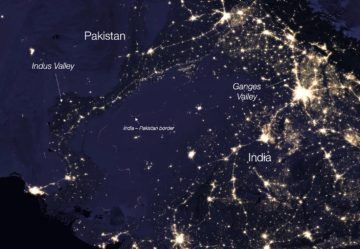 Pakistan has two things: very high mountains, and a very flat plain.
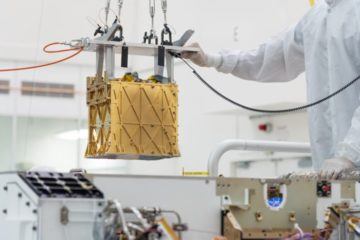 One of the major challenges of space travel is that there are no ready-made resources there. Mars, for example, has no food, shelter, oxygen, fuel, or power. It likely has water, but it’s not certain how much and how accessible. So for now any human mission to Mars will have to bring all recourses from Earth. Getting stuff to Mars is massively expensive, and resupply can take 6-9 months, during optimal launch windows. Keeping humans alive on Mars for any length of time is therefore a very tenuous and expensive endeavor.
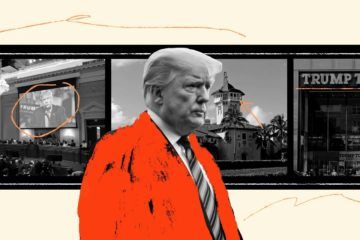 If all the criminal investigations into former President Donald Trump end in conviction, then Trump will be a true renaissance man of crime.
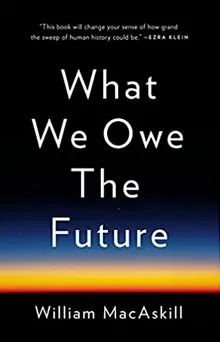 If the point of publishing a book is to have a public relations campaign, Will MacAskill is the greatest English writer since Shakespeare. He and his book
 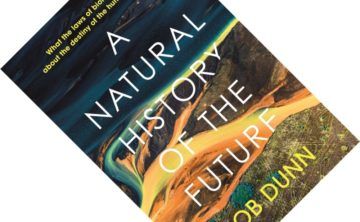 When considering environmental issues, the usual rallying cry is that of “saving the planet”. Rarely do people acknowledge that, rather, it is us who need saving from ourselves. We have appropriated ever-larger parts of Earth for our use while trying to separate ourselves from it, ensconced in cities. But we cannot keep the forces of life at bay forever. In A Natural History of the Future, ecologist and evolutionary biologist Rob Dunn considers some of the rules and laws that underlie biology to ask what is in store for us as a species, and how we might survive without destroying the very fabric on which we depend.
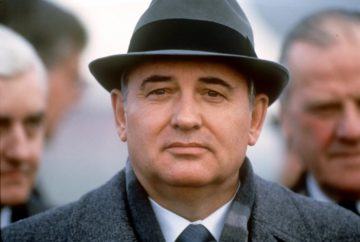 Mikhail S. Gorbachev, whose rise to power in the Soviet Union set in motion a series of revolutionary changes that transformed the map of Europe and ended the Cold War that had threatened the world with nuclear annihilation, has died in Moscow. He was 91.
 Much
Much