
Mariana Lenharo in Nature:
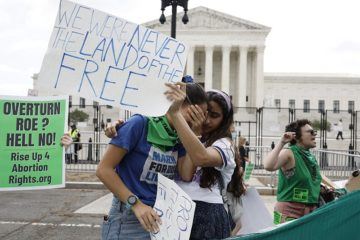 The constitutional right to an abortion has been struck down in the United States. The US Supreme Court announced on 24 June that it would overturn the 1973 landmark decision Roe v. Wade, which had protected abortion access up until the point that a fetus can live outside the womb — typically set at 22 or 24 weeks of pregnancy. Public-health researchers have renewed their warnings about the harms that this decision will bring to the country.
The outcome is not a surprise to them, because an initial draft opinion was leaked to news outlet Politico in May. “All I could add at this point is how disappointing it is to see that the majority opinion, like the leaked draft, ignores the fact that there is solid scientific evidence that this decision will harm women,” says Caitlin Myers, an economist at Middlebury College in Vermont who has studied the financial impacts of abortion restriction.
More here.
 I grew up in Qatar, a tiny peninsula off the eastern coast of Saudi Arabia. Less than a century ago, before the boom, it was a desolate corner of the world, home to Bedouin tribes, shepherds, fishermen, and pearl divers. Today it is, by virtue of its massive oil and gas deposits, the richest country on Earth.
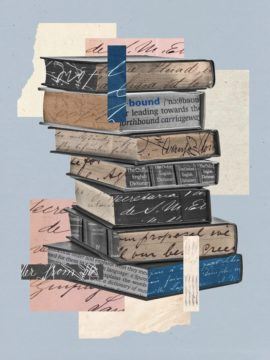 The team at the Oxford English Dictionary felt some nervousness about writing the definition for “Terf”, an acronym for trans-exclusionary radical feminist, which this month has been added to its pages. “To a certain extent, it is like any other word,” says Fiona McPherson, a 50-year-old lexicographer from Grangemouth, Stirlingshire, who has worked at the dictionary since 1997. “But it would be disingenuous to say that it is exactly the same. There seems more at stake. You want to be accurate, you want to be neutral. But it’s a lot easier to be neutral about a word that isn’t controversial.”
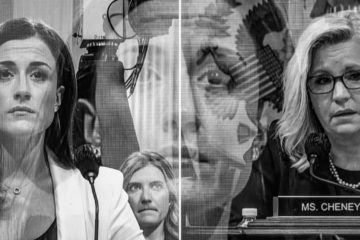 In this age of political cowardice and self-dealing, it can be easy to forget that public service is supposed to be a noble calling — one that at times requires people to step up and do hard, scary things. On Tuesday, a former
 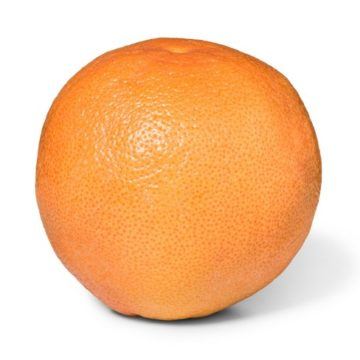 I have never liked grapefruit. They are hard to peel. A friend of mine once used them to practice tattooing: the leathery skin can stand up to the action of the gun, it turns out, plus it holds ink well enough and provides a sizable canvas. I suppose any fruit that can mimic human skin has the right to resist my fingers as they try to reach its flesh. A large knife would do the trick, but I don’t believe fruit should require butchery. I am an American born in the nineteen-eighties; I was raised in a place and time that had subordinated all other values to blithe consumption. I expect any fruit to denude itself in my hands at the slightest effort, like an eager lover or an EZ-peel clementine.
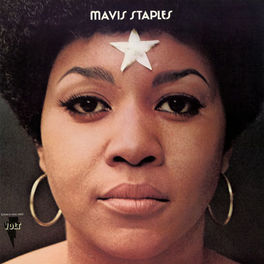 Mavis Staples has been a gospel singer longer than Elizabeth II has worn the crown. During concerts, sometimes, she might take a seat and rest while someone in her band bangs out a solo for a chorus or two. No one minds. Her stage presence is so unfailingly joyful—her nickname is Bubbles—that you never take your eyes off her. Staples sings from her depths, with low moans and ragged, seductive growls that cut through even the most pious lyric. She is sanctified, not sanctimonious. In her voice, “Help Me Jesus” is as suggestive as “Let’s Do It Again.” When she was a girl, singing with her family ensemble, the Staple Singers, churchgoers across the South Side of Chicago would wonder how a contralto so smoky and profound could issue from somebody so young.
 As a fiction writer who teaches, I often speak about what I love in fiction, what to me makes it powerful and engaging. This is a version of a talk I have been giving for years to students and other interested parties; it is a talk I’ve become — what is the right word? — uncertain about in the last five years, not because I don’t believe what I’m saying or that I care about it less but because I’m not sure that people can find it meaningful anymore.
 The United States is suffering from an epidemic of tragic gun violence. While a political debate rages around the topic of gun control, it remains important to understand the causes and possible remedies for gun violence within the current system. Andrew Papachristos is a sociologist who uses applied network science to study patterns of street violence in urban areas. His research shows that such violence is highly non-random; knowing something about the social networks of perpetrators and victims can help identify who might be at heightened risk of gun violence. It’s an interesting example of applying ideas from mathematics and computer science to real-world social situations.
 What should my friends do if I am being canceled?
 The Republican Party hasn’t adopted a new platform since 2016, so if you want to know what its most influential figures are trying to achieve—what, exactly, they have in mind when they talk about an America finally made great again—you’ll need to look elsewhere for clues. You could listen to Donald Trump, the Party’s de-facto standard-bearer, except that nobody seems to have a handle on what his policy goals are, not even Donald Trump. You could listen to the main aspirants to his throne, such as Governor Ron DeSantis, of Florida, but this would reveal less about what they’re for than about what they’re against: overeducated élites, apart from themselves and their allies; “wokeness,” whatever they’re taking that to mean at the moment; the overzealous wielding of government power, unless their side is doing the wielding. Besides, one person can tell you only so much. A more efficient way to gauge the current mood of the Party is to spend a weekend at the Conservative Political Action Conference, better known as cpac.
 The last known experiment at a Department of Veterans Affairs clinic with psychedelic-assisted therapy started in 1963. That was the year President John F. Kennedy was assassinated. “Surfin’ U.S.A.”
  When Leonard Cohen starts singing “Passing Through” on his 1973
 The Fed’s recipe to bring prices under control will increase the cost of borrowing money, which is good news for creditors, while heavily indebted households that rely on loans for their daily survival will face higher bills.
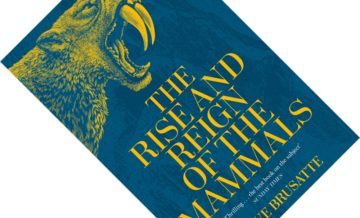 Imagine being a successful dinosaur palaeontologist and landing a professorship before you are 40, authoring a leading dinosaur textbook and a New York Times bestseller on dinosaurs. Imagine achieving all that and then saying: “You know what really floats my boat? Mammals.” After the runaway success of his 2018 book