
Adam Frank at Big Think:
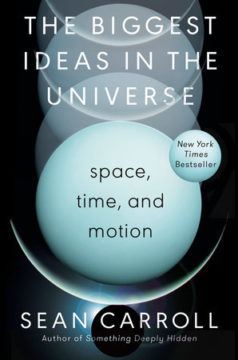 What Carroll wants is to give readers something of the mathematical essence which, after all, is how physics is done. To accomplish this goal he proposes a novel approach. As he rightly notes, to become a practicing physicist, a student must not only learn the equations and their meanings, but they must also spend untold hours solving the equations in specific circumstances. To give an example, it is not that hard to learn the basic equations of Newtonian gravity. I walk my freshman non-science students through them. The really hard part is solving those equations for something like the motion of a comet around the Sun when it is perturbed by the gravitational pull of Jupiter. That part takes hours and hours of calculation. Learning to solve equations is what week-long graduate student homework sets are for.
But Carroll is betting that scientifically interested non-scientists don’t need to solve the equations of physics — they just need to know how to read them. For Carroll, understanding specifically what the specific equations say, and how they say it, should be enough to move beyond the metaphors of most popular-science accounts. In this way readers might get a more true and visceral sense of why physics is so potent.
More here.
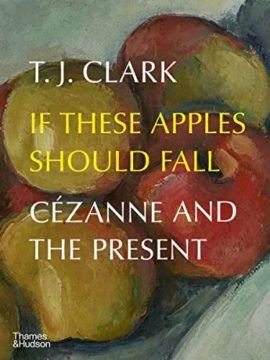 IT TAKES A STRONG STOMACH for paradox to write that Paul Cézanne “cannot be written about any more.” When art historian T.J. Clark began a 2010 London Review of Books article on the painter this way, he meant no insult. The post-Impressionist and proto-modernist Cézanne was one of the keenest observers of the industrial disenchantment of late 19th-century Western Europe. In the 21st century, Clark argued, his paintings had become “remote to the temper of our times,” ergo, a tough subject. Accordingly, Clark’s new study of the painter, If These Apples Should Fall: Cézanne and the Present, is a book about Cézanne, but also about the difficulties of writing such a book.
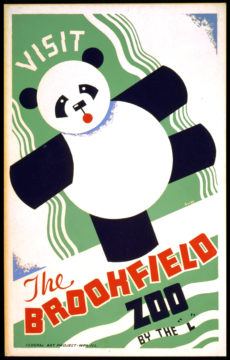 Giant pandas are found in the wild only in a few mountain ranges in China, primarily in Sichuan province, which means that China controls the supply of one of the world’s most beloved animals. Pandas became a key component of China’s diplomatic relations beginning in the mid-twentieth century, with the first instance of such “panda diplomacy”—as the practice of offering the bears as the highest official gift came to be called—occurring in 1941 when Madame Chiang Kai-shek and her sister gave a pair of pandas to the United States in gratitude for assisting the country in its war with Japan. This began a tradition that continued through the Cold War to the present day, with the animal playing a vital role in China’s relationship with countries including Taiwan, Japan, the United States, and the United Kingdom. In 1936, the first living panda arrived in the West. It was brought to the United States illegally by Ruth Elizabeth Harkness, a fashion designer from New York whose husband, William, had died that February in Shanghai while preparing an expedition to capture pandas in Sichuan.
 Historians will look back and see a point of origin to the current madness, one that explains how a new prime minister could see her administration fall apart in a matter of weeks, even if we struggle to name that cause out loud right now. When the textbooks of the future come to the chapter we are living through, in the autumn of 2022, they will start with the summer of 2016:
  Amid the endless stream of everyday experience, emotion is like a blazing neon tag that alerts the brain, “Yoo-hoo, this is a moment worth remembering!” The salience of the humdrum sandwich you ate for lunch pales in comparison, consigning its memory to the dustbin. Yet emotions regulate our recall of not just our most riveting moments. Researchers now recognize that the same neural mechanisms involved in flashbulb memories underlie recollections along the continuum of human emotional experience. When people view a series of pictures or words in the laboratory, any emotionally laden content sticks in their head better than neutral information.
 There are many good reasons to take care of your hearing — from the sound of birds chirping to being able to carry on a conversation in a restaurant. But the best reason to take care of your hearing is to take care of your brain. Hearing loss in middle age — ages 45 to 65 — is the most significant risk factor for dementia, accounting for more than 8 percent of all dementia cases, Richard Sima reports in this week’s
  The Seven Moons of Maali Almeida by Sri Lankan author
 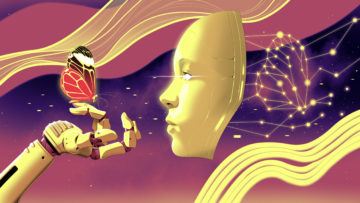 Now some computational neuroscientists have begun to explore neural networks that have been trained with little or no human-labeled data. These “self-supervised learning” algorithms have proved enormously successful at
 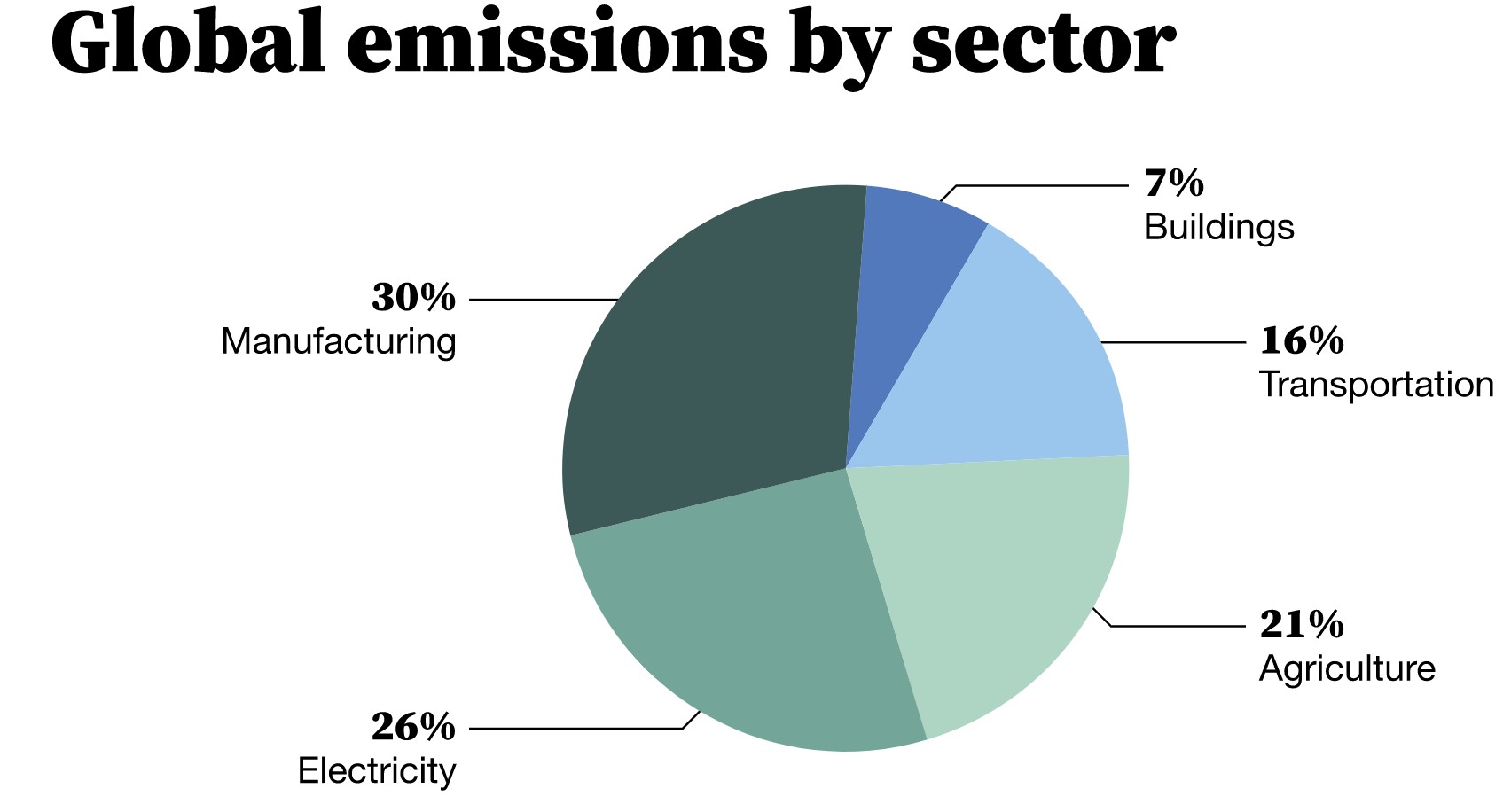 When I first started learning about climate change 15 years ago, I came to three conclusions. First, avoiding a climate disaster would be the hardest challenge people had ever faced. Second, the only way to do it was to invest aggressively in clean-energy innovation and deployment. And third, we needed to get going.
 OVER A DECADE AGO,
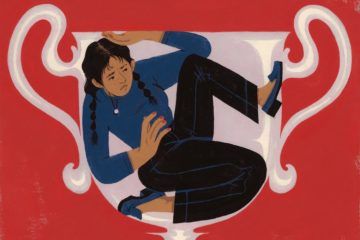 I am a recovering perfectionist.
 Science is “a shared experience, subject both to the best of what creativity and imagination have to offer and to humankind’s worst excesses”. So wrote the guest editors of this special issue of Nature, Melissa Nobles, Chad Womack, Ambroise Wonkam and Elizabeth Wathuti, in a