
Category: Recommended Reading
Annie Ernaux’s Memoir Of The Self And Society
Gili Ostfield at Bookforum:
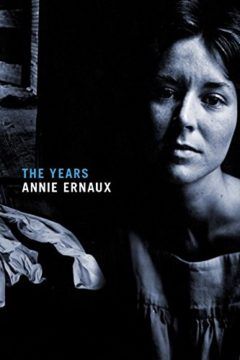 “I have always wanted to write the sort of book that I find it impossible to talk about afterward, the sort of book that makes it impossible for me to withstand the gaze of others,” writes Annie Ernaux’s narrator near the end of her 1998 autofiction, Shame. Ernaux takes the sentiment further in the opening lines of her 2008 book, The Possession: “I have always wanted to write as if I would be gone when the book was published. To write as if I were about to die—no more judges.”
This is a thread that ties together much of Ernaux’s writing, one pulled taut by a certain anxiety about truth on one end and the endurance of a self on the other. The frank admissions that pepper her work expose the radical nature of her long writing career.
more here.
The Ghostly Songs of Othmar Schoeck
Alex Ross at The New Yorker:
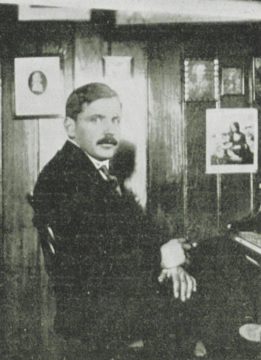 The Swiss composer Othmar Schoeck, who lived from 1886 to 1957, is little known outside his native land, but his moments of fame have been as striking as they are strange. For one thing, Schoeck gained the admiration of several leading writers of the twentieth century. Hermann Hesse ranked Schoeck’s songs alongside those of Schubert and Schumann; James Joyce considered him a rival to Stravinsky; Thomas Mann also thought highly of him. A further quiver of notoriety followed in the nineteen-seventies, when, as Calvin Trillin related in this magazine, students at Amherst College launched an absurdist organization called the Othmar Schoeck Memorial Society for the Preservation of Unusual and Disgusting Music. The group is best remembered for having precipitated the meeting of the illusionists Penn and Teller. At the time of their fateful encounter, Penn was riding a unicycle and Teller was selling pencils emblazoned with Schoeck’s name.
more here.
Othmar Schoeck: Elegie op.36 (1921/1922)
Friday Poem
How to Have a Child
Begin on the day you decide
you are fit
to carry on.
Begin with a quailing heart
for here you stand
on the fault line.
Begin if you can at the beginning.
Begin with your mother,
with her grandfather,
the ones before him.
Think of their hands, all of them:
firm on the plow, the cradle,
the rifle butt, the razor strop;
trembling on the telegram,
the cheek of a lover,
the fact of a door.
Everything that can wreck a life
has been done before,
done to you, even. That’s all
inside you now.
Half of it you won’t think of.
The rest you wouldn’t dream of.
Go on.
by Barbara Kingsolver
from How to Fly
Harper Collins
Against Algebra
Temple Grandin in The Atlantic:
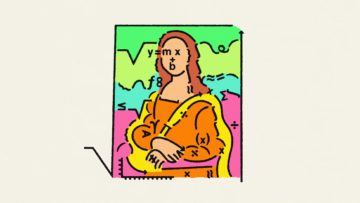 One of the most useless questions you can ask a kid is, What do you want to be when you grow up? The more useful question is: What are you good at? But schools aren’t giving kids enough of a chance to find out. As a professor of animal science, I have ample opportunity to observe how young people emerge from our education system into further study and the work world. As a visual thinker who has autism, I often think about how education fails to meet the needs of our very diverse minds. We are shunting students into a one-size-fits-all curriculum instead of nurturing the budding builders, engineers, and inventors that our country needs.
More here.
Fungal DNA, Cells Found in Human Tumors
Catherine Offord in The Scientist:
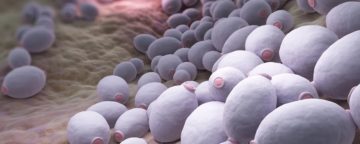 Fungal DNA is present in various types of cancer, according to two studies published yesterday (September 29) in Cell. The findings add support to a hypothesized link between fungi and certain cancers, although researchers emphasize that there isn’t yet evidence for a causal connection.
The studies provide “pretty compelling evidence there may be rare fungi within tumors,” Stanford University’s Ami Bhatt, who was not involved in either study, tells STAT. She adds that the work also raises various questions about the detected fungi: “Are they alive or not? And assuming they really are there, then why are they there? And how did they get there?” Both studies examined tissues from multiple types of human cancers throughout the body. One group, led by researchers at the Weizmann Institute of Science in Israel and the University of California, San Diego (UCSD), reports detecting fungal DNA or cells—typically at low abundance—in 35 different cancer types, with fungal species composition differing among them.
More here.
Thursday, October 6, 2022
Headscarf Games
Rafia Zakaria in The Baffler:
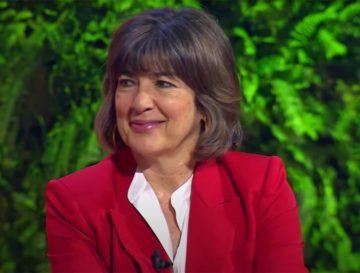 IT WAS JUST THE KIND of cringe moment that makes you want to forswear cable news forever. A few days after the death of twenty-two-year-old Mahsa (Zhina) Amini in Tehran, celebrated CNN anchor Christiane Amanpour was slotted to interview Iranian president Ebrahim Raisi, who was in New York City to make an address to the United Nations. At the appointed time of the conversation, Raisi was a no-show. According to Amanpour, an aide to the president then approached her and asked her to put on a headscarf out of respect and observance of the months of Muharram and Safar (sacred months in the Islamic calendar). Amanpour said that she refused, noting that she had never worn the hijab when interviewing his predecessor. Her refusal to wear the headscarf, she says, is why the Iranian president canceled the interview. “It’s an unprecedented request,” she stated on her broadcast on September 22.
More here.
A Universal Cancer Treatment?
Lina Zeldovich in Nautilus:
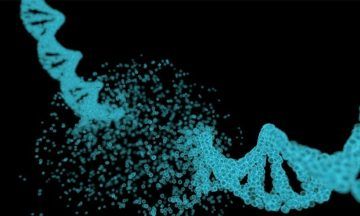 Deep inside the tens of trillions of cells that comprise your body, the DNA replication machinery is constantly speeding along in many tissues. In the bone marrow alone, 500 million red and white blood cells are produced every minute. There’s about two meters of DNA in each cell, neatly woven inside the nucleus. To keep the blood cell supply steady, about a billion meters of DNA must be copied every minute. “You could wrap that around the Earth along the equator about 25 times,” Stillman says. It is inevitable that over the course of a person’s lifetime, this process will make mistakes—some harmless, but others leading to malignant mutations. So, understanding the cogs of this complex machinery may hold the key to combating many cancers.
Stillman and his team discovered that the replication process starts with a set of six specific proteins called Origin Recognition Complex, or ORC. The proteins bind to the DNA at specific locations and recruit more proteins to help, forming what’s called the pre-replicative complex. This pre-replicative complex “gives permission” to start DNA replication and many proteins begin copying the genetic material from their respective starting points. Once the job is finished, the pre-replicative complex is destroyed. Once the cell is ready to divide again, the complex is formed anew.
More here.
How Jon Stewart Made Tucker Carlson
Jon Askonas in The New Atlantis:
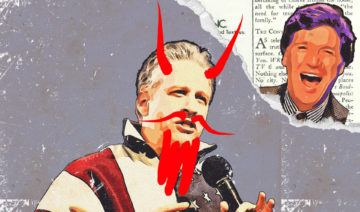 Jon Stewart has a dream where he walks out onto the brightly lit set of a new TV show. He has worked for years to build this show. It’s the answer to everything wrong with the news media.
For decades, Americans were fed a news diet of mass-produced garbage. O. J. Simpson, Monica Lewinsky, endless coverage of the Laci Peterson disappearance … hour after hour of filler. Talking points and “spin rooms” and canned zingers. Presidential aspirants doing eighth-grade debate theater. It was empty both-sides centrism. It didn’t speak to what mattered. It staged fake confrontations with powerful people to protect them from real accountability.
On this new show, yes, figures from across the political spectrum come to argue. But now it’s only real disagreement about the issues that matter to real Americans. No more treating politics like a staged wrestling match, only authentic single-warrior combat.
More here.
What’s next for ancient DNA studies after Nobel Prize honors groundbreaking field of paleogenomics
Mary Prendergast in The Conversation:
 For the first time, a Nobel Prize recognized the field of anthropology, the study of humanity. Svante Pääbo, a pioneer in the study of ancient DNA, or aDNA, was awarded the 2022 prize in physiology or medicine for his breathtaking achievements sequencing DNA extracted from ancient skeletal remains and reconstructing early humans’ genomes – that is, all the genetic information contained in one organism.
His accomplishment was once only the stuff of Jurassic Park-style science fiction. But Pääbo and many colleagues, working in large multidisciplinary teams, pieced together the genomes of our distant cousins, the famous Neanderthals and the more elusive Denisovans, whose existence was not even known until their DNA was sequenced from a tiny pinky bone of a child buried in a cave in Siberia. Thanks to interbreeding with and among these early humans, their genetic traces live on in many of us today, shaping our bodies and our disease vulnerabilities – for example, to COVID-19.
More here.
Annie Ernaux wins the 2022 Nobel prize in literature
Sarah Shaffi in The Guardian:
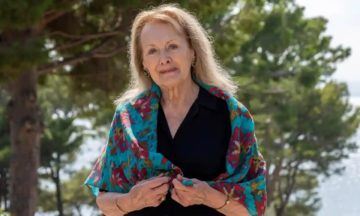 The Nobel prize in literature has been awarded to Annie Ernaux “for the courage and clinical acuity with which she uncovers the roots, estrangements and collective restraints of personal memory”.
Ernaux, who writes novels about daily life in France as well as non-fiction and is one of her country’s most acclaimed authors, had been among the favourites to win the prize. The Nobel said that they had not yet been able to reach her on the phone, but expected to be able to speak to her soon.
Ernaux is the first French writer to win the Nobel since Patrick Modiano in 2014. She becomes the 16th French writer to have won the Nobel to date.
More here.
Daniel C. Dennett: Do Persons Have Souls?
Loretta Lynn Knew the Truth About No-Good Men and the No-Good World
Hanif Abdurraqib at The New York Times:
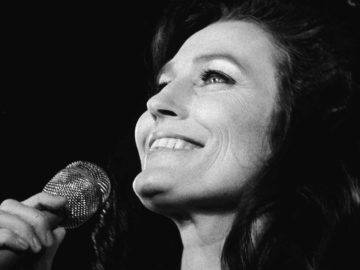
I found her to be one of the great romanticists because she was so committed to the rigors of loving herself that she suffered no one. She’d be quick to tell you what you weren’t gonna do on her watch. She slid seamlessly into the canon of women I listened to growing up, women whom I could easily map onto the women I loved and held close. Loretta Lynn also understood work, but she did not bow to it, or praise it in the name of capital. It was what it was. When she was still touring, aggressively, and got asked about how she maintained the stamina to do it at her age, she’d shrug and say: “I work. I get on my bus and I ride my bus to the next date. And then I get back on the bus after the show and ride to the next date. Simple as that.”
more here.
Loretta Lynn – Lay Me Down ft. Willie Nelson
Two Girls on the Street: All Is Lies
Chris Fujiwara at The Current:
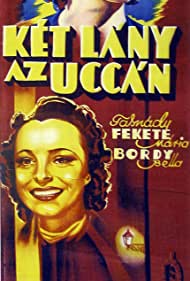 Early in Two Girls on the Street (1939), the third of five films that André de Toth made in his native Hungary at the outset of his long directing career, something happens that predicts both the mood and the concerns of de Toth’s future work in Hollywood. Vica (Bella Bordy), newly arrived in Budapest and working on a construction site, has received permission to sleep in the storage room adjoining the architect’s office. Working at his desk late at night, the architect, Csiszár (Andor Ajtay), at first shows no interest in Vica. Then, through the open doorway to the storage room, he sees her shadow on the wall as she undresses. The shadow distracts him more and more—and de Toth cuts back to it insistently—until, after checking his watch twice in a businesslike manner, Csiszár walks toward the door and enters the room.
The scene evokes the world of total unreliability that we encounter in such later de Toth films as Ramrod (1947), House of Wax, Crime Wave (both 1953), Riding Shotgun (1954), The Two-Headed Spy (1958), and Man on a String (1960), a world in which situations and affections reverse themselves in a moment.
more here.
Thursday Poem
A Letter to M.A. Who Lives Far Away
Dear Melissa,
I do remember you
You had curly hair
Up there on Quadra Isle
With a shy smile
Say hello to your mother Jean
I don’t remember your sister’s name
And that’s a shame
But I sort of remember her face
And natural grace
Not all poetry has to rhyme
But this time
I’m writing back, the way you did it
It’s to your credit
You got me to write this form
Since real poetry is born
From a formless place
Which is our Original Face
Zen Buddhists say,
In play.
So if this helps you to be a writer
It will please your new friend
Gary Snyder.
by Gary Snyder
from This Present Moment
Counterpoint Press, 2015, Berkeley, CA
Wednesday, October 5, 2022
The Inflated Promise of Science Education
We can’t simply teach our way out of anti-science sentiment. Building public trust is as much about power as about knowledge.
Catarina Dutilh Novaes and Silvia Ivani in the Boston Review:
 The public, it is assumed, knows little about science: they are ignorant not just of scientific facts but of scientific methodology, the distinctive way scientific research is conducted. Moreover, this ignorance is supposed to be the primary source of widespread anti-science attitudes, generating fear and suspicion of scientists, scientific innovations, and public policy that is said to “follow the science.” The consequences are on wide display, from opposition to genetically modified foods to the anti-vax movement.
This influential conception of the relations between science and society helped underwrite what has become known as the “knowledge deficit model” of science communication. The model posits an asymmetric relation between scientists and the public: non-scientists are seen as passive recipients of scientific knowledge, which they should accept more or less uncritically according to the dispensations of scientific experts.
More here.
Will the Circle Be Unbroken
Steve Futterman at Commonweal:
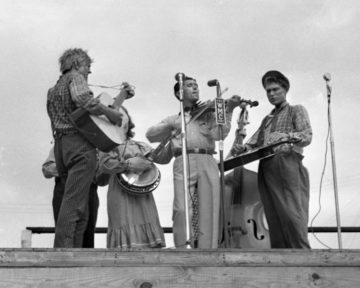 For open-eared pop music fanatics of the seventies, Circle was a gateway album that revealed vistas. It spoke of a world beyond the sonic eruptions of rock-and-roll, yet one that could exist peaceably alongside it. The unassuming splendor of the music I heard that night in Central Park, particularly the marvelous flatpicking and straight-from-the-hills singing of Watson and the offhand brilliance of Scruggs’s banjo playing—indeed, the seemingly effortless, stirringly unselfconscious virtuosity of both men—brought to life the pleasures of a new idiom, one I still cherish. It was the joy already embedded in that momentous album come to life.
Antecedents for the project were actually abundant. The Byrds, Buffalo Springfield, the Flying Burrito Brothers (with the stylistic pioneer Gram Parsons at the helm), the Band, the Grateful Dead, and, of course, Bob Dylan, among others, were already infusing elements of country and bluegrass into their sound.
more here.