
Category: Recommended Reading
The Art Of Wolfgang Tillmans
Alex Kitnick at Artforum:
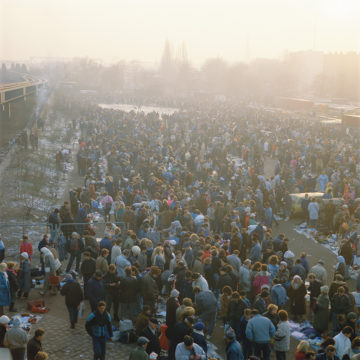 WOLFGANG TILLMANS HAS CREATED an image of contemporary Europe that a lot of people carry around in their heads. Not the Colosseum or the Arc de Triomphe or even the Eiffel Tower, but easyJet, English, Berghain. These keywords are both the technologies and the coordinates of Tillmans’s practice, the atmosphere and infrastructure that support his work, though they are not necessarily visible in his pictures. And yet he has created images—indeed, icons—that are somehow correlates for them, that use these things as scaffolding. I know this is a big claim to make about an artist, given that the profession today no longer has much to do with the way things look. The task of imaging has largely been left to the stylist, the executive, and the influencer. But by leveraging photography’s many lives (as art, as document, as fashion editorial, as reportage, and as publicity), Tillmans has been able to thread the needle through an increasingly vast network of image production, and its sites of display, in order to create a new kind of image—a moving image not simply in the affective sense, but in the circulatory one, too. His images get around, change shape. They are promiscuous. We can call them images in motion.
more here.
On Bruno Latour (1947–2022)
Ava Kofman at n+1:
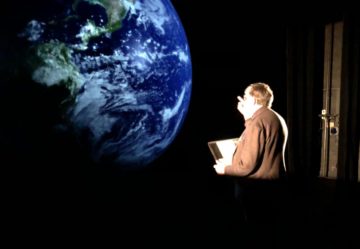 ONE MAN ALONE can do very little. This was a precept held by Bruno Latour, among the most inventive and influential philosophers of postwar Europe. Latour did for science something similar to what Tolstoy, one of his heroes, did for history—namely, reveal that its landmark theories and discoveries, like epochal wars and revolutions, far from being the work of a few great men, were actually the product of careful coordination between an abundance of human and non-human actors. “A crowd may move a mountain; a single man cannot,” Latour wrote in The Pasteurization of France (1984), his unconventional study of Louis Pasteur. “If, therefore, we say of a man that he has moved a mountain, it is because he has been credited with (or has appropriated) the work of the crowd that he claimed to command but that he also followed.”
It was not lost on Latour, a generous, inveterate collaborator, that his own success could be partially explained by his ability to put his philosophy into practice.
more here.
Bruno Latour Interview
https://www.youtube.com/watch?v=sYfwkTgEpmE&ab_channel=ARTE.tvDocumentary
How to store data for 1,000 years
Jocelyn Timperley in BBC:
 “You know you’re a nerd when you store DNA in your fridge.”
At her home in Paris, Dina Zielinski, a senior scientist in human genomics at the French National Institute of Health and Medical Research, holds up a tiny vial to her laptop camera for me to see on our video call. It’s hard to make out, but she tells me that I should be able to see a mostly clear, light film on the bottom of the vial – this is the DNA. But this DNA is special. It does not store the code from a human genome, nor does it come from any animal or virus. Instead, it stores a digital representation of a museum. “That will last easily tens of years, maybe hundreds,” says Zielinski.
Research into how we could store digital data inside strands of DNA has exploded over the past decade, in the wake of efforts to sequence the human genome, synthesise DNA and develop gene therapies.
More here. (Note: Thanks to dear friend Tom Brennen)
Eating Right to Avoid Catastrophe
From The Scientist:
 The world may be at greater risk of infectious diseases that originate in wildlife because people are increasingly encroaching on natural habitats in the tropics to graze livestock and hunt wild animals. Devastating pandemics such as HIV/AIDS, Ebola, and COVID-19, all of which likely originated in wildlife, are reminders of how environmental destruction and infectious disease are intertwined. Tropical deforestation and overhunting are also at the root of global warming and mass species extinction.
All of these phenomena suggest that what we choose to eat has a fundamental impact on our health and that of the planet. We recently conducted a review of the scientific literature to explore how wildlife-origin diseases, global warming, and mass species extinction are linked to the global food system. Our second objective was to explore reparative actions that governments, NGOs, and each one of us can undertake. From the perspective of individual consumers, the global population needs to shift to diets low in livestock-sourced foods to stem human encroachment on tropical areas of wilderness. Second, there is a need to curb wildmeat demand in tropical cities.
More here.
Friday Poem
Border
I’m going to move ahead.
Behind me my whole family is calling,
My child is pulling my sari-end,
My husband stands blocking the door,
But I will go.
There’s nothing ahead but a river.
I will cross.
I know how to swim,
but they won’t let me swim, won’t let me cross.
There’s nothing on the other side of the river
but a vast expanse of fields,
But I’ll touch this emptiness once
and run against the wind, whose whooshing sound
makes me want to dance.
I’ll dance someday
and then return.
I’ve not played keep-away for years
as I did in childhood.
I’ll raise a great commotion playing keep-away someday
and then return.
For years I haven’t cried with my head
in the lap of solitude.
I’ll cry to my heart’s content someday
and then return.
There’s nothing ahead but a river,
and I know how to swim.
Why shouldn’t I go?
I’ll go.
by Taslima Nasrin
from Poetry Nook
Thursday, October 13, 2022
Pankaj Mishra’s novel of intellectuals and influencers
Jennifer Wilson in The Nation:
 In 2015, The New York Times Book Review posed the question “Whatever happened to the Novel of Ideas?” to the writers Pankaj Mishra and Benjamin Moser. On the question of “whether philosophical novels have gone the way of the dodo bird,” Mishra answered in the affirmative and—not a writer who shies away from generalizations—charged that the culprit was the MFA program. “America’s postwar creative-writing industry,” Mishra claimed, has “hindered literature from its customary reckoning with the acute problems of the modern epoch” and “boosted instead a cult of private experience.”
Yet in his new novel, Run and Hide, Mishra sounds a bit down on the idea of, well, ideas. He begins his story on a college campus, a place that, theoretically, should be teeming with the stuff (in fact, he asserted in the Book Review, the campus novel had become the new novel of ideas). Yet in the picture he sketches of the university, it largely functions as a means to an end: that of ruthless upward mobility.
More here.
Humanity has diverted an asteroid for the first time
Rahul Rao in Nature:
 Humans have for the first time proved that they can change the path of a massive rock hurtling through space. NASA has announced that the spacecraft it slammed into an asteroid on 26 September succeeded in altering the space rock’s orbit around another asteroid — with better-than-expected results.
Agency officials had estimated that the Double Asteroid Redirection Test (DART) spacecraft would ‘nudge’ the asteroid Dimorphos closer to its partner, Didymos, and cut the time it takes to orbit around that rock by 10–15 minutes. At a press conference on 11 October, researchers confirmed that DART in fact cut the orbital time by around 32 minutes.
Neither asteroid was a threat to Earth, but the agency tested the manoeuvre to prove that humanity could, in principle, deflect a worrisome space rock heading for the planet.
More here.
The US is under-policed and over-imprisoned
Alex Tabarrok in Marginal Revolution:
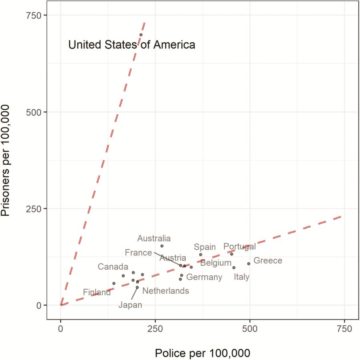 A new paper, The Injustice of Under-Policing, makes a point that I have been emphasizing for many years, namely, relative to other developed countries the United States is under-policed and over-imprisoned.
…the American criminal legal system is characterized by an exceptional kind of under-policing, and a heavy reliance on long prison sentences, compared to other developed nations. In this country, roughly three people are incarcerated per police officer employed. The rest of the developed world strikes a diametrically opposite balance between these twin arms of the penal state, employing roughly three and a half times more police officers than the number of people they incarcerate. We argue that the United States has it backward. Justice and efficiency demand that we strike a balance between policing and incarceration more like that of the rest of the developed world. We call this the “First World Balance.”
First, as is well known, the US has a very high rate of imprisonment compared to other countries but less well known is that the US has a relatively low rate of police per capita.
More here.
Sean Carroll: Children, Philosophy & the Meaning of Life
La Zona Fantasma: Ghosts And Ancient History
Javier Marías at The Believer:
 As I write this I suddenly realize that All Souls’ Day, November 1, might have been a more timely date for the publication of this article, but alas, that is one of the (very few) inconveniences of not being a religious man. Life is life, however, and certain truths do not always dawn on us in a timely fashion; they come when they come. And in the end, there is so much more to be pondered in November, the month that Herman Melville always associated with melancholy, as he so succinctly expressed it at the beginning of Moby-Dick, through the voice of Ishmael, his narrator who said that “whenever it is a damp, drizzly November in my soul… I account it high time to get to sea as soon as I can,” since the sea was his “substitute for pistol and ball.”
In my case, a few days ago I decided it was high time I clean up my old address book, with its dog-eared oilcloth cover and its haphazard, chaotic content—last names starting with “C” that had long since overflowed into the “E” section because the “C” and “D” pages were entirely filled up with other names, just like “M,” “R,” and so many other sections.
more here.
Javier Marías Interview: “You Rest In Fiction.”
When the Hindu Right Came for Bollywood
Samanth Subramanian in The New Yorker:
 Filmmaking thrives in plenty of other cities in India, but “Bollywood” has become shorthand for Indian cinema as a whole, and for the thousand or so movies that the country releases annually. For nearly a century, Bollywood has also worn the warm, self-satisfied gloss of being a passion that unifies a country of divisions. Not only are its audiences as mixed as India itself, filmmakers will say, but Bollywood is a place where caste and religion don’t matter. The most piously presented proof of this is the fact that, in a Hindu-majority country, a Muslim man named Shah Rukh Khan has been the supreme box-office star for decades.
Even if Bollywood possesses this liberal fibre, the rightward swing in Indian politics has gnawed away at it. In Mumbai, people divide recent history into pre-“Tandav” and post-“Tandav” periods, reading the show’s fate—its bitter legal battles, its suspended second season—as a lesson in what can and cannot be said in Modi’s India. Their nervousness manifests in absurdities—in, for example, how Amazon Prime now discourages characters who share their names with Hindu deities—but also in decisions to put audacious film and TV projects into cold storage. Other filmmakers embrace genres that match the B.J.P.’s tastes: dubious historical epics that glorify bygone Hindu kings; action films about the Indian Army; political dramas and bio-pics, dutifully skewed. These productions all draw from the B.J.P.’s roster of stock villains: medieval Muslim rulers, Pakistan, Islamist terrorists, leftists, opposition parties like the Indian National Congress. Through Bollywood, India tells itself stories about itself. Many of those stories are now starkly different, in lockstep with the right wing’s bigotry.
More here.
Re-Covered: Angelica and Henrietta Garnett
Lucy Scholes at The Paris Review:
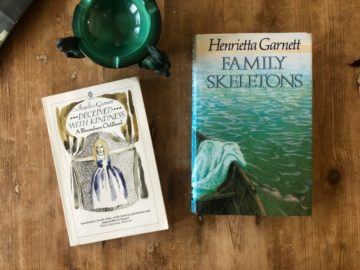 Henrietta Garnett was forty-one when her first and last novel, Family Skeletons, was published in 1986. She knew that her debut, a tragic gothic romance revolving around a complex constellation of family secrets, would face an unusual degree of public scrutiny: Henrietta was English literary royalty, the direct descendant of the Bloomsbury Group on both sides of her family tree. Her father was the novelist David “Bunny” Garnett, author of the James Tait Black Memorial Prize–winning Lady into Fox (1922), a book so highly regarded it was on the British high school syllabus when his daughter was a teenager in the late fifties and early sixties. Henrietta’s mother was Angelica Garnett, née Bell, daughter of Virginia Woolf’s sister, the painter Vanessa Bell. “I had been putting off trying to get anything published,” Henrietta confessed when an interviewer asked about her famous relations, “because I couldn’t help thinking that whatever I did it would never be as good as anything they’ve achieved.” Family Skeletons is a strange and singular creation: melodramatic in plot but elegant in tone, written in a cool and fluent prose that is utterly Henrietta’s own. The novel bears no resemblance to either Bunny’s or Woolf’s fiction; nevertheless, the story does contain more psychological traces of her family’s legacy—namely, of the uniquely disturbing personal dramas that shaped the lives of those who raised her and the public perception of the Bloomsbury Group.
more here.
Thursday Poem
Glioblastoma: Starlight
—for Adam
Astrocytes in the brain seem as numerous
and shapely as stars in the universe,
but when the stars in your brain go awry,
they behave like dark energy, changing
the shape of time.
You see time’s boundaries. Constraints
get into your blood and bones,
a double-barreled two years of choices
to make on days you are able make them.
You’re un-glued and re-glued in an instant,
and everything’s palliative after.
That cloak of care is another kind
of starlight, and it’s all surgery and radiation
by which you discern what’s what.
What had been an idea of happiness
by which you tried
to live becomes this moment
and the next and the need to nap
and weep, the want of words, the memory
of magic that each friend
bequeaths in your mind, however
small, the need
to father finitely and
to love for all the time in the world.
by Anna Leahy
from Contrary Magazine
Wednesday, October 12, 2022
An Interview With Chris Forsyth
Rick Moody interviews Chris Forsyth at Salmagundi:
 If rock and roll has, in fact, become an invalidated form, a “niche product,” encrusted with its political difficulties, and, perhaps, exhausted as a way of thinking about popular music, one of the chief problems, perhaps, is that it has failed to find new ways to use the guitar. Since the high period of guitar innovation—the period in which we had Sonic Youth and their tunings, James “Blood” Ulmer and his unison strings, and the pieces for a hundred guitars of Rhys Chatham and Glenn Branca—there just hasn’t been as much innovation in the guitar as in the years prior (rare exceptions: left-field employment of guitar synthesizers in, e.g., the work of Robert Fripp, or: the beautiful jazz-flavored modulations of Marc Ribot, or: almost everything played by Nels Cline). So it’s striking and, well, thrilling, when a contemporary player appears, rises up from out of the surface noise, and seems to have his ears fixed mightily on the history of the guitar, and with it the potential for rock and roll to speak anew to an audience. Chris Forsyth is one such contemporary player. His point of origin is (arguably) New York punk of the Dolls, Television, Patti Smith group variety, but he also mixes in a kind of jam-oriented approach that would have been somewhat verboten in the orthodox punk days.
more here.
Chris Forsyth & The Solar Motel Band
What, Exactly, Is David Bentley Hart’s Deal?
Phil Christman at Commonweal:
 What, exactly, is David Bentley Hart’s deal? One asks the question in awe. How does he produce so many books—as of this writing, eighteen of them, spanning theology, cultural criticism, and fiction, not counting his translation of the New Testament, his co-translation with John R. Betz of Erich Przywara’s Analogia Entis, his uncollected articles (there must still be a few) and his Substack posts? When did he have time to learn so many languages, that he can refer familiarly to the literatures of Europe, China, Japan, India, and the Americas, and to fine details of theological controversy in several faiths? Where does he find a moment to floss, to do housework, to keep up with his beloved Baltimore Orioles?
But the question What is David Bentley Hart’s deal? might be asked less admiringly. Must he bluster so? In his nonfiction writing, is he, perhaps, sometimes just a little hasty in his generalizations, a bit lavish with his use of the “No serious scholar of X would ever think of denying Y” formula?
more here.
If an American Cannot Speak Arabic
Raaza Jamshed in Guernica:
 My house is isolated, up on the tip of a hill overlooking the Mediterranean Sea, but daybreak sounds rise and reach my window, where I sit reading your book. Someone heckles from a road below to someone else, whom I imagine is trudging uphill. I recognize the Arabic words individually, but strung together, they are senseless to me. I write them down, a small digitalized scribble, on the concluding page of your book, and I mouth them repeatedly, as I do with any new word or phrase in this place, which is also new to me, to cast them in memory. Later, I’ll find someone kind enough to attempt a translation. You would know, Noor, that street calls show for nothing in the online Arabic-to-English dictionary — and that there is a particular kind of angst, a wanting and waiting, at the periphery of a language.
I have long known that languages house worlds unique to them. I was born and raised in Pakistan. English, the language of the colonizers, was drilled into me along with Urdu, my mother tongue.
More here.