
Category: Recommended Reading
Tuesday Poem
Animal Planet
“I am the master of this universe, my fun and frolic are the only things that matter, besides which there is no other truth
or mystery, inside this creation,”— Whenever the modern man thinks like this, he turns into a beetle. A stout, strong
black beetle of the Amazon basin. He roams the branches of the rubber trees with a snobbish swagger. He sits in a
coffee house of Rio de Janeiro, wearing spectacles and a grave expression on his face, indulging in intellectual
discourse about musk and Michel Foucault. In fact that coffee house is nothing but a tall branch of a huge rubber tree,
under which flows the river Amazon. And in the water of that river swims a ‘water-monkey’ fish. The fish has two very
long beards on its chin. Amid the dense rainforest, suddenly the water-monkey fish jumps from the water up to a height
of six feet in the air, neatly gobbles up the beetle in its mouth, and disappears under the waters of the river Amazon.
by Ranajit Das
from: A Summer Nightmare and Other Poems
translation: 2011, Nirmal Kanti Bhattacharjee
Rupa and Co, New Delhi, 2011
Sunday, November 6, 2022
Walking, Seeing, Thinking
Justin E. H. Smith in his Substack newsletter, The Hinternet:
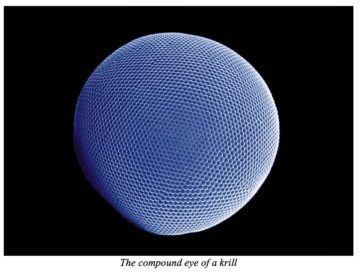 One of the last flashes of creativity I saw before I deactivated my Twitter account (more on that below, and on its significance for this Substack project), was a question launched by another user (whom I can’t locate now, without Twitter, but to whom I say “thanks”). “Are there,” this user asked, “more eyes or legs in the world?”
To be honest I’ve been thinking about little else for the past few weeks since I encountered this “prompt” (as American undergraduates now say, I’ve learned, of what I still call “paper topics”). Nor is this only the burrowing and obsessing of a curiosity that does not know when to quit. As I am about to show you, I think this question has profound implications for our understanding of certain fundamental matters at the heart of our ongoing debates about scientific realism. In particular, while I’m still on the fence about eyes, I don’t think legs, strictly speaking, exist, and I think the non-existence of legs offers an instructive illustration of the limits of the “manifest image” of the world. Moreover, I think this difference has vast consequences for our understanding of certain prejudices that run throughout the history of philosophy. For example, it becomes clear why René Descartes’s “I think, therefore I am” sounds like a serious and laudable stab at explaining the nature of our existence, while Thomas Hobbes’s retort, “Why not: ‘I walk, therefore I am’?” sounds like facetious trouble-making.
In a Hobbesian spirit, then, let us make some trouble.
More here.
Annual US clock change kills 33 people and 36,500 deer in car crashes
Matthew Sparkes in New Scientist:
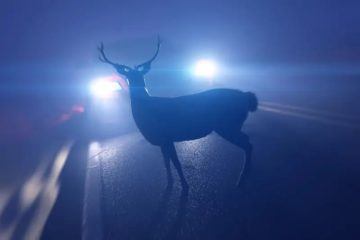 Moving to daylight saving time permanently could prevent 36,550 deer deaths, 33 human deaths and $1.19 billion in costs annually in the US.
Calum Cunningham at the University of Washington in Seattle and his colleagues have analysed data from 23 US states that included details on more than a million collisions between deer and vehicles from 1994 to 2021. There are an estimated 2.1 million of these accidents in the US every year, killing about 440 people and causing upwards of $10 billion in damage.
The team found that the shift from daylight saving time to standard time in November, when the clocks go back an hour, leading to sunrise and sunset being experienced at an earlier time, led to a sudden increase in the amount of driving during darkness. Peak traffic volume also shifted from before sunset in October to during sunset in November. The records showed that collisions between deer and cars in the US rise by 16 per cent in the week following the autumn clock change.
More here.
Sean Carroll’s Mindscape Podcast: John Allen Paulos on Numbers, Narratives, and Numeracy
Sean Carroll in Preposterous Universe:
 People have a complicated relationship to mathematics. We all use it in our everyday lives, from calculating a tip at a restaurant to estimating the probability of some future event. But many people find the subject intimidating, if not off-putting. John Allen Paulos has long been working to make mathematics more approachable and encourage people to become more numerate. We talk about how people think about math, what kinds of math they should know, and the role of stories and narrative to make math come alive.
More here.
Why aesthetic value should take priority over moral value
Tom Cochrane in Aeon:
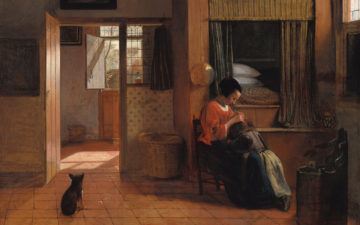 So can we find final value in the world? I believe that we can, so long as we are attuned to aesthetic value. Aesthetic value is a catch-all term that encompasses the beautiful, the ugly, the sublime, the dramatic, the comic, the cute, the kitsch, the uncanny, and many other related concepts. It is a well-worn cliché that the practical person scorns aesthetic value. But there’s reason to think that it is the only way in which we can draw final positive value from the entire world. Thus, to the extent that we care whether or not we live in a good world, we must be aesthetically sensitive.
More here.
The Roiling Point
Rafia Zakaria in The Baffler:
 BEING A TRUTH-TELLING journalist has always been a liability in Pakistan. If one manages to evade the bullying of this or that political party, there is the omniscient Pakistani military and its long shadow. The powerful in Pakistan believe that truth is something that can be molded; they expect journalists to do the molding to their liking. It follows, therefore, that independent investigative journalism is a dangerous, sometimes fatal, pursuit.
Arshad Sharif was a renegade journalist, and in the past several months he had been playing with fire while walking a tightrope. Since April of this year, when a no-confidence motion in Parliament led to the removal of then-prime minister Imran Khan, he had been digging to expose the truths behind this regime change. At issue was the allegation that Khan, a right-of-center populist leader, had been removed because of disagreements with General Qamar Javed Bajwa, the head of Pakistan’s bloated military. Sharif was chasing this story.
In the last video that he posted on YouTube, he remained committed to exposing how collusion between the Pakistani military and the opposition political parties had led to the no-confidence motion in Parliament. Khan’s government, the legitimately elected one, had thus been wrongly removed from power. This summer, the new government slapped Sharif with sedition charges, allegedly for criticizing state institutions and “abetting mutiny” within the military.
More here.
Why Do Women Want?: Edith Wharton’s Present Tense
Sarah Blackwood in The Paris Review:
“Undine Spragg—how can you?” her mother wailed, raising a prematurely-wrinkled hand heavy with rings to defend the note which a languid “bell-boy” had just brought in.
It strikes me as odd that the opening of Edith Wharton’s 1913 novel, The Custom of the Country, rarely appears on those “best first lines in literature” lists that go around every so often. The sentence has everything that makes the novel, and Wharton’s work in general, so great: vigor, voice, irony, detail. Through it, Wharton sketches a tense and dissonant world in which the colloquial and the bejeweled come into uncomfortable relation with each other. Dramatic and dynamic, this world nevertheless feels intensely claustrophobic. From the first five words of the novel, the reader is tied to a repetitive present tense that feels inescapable—no future, no past, just a boxed-in present (“how can you?” rather than the usual “how could you?”).
Each time we read the novel, it seems, the continuous present of the deliciously named Undine Spragg happens to us all over again. The Custom of the Country, many recent commentators have noted, feels uncannily up to the minute. Its heroine, the beautiful, social-climbing, rapacious, and empty-souled Undine Spragg, reminds us of a tabloid fixture or a reality television star; her currency as a figure who exemplifies the ideas about white womanhood in every era has remained constant. If the morality of divorce—the main “problem” in this 1913 “problem novel”—is perhaps no longer the most pressing social phenomenon to imaginatively explore, Undine’s grasping, financially speculative approach to personal identity and relationships still is.
More here.
Robert Gordon (1947 – 2022) Rockabilly Singer
Toshi Ichiyanagi (1933 – 2022) Avant-Garde Composer And Pianist
Rodney Graham (1949 – 2022) Conceptual Artist
Sunday Poem
The Fiddler
In a little Hungarian cafe
Men and women are drinking
Yellow wine in tall goblets.
Through the milky haze of the smoke,
The fiddler, under-sized, blond,
Leans to his violin
As to the breast of a woman.
Red hair kindles to fire
On the black of his coat-sleeve,
Where his white thin hand
Trembles and dives,
Like a sliver of moonlight,
When wind has broken the water.
by Lola Ridge
from Poetry.com
Saturday, November 5, 2022
Saturday Poem
The Death of the Wounded Child
… In the night once more . . . It is the fever-
hammer in the bandaged temples
of the boy. “Mother! The yellow bird!
The butterflies are black and purple!”
… “Sleep, my son.” The mother by the bed
squeezes the tiny hand. “My burning flower,
my bloodflower, who freezes you? Tell me!”
There is an odor of lavender in the stark bedroom;
… outside the swollen moon is turning white
the cupola and the steeple of the darkened city.
An invisible aeroplane hums.
… “Are you asleep, sweet flower of my blood?”
The pane on the balcony window shivers.
“Oh cold, cold, cold, cold, cold.”
by Antonio Machado
from Times Alone
Wesleyan University Press, 1983
Original Spanish at: Read More
Ronald Blythe at 100
Patrick Barkham at The Guardian:
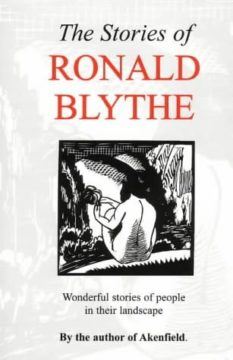 The greatest living writer on the English countryside will celebrate his 100th birthday this week at his Suffolk farmhouse, surrounded by the friends he calls his “dear ones”. Ronald Blythe is best known for Akenfield, his moving and intimate portrait of a Suffolk village through the lives of its residents, which became an instant classic when published in 1969. But Blythe, who has spent all his 10 decades living within 50 miles of where he was born, has also devoted millions more words – in history, fiction, and luminous essays and columns – to describe with poetry and precision not simply rural folk but the very essence of existence.
His writing is honoured in a new volume, Next to Nature, a highlights package of nearly a quarter-century of weekly columns for the Church Times, written between 1993 and 2017. Fellow writers agree that Blythe’s work has improved with age.
more here.
Interview of Ronald Blythe (2015)
A New Biography of George Balanchine
Dwight Garner at the New York Times:
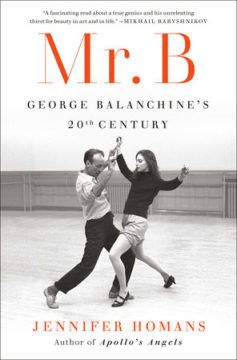 Opera is all about saying goodbye, Virgil Thomson is reputed to have said, and ballet is all about saying hello.
In “Mr. B,” a sensitive, stately and often thrilling new biography of the Russian-born choreographer George Balanchine, Jennifer Homans finds a bittersweet tone to capture Balanchine’s many leave-takings — the way he was chased, as if he were Chaplin’s Tramp, across the first half of the 20th century.
When World War I arrived, Balanchine was a young dance student in czarist Russia. Three years later, at 13, he was forced to scavenge for food when the revolution disrupted his life. He spent the interwar years shuffling between Weimar Berlin, before Hitler put an end to that decadent and creative intellectual milieu, and Paris, Monte Carlo and London.
more here.
Psilocybin Relieves Some Treatment-Resistant Depression Cases: Trial
Shawna Williams in The Scientist:
 For years, some researchers have looked to psychedelic drugs, including psilocybin (the active ingredient in so-called magic mushrooms), as a potential treatment for some psychiatric conditions. The largest trial to date of psilocybin for depression, published today (November 3) in the New England Journal of Medicine, finds that a dose of synthetic psilocybin combined with counseling did alleviate symptoms for some patients. But for some participants who did respond, the effects wore off within 12 weeks of the treatment.
“It’s a big step forward for the field of psychedelic research and depression treatment,” Jimmy Potash, who oversees psychedelics research at Johns Hopkins but was not involved in the study, tells STAT. The durability of the response is “not as good as you’d like, but it’s still quite good,” he adds. The Phase 2 clinical trial, funded in part by the mental health care startup Compass Pathways, which makes the synthetic psilocybin used in the study, included 233 patients for whom at least two depression medications had not worked. The participants were randomly assigned to receive psilocybin at one of three dosing levels: 25 mg, 10 mg, or 1 mg (used as a control). Volunteers in all three groups received counseling before and after the psilocybin use and were monitored during their experience with the drug.
Three weeks after treatment, all three groups saw a fall in their average score on a standard rating scale of depression indicators (indicating less severe cases) relative to their scores prior to treatment, according to the paper, with the largest improvement in the highest-dose group. STAT notes that 29 percent of those high-dose participants were in remission at the three-week mark, a number that dropped to 20 percent at 12 weeks, while 37 percent had their depression score halved by the three-week mark.
More here.
In Search of a Lost Spain
Aatish Taseer in The New York Times:
 ON A MORNING of haunting heat in Seville, I sought out the tomb of Ferdinand III. There, in the Gothic cool, older Spaniards came and went, dropping to one knee and crossing themselves before the sepulcher of the Castilian monarch. There were men in staid tucked-in shirts, gray checked with yellow, and women with short-cropped hair and knee-length dresses, slim belts around their waists. They sat in pews under a coffered ceiling, dourly communing with El Santo, the patron saint of what would come to be called La Reconquista — the man under whom five and a half centuries of Muslim rule had in 1248 come to an end in this town: Seville, or Ishbiliya, as it was known then.
On a banner above the altar, silver letters against a crimson ground read, “Per Me Reges Regnant” (“By Me, Kings Reign”). The Virgin of Kings, dressed in orchid pink, gazed down at this scene of historical piety. Black-haired putti, prying and vaguely deviant, swarmed around her. The organ played. Latin chants filled the ribbed recesses of the largest Gothic church in Christendom, which retained as its belfry the fabled minaret (La Giralda, or “weather vane”) of the 12th-century mosque on whose bones it had been built.
More here.
Friday, November 4, 2022
Haruki Murakami on Cold Beer, Nothingness, and F. Scott Fitzgerald
Haruki Murakami in Interview:
You often write your novels abroad. What has been your favorite foreign locale for writing?
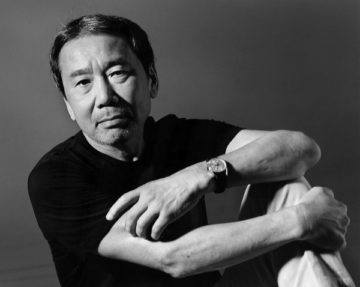 MURAKAMI: When I was writing a novel on an island in Greece, I could see a flock of sheep right outside the window and I wrote the novel every day looking at them. It’s not like the sheep helped in any special way, but they might have encouraged me. The novel I was writing then was Norwegian Wood. Not a single sheep in the story.
How important is the classification of “Japanese writer” to you?
MURAKAMI: I write novels in Japanese, so I guess that’s why I’m called a “Japanese writer.” It’s easiest for me to write in Japanese, but it doesn’t mean anything beyond that. I do, though, like being in Japan because of all the delicious soba buckwheat noodle shops.
More here.
Climate warnings highlight the urgent need for action ahead of COP27
Madeleine Cuff in New Scientist:
 In the holiday resort of Sharm El Sheikh in Egypt, the stage is being set for COP27, the next round of UN climate talks, which kicks off on 6 November.
As delegates prepared to head to the summit, a flurry of sobering reports released last week reminded the world that greenhouse gas concentrations are rising and hopes of delivering on the promises of the 2015 Paris Agreement are fading fast.
First came the stark but unsurprising news from the World Meteorological Organization (WMO) that atmospheric concentrations of planet-warming carbon dioxide, nitrous oxide and methane hit a record high in 2021 and have continued to rise throughout 2022.
Atmospheric CO₂ , responsible for about 66 per cent of global warming since 1750, hit 415.5 parts per million in 2021, the WMO said. Meanwhile, methane registered the largest single-year increase since researchers started keeping records 40 years ago.
More here.