
Magali Nuzant in lensculture:
 The images are printed on khadi, the cloth produced by traditional spinning wheels—the charkha, a device that is deeply rooted in Indian history. During the struggle for independence, Mahatma Gandhi used the spinning wheel as a symbol of self-reliance, urging Indians to spin their own cloth as a means of gaining economic freedom from the exploitation of British colonizers. If the spinning wheel has come to be a symbol of self-reliance, then in the work of Malik, the act of embroidery embodies resistance and the strength and care that can be found in community. Behind the work lies the reality of the struggle for women’s rights and the issue of gendered violence in India.
“‘Nā́rī’ is a word that I’ve used all my life,” explains Malik. “There are multiple definitions that appear in Hindi: woman, wife, female, an object that is regarded as feminine, but it also means sacrifice. When I first read that, I started to read more about women in the time that the word was coined and all that women had to sacrifice throughout history, all the rituals that were part of the culture, that were built around this word.”
More here.
 In 1978, when
  There are distinct signs that the poet John Keats’ Grecian Urn has found its voice again. This is a surprise. The final Delphic utterance of the decorated vessel in his poem Ode to a Grecian Urn runs: “Beauty is Truth, Truth Beauty, — that is all / Ye know on earth, and all ye need to know.” Though well-known as verse, it has long been relegated to romantic wishful thinking.
 Artificial intelligence can learn and remember how to do multiple tasks by mimicking the way sleep helps us cement what we learned during waking hours.
 The morning after the 2016 U.S. presidential election, my partner Skyped her parents back home in Italy. I finished my coffee, and they chatted. At some point her mother asked where I was: I had broken my usual pattern of dropping in to say ciao. My partner slid the laptop over to direct the camera’s gaze at my head, slumped onto our dining room table. “What happened?” the voice on the computer asked. “Trump won,” I explained.
 For me, and for many others, encountering Mark Fisher’s Capitalist Realism in 2009 felt like coming up for air. In a society where everything was arranged to make you think that emotional well-being began and ended with your own personal psychodrama, perhaps the most important thing Capitalist Realism did was to suggest that mental suffering might have something to do with structural flaws in society as a whole. In a political system which endlessly promoted the notion that we were all alone, Fisher’s book announced that we were suffering together. Also, more hopefully, it said that if we were to realise this, and somehow make connections between our several hardships, we would be taking the first step towards doing something we seemed to have mostly forgotten about by the late Noughties: mounting an organised resistance. This is the near-spiritual message in the short, sharp text of Capitalist Realism, published on the eve of a new and tumultuous decade. Whatever political and theoretical nuances it might otherwise have implied, this was a book which called for a joining of human hands.
 J
J As I stand on the blue bridge, gateway to a subtropical garden on this island haven near southwestern England, I look to the side and see a small creature sitting astride a mound of hazelnuts. Its fur blazes a bright russet color, its tail fanned out like a sail. I glance up, and in the neighboring pine tree I see two or three more, racing up and down the trunk, pausing every so often to steal a glance at the feast below, waiting their turn. These are red squirrels, and to see them in the wild, let alone in such numbers, is a rare treat. The animals were once common throughout the United Kingdom, but the invasive gray squirrel has pushed them to the brink of extinction in all but a few strongholds.
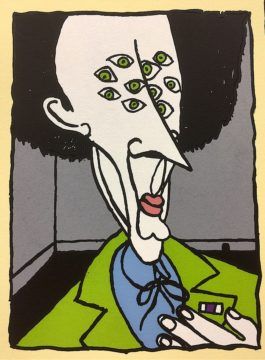 When American novelist Kurt Vonnegut addressed the Bennington College class of 1970—1 year after publishing his best-selling novel, Slaughterhouse-Five—he hit the crowd with his signature one-two punch. “I fully expected that by the time I was 21, some scientist … would have taken a color photograph of God Almighty and sold it to Popular Mechanics magazine,” he said. “What actually happened … was that we dropped scientific truth on Hiroshima.” This weary skepticism for the scientific endeavor rings through many of Vonnegut’s 14 novels and dozens of short stories. For what would have been the famed author’s 100th birthday, Science talked to literary scholars, philosophers of science, and political theorists about the messages Vonnegut left for the scientific community—and why he’s more relevant than ever.
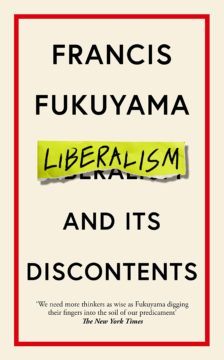 Francis Fukuyama’s work is generally treated much the way pigeons treat statues: as something on which to deposit badly digested ideas, which are then left for others to clean up. His notoriety for the “End of History” thesis is based on a misreading of that phrase, not a real reading of his 1989 National Interest article “The End of History?” or his less sanguine 1992 book The End of History and the Last Man. His subsequent work has received respectful public attention, but little scholarly engagement; he is treated more as a symptom than an intellect. Even with this book, the pattern of neglect-by-vague-praise continues: None of its many reviewers, for all their pretense at comprehension, noticed that his drive-by definition of “deontology” (“not linked to any ontology or substantive theory of human nature”) is totally wrong: Deontology comes from deon, a Greek word here meaning something like “duty” and refers to the study of ethics.
 I teach in and co-direct the undergraduate program in the Department of Human Evolutionary Biology at Harvard University. During the promotion of my recent book on testosterone and sex differences, I appeared on “Fox and Friends,” a Fox News program, and explained that sex is binary and biological. In response, the director of my department’s Diversity, Inclusion and Belonging task force (a graduate student) accused me on Twitter of transphobia and harming undergraduates, and I responded. The tweets went viral, receiving international news coverage. The public attack by the task force director runs contrary to Harvard’s stated academic freedom principles, yet no disciplinary action was taken, nor did any university administrators publicly support my right to express my views in an environment free of harassment. Unfortunately, what happened to me is not unusual, and an increasing number of scholars face restrictions imposed by formal sanctions or the creation of hostile work environments. In this article, I describe what happened to me, discuss why clear talk about the science of sex and gender is increasingly met with hostility on college campuses, why administrators are largely failing in their responsibilities to protect scholars and their rights to express their views, and what we can do to remedy the situation.
 With the centre-left divided and in perpetual crisis, none of its well-known leaders appears remotely capable of forming an effective opposition movement against the far-right government.
 Low
Low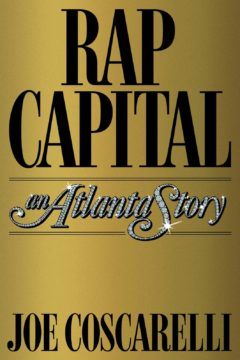 A MONTH BEFORE Atlanta hosted the first hip-hop-focused spinoff of the BET Awards in 2006, an executive at the cable network joked the event would likely not benefit the local economy. He was probably right. Rap dollars already coursed through the Southern city like its ceaseless traffic, bankrolling recording studios, propping up nightclubs and music-publishing companies, and sustaining a vast corps of DJs, strippers, bodyguards, and lawyers. After the inaugural BET Hip Hop Awards aired and nearly half the honors went to Atlantans, local rapper T. I.—who won four awards that night, the largest individual takeaway—described the show’s location as the city’s due: “We control and monopolize so much of this hip-hop industry, it’s only right that they start bringing these awards down here.”