
Sigal Samuel in Vox:
 In Ghana, a nation of 32 million people, there are only 62 psychiatrists.
Zimbabwe, with a population of 15 million, has only 19 psychiatrists.
And in Uganda, there are 47 psychiatrists serving a country of 48 million — less than one single psychiatrist for every million people.
These are staggering ratios. To get your head around them, take the US as a comparison. There are around 45,000 psychiatrists for all 333 million Americans, which translates to about 135 psychiatrists for every million people. That’s still not enough — experts are actually warning of an escalating shortage — and yet it’s a whopping 135 times more coverage than exists in Uganda. These numbers have very real, and sometimes very brutal, implications for people’s lives. When psychiatry and other forms of professional mental health care are not accessible, people suffer in silence or turn to whatever options they can find. In Ghana, for instance, thousands of desperate families bring their ailing loved ones to “prayer camps” in hopes of healing, only to find that the self-styled prophets there chain their loved ones to trees. Instead of receiving medical treatment for, say, schizophrenia, the patients receive prayers.
More here.
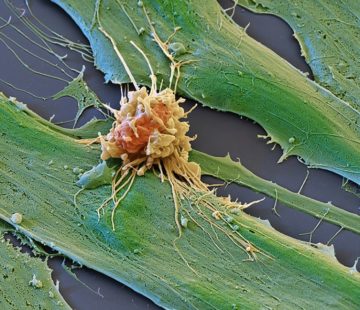 Elaborately engineered immune cells can not only recognize cancer cells, but also evade defences that tumours use to fend off attacks, researchers have found. Two studies published today in Science
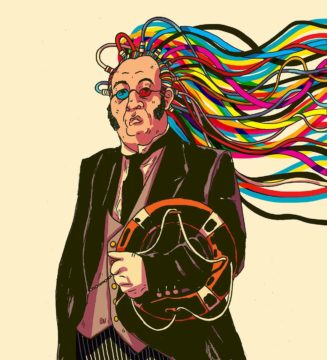 Despite being the culmination of a century-long dream, no better word describes the much-discussed output of OpenAI’s ChatGPT than the colloquial “mid.”
 Our goal isn’t to try convince you to take one side over the other in a debate about optimism and pessimism – the world is far too muddled for that. Instead, it’s to remind you that away from the headlines, millions of people from every corner of the planet did their best to solve the problems that could be solved, and stayed open-eyed and open-hearted even in the most difficult of circumstances.
 IT’S A FUNNY THING TO LEARN
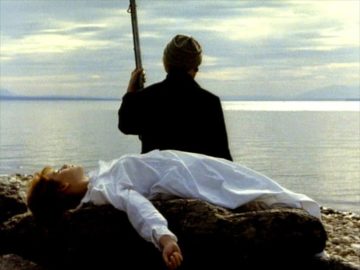 Before we started filming, I asked someone from the production team when I would meet makeup, hair, and wardrobe, and was told that I would be doing my own. I was also informed that Godard would be stopping by my room to choose Cordelia’s costumes from the clothes I had brought with me. It was the first I’d heard of this, and I suddenly wished I had been more selective in my packing. I went back to my room, picked out a nice sweater and skirt, tied a scarf in my hair, and carefully applied my makeup. Then I wrote postcards while I waited for Godard, the contents of my suitcase neatly arranged on the bed. When I greeted him and an assistant at the door, he took one look at my face and exclaimed, “No, no, no! Too much makeup! Take it off. If you must, just a little mascara, that’s all.” The “a” in “all” was pronounced as an “o,” articulated in the exact same way he later asked me to pronounce Cordelia’s answer to her father’s question about what she will say to prove her love for him. “Not no‑thing.” no thing. He split the word in two, and I could tell that this distinction was important to him, without really understanding why.
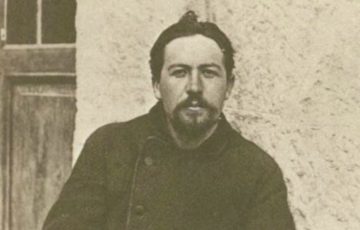 Anton Chekhov’s biography in 1886-1887 is captured almost completely in the writing that he was doing. Reading the stories, we are as close as we can be to being in his company.
 Motivation to exercise may come from the gut in addition to the brain. A study in mice finds that
  A few years ago I was invited to an off-the-record meeting with senior executives at a major social media company. The topic was free speech. I’d just written a piece for the New York Times called “
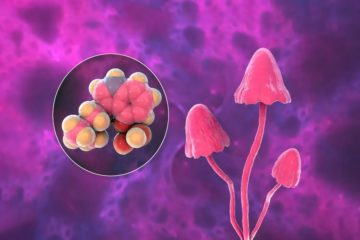 It seems as though “magic” mushrooms containing the psychedelic drug psilocybin are suddenly in vogue, judging by the sudden pop up of
  Last year, the Survey Center on American Life published a
 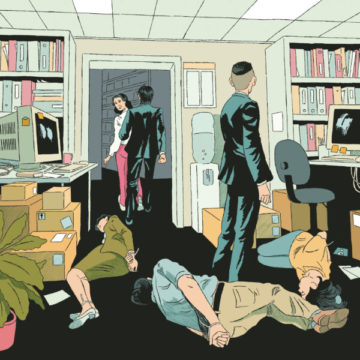 In the early ’90s, the FBI had learned of a Vietnamese-Chinese heroin organization that was closely aligned with Vietnamese street gangs throughout the United States. Their connections were wide-ranging, and they were loosely affiliated with the Triads (including Frank Ma, one of the last Chinese “godfathers” in New York), as well as with several other high-echelon Asian crime bosses in various American cities. But this heroin organization operated differently from the Asian gangs of previous generations.
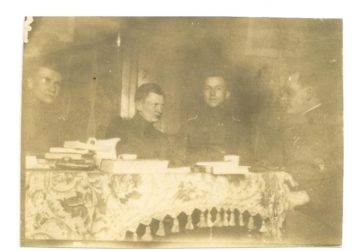 Jünger’s politics were complicated, if not incoherent. A decorated veteran of the First World War (he made his literary debut with a bellicose, best-selling diary from the trenches, Storm of Steel) who was praised by Hitler but who refused to join the Nazi Party; a self-taught conservative intellectual (Jünger never completed university) who won the admiration of Marxist writers like Bertolt Brecht; an incurable elitist sympathetic to communist centralization (he opposed liberalism above all)—the Weimar-era Jünger projected an aloof, aestheticizing, and ultimately paradoxical strain of fascism. Kracauer captured what feels most damning about Jünger’s political thinking during this time in a review of his controversial treatise The Worker (1932) for the Frankfurter Zeitung, in which he accused Jünger of having “metaphysicized” (metaphysiziert) politics: What about real, tangible action in our own historical moment? Metaphysics is an escape.