
The Story of Keys
If you would give me
the key to your house
I would think of it
as a one-dimensional
mountain range.
I would hold it up
to the sky
and study how clouds
drink in its valleys.
Think of it
as a tiny file
that cuts through
vertical shadows.
The door of your house
would be a rectangle of light
that shuts behind me
trapping the moon
by the coattails.
I would no longer need
the twisted path
that brought me to you.
It would disappear
along with the forest
that popped up
on springs and hinges.
And the stagehands
and the roadies of my dreams
could put away their props —
cups, pools, musical perfumes
darker than your hair.
Entering for the first time
would be as if I never left.
And I would tell you
the story of keys.
They were made long before
the invention of doors.
Although no one knew their function,
wise men suspected their importance.
Carefully, they would place them
into the cracks of tree bark and twist.
Anything can be a key: a piece of wire
a safety pin, laughter.
by Richard Garcia
from Touching the Fire
Anchor Books, 1998
 We wondered: Were we condensing phrases to terms because we were typing with our thumbs? Had we come to expect listeners and readers to autocomplete and fill in syntax? Had work jargon saturated private life because Americans worked such long hours? Had a generation told by daycare providers that they were good toy-picker-uppers grown up to make a norm of behaviorist verbing? Had the passive constructions by which one avoids assigning blame (or credit) in the workplace made naming who did what seem rude?
 Fortunately, a whole raft of new technologies is being developed that make a system-wide revolution in food production feasible. According to recent research by one of us (Chris), this transformation could meet increased global food demands by a growing human population on
  So, unfortunately, it’s time for another one of these. By which I mean both a “
 A
A 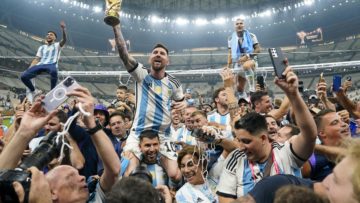 Pick the best moment of the match. It seems impossible. The
 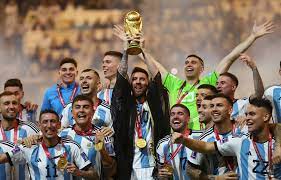 OK, I’m going to do my best here. But I need you to know exactly what you are getting, as Joan Didion once wrote, and what you are getting is a man who cannot feel his face. My hands are still shaking. There are tears in my eyes. I’m writing this less than 10 minutes after the end of the greatest World Cup final ever, which Lionel Messi’s Argentina won on penalties over Kylian Mbappé’s France, and I do not believe it is recency bias that makes me think that this match was the single most thrilling sporting event I have ever witnessed. Every game is a story. And when you consider the stakes, the performances, the history in the balance, the refusal of either side to lose, the moments of astonishing play, the sudden reversals and wild swings of momentum, the knife’s-edge uncertainty of the outcome, and the epochal significance of a result that brought the career of the world’s best player to an almost magically perfect climax, it is hard to imagine a story more overwhelming or more satisfying than this one.
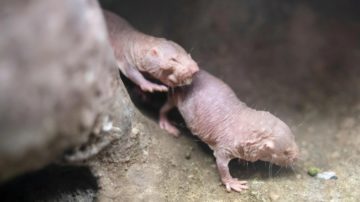 Rochelle “Shelley” Buffenstein has one of the world’s largest, if not the largest, lab-dwelling colonies of the naked mole rat. (No one has done a worldwide tabulation, but she has 4,500 of them.) Buffenstein has spent decades studying the little subterranean-dwelling rodents. Over the years, she and her colleagues have uncovered one surprising discovery after another, which has led them to re-orient the whole field of anti-aging research.
 Leibovich: The Republican Party is in a strange place. The 2022-midterm losses stunned the GOP and created calls for a 2024 challenger to Donald Trump. But can the party move past the man who dominated it for six years? Now we’re actually going on seven years, almost eight years, right? It just keeps going and going. So, hi, Elaina—tell us everything.
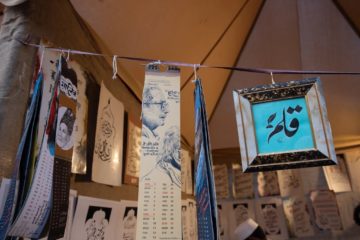 The four designated stages inside the crowded stadium complex in the heart of the busy capital weren’t enough. So the poetry lovers also took to the footpaths and the spaces in between, turning them into impromptu open-mic platforms for India’s embattled language of love.
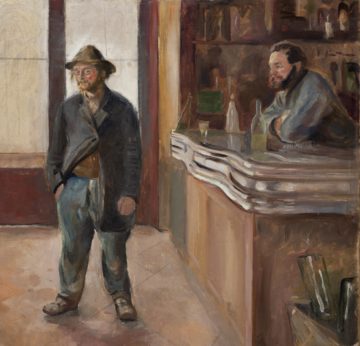 On the evening of December 2, 2020, around 10pm, I swallowed the last of what must have been multiple lifetimes’ worth of mouthsful of red wine. Unlike the partisans of AA, I am confident in saying that I will never again in my life consume alcohol. There are things I just don’t do anymore. I am no less morally certain, for example, that I will never go sky-diving. The version of me that believed a good life is constituted from such “fun” diversions as this died a long time ago. Far from having a “bucket list”, I now understand that the proper conduct of the second half of life is to approach something like what the Tibetan Buddhists call tukdam, to do less and less, but only to sit and meditate, and to breathe once every century or so, so that by the time you actually die there will be scarcely any change to register. I can picture a future not so far from now when, to the question, “Is he alive or dead?”, the only fitting response will be: “Who can say?” You might be able to jolt me into some new movement, like a fly removed from its long sleep in a jar of talc that flicks its wing in reluctant palingenesis (the phenomenon of being “born again”, which by the law of nomen est omen has long tricked me into thinking that Sarah Palin must be destined for a comeback); then again you might not. So, yeah, sky-diving’s out, along with drinking. The version of me that drank died two years ago. We’re coming up on the two-year anniversary of his death.
 A grammatical problem which has perplexed scholars since the 5th century BC has been solved by a
 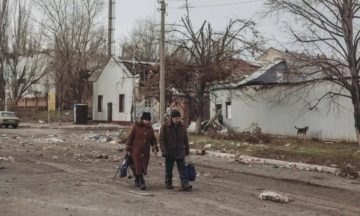 Wherever I turned, in every conversation, there was a total rejection not just of the Russian dictator, not merely of the Russian Federation as a state, but of everything and almost everyone Russian. Polling by the Kyiv International Institute of Sociology shows that some 80% of Ukrainians had a positive attitude to Russia in 2013; by May 2022, the figure was