
Maureen Dowd in The New York Times:
 WASHINGTON — I had always been a bah humbug sort of person about Christmas.
It seemed like a season of stress, as my parents scrambled to find the money to buy presents for five kids and have a big feast. I didn’t like the materialism or the mawkishness. Why should there be one week of the year when we were all supposed to be Hallmark happy? “You’re weird,” my mother told me.
Then I took a course on Charles Dickens at Columbia University with the estimable Prof. James Eli Adams, and I began to fathom the magic. As Dickens said in his sketch, “A Christmas Tree,” published in his journal “Household Words” in 1850, “Oh, now all common things become uncommon and enchanted to me.” His biographer Peter Ackroyd wrote that “Dickens can be said to have almost single-handedly created the modern idea of Christmas.” Christmas morally radicalized Dickens. The disparity between the circumstances and fates of different people offended Dickens in the Christmas season. For him, it was a time to think about what we owe one another, how we live with one another; a time to have a proper sense of outrage about inequality and injustice, and to think about the past, present and future and how much they have to do with each other; a time to consider the good values we’ve thrown away and the bad values — selfishness, egotism, social snobbery, condescension and the worship of money — that infiltrate the heart. Dickens became an outsider looking in when his middle-class life got disrupted by cold, grinding reality: His father went to debtors’ prison and, at 12, Dickens had to leave school to work in a bootblacking factory in London.
…As Mitch Glazer, who co-wrote “Scrooged,” the hilarious 1988 movie with Bill Murray, put it: “Dickens hits us with the setup: regret, loss, mistakes, missed love, wasted life, and then the punchline: ‘It’s not too late!’ In every version from his novella to Mr. Magoo to ours, I always get emotional when Scrooge is reborn.” Dickens has taught me that it’s not too late to focus on the sweet memories, like the time my mom somehow bought me a doll’s kitchen I longed for that my parents couldn’t afford, or the way she would be aghast if we didn’t wear red and green.
The magic is there, if you look. So on this Christmas, as Tiny Tim said, God bless us, every one!
More here.
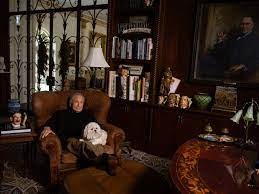 To revisit “The Dick Cavett Show,” which ran late night on ABC from 1969 to 1975 (and in various other incarnations before and after), is to enter a time capsule—not just because of Cavett’s guests, who included aging Hollywood doyennes (Bette Davis, Katharine Hepburn), rock legends in their chaotic prime (Janis Joplin, Jimi Hendrix), and squabbling intellectuals (Gore Vidal, Norman Mailer), but because Cavett’s free-flowing yet informed interviewing style is all but absent from contemporary television. Late-night shows are now tightly scripted affairs, where celebrities can plug a new movie, tell a rehearsed anecdote, and maybe get roped into a lip-synch battle. But Cavett gently prodded his subjects into revealing themselves. Though he was pegged as the “intellectual” late-night host, he resisted the label. He was a creature of show business: spontaneous, witty, and interested in everything.
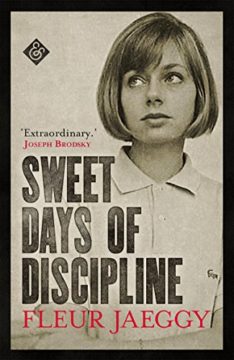 Fleur Jaeggy would like to see herself as something of a mystic.
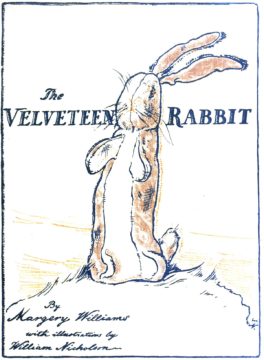 The story behind the story of “The Velveteen Rabbit” is itself a kind of fairy tale. Much of it was revealed to me during an interview I did with Margery’s daughter, Pamela Bianco, in 1979. Pamela, born in London in 1906, was an art prodigy, and by the tender age of 12, was one of the most famous children in the world. She was 62 when I met her and working in relative obscurity, as she had done for much of her adult life. During our lengthy conversation, she described the evolution of “The Velveteen Rabbit” and her crucial part in its inception. Pamela was the most childlike person I have ever met. That may well be because her childhood was taken from her. I have never quite forgotten her.
 At twenty-six, at the embarrassing end of a series of attempts at channelling Kerouac, I was beyond broke, back in my home town, living in my aunt and uncle’s basement. Having courted and won a girl I had courted but never come close to winning in high school, I was now losing her via my pathetically dwindling prospects. One night she said, “I’m not saying I’m great or anything, but still I think I deserve better than this.”
 Stimulating neurons that are linked to alertness helps rats with cochlear implants learn to quickly recognize tunes, researchers have found. The results suggest that activity in a brain region called the locus coeruleus (LC) improves hearing perception in deaf rodents. Researchers say the insights are important for understanding how the brain processes sound, but caution that the approach is a long way from helping people. “It’s like we gave them a cup of coffee,” says Robert Froemke, an otolaryngologist at New York University School of Medicine and a co-author of the study, published in Nature on 21 December
 With a title like that, obviously I will be making a nitpicky technical point. I’ll start by making the point, then explain why I think it matters.
 The main federal agency guiding America’s pandemic policy is the U.S. Centers for Disease Control, which sets widely adopted policies on masking, vaccination, distancing, and other mitigation efforts to slow the spread of COVID and ensure the virus is less morbid when it leads to infection. The CDC is, in part, a scientific agency—they use facts and principles of science to guide policy—but they are also fundamentally a political agency: The director is appointed by the president of the United States, and the CDC’s guidance often balances public health and welfare with other priorities of the executive branch.
 Glass frogs can boost their transparency by up to 61 per cent by storing most of their blood in their liver while they sleep. Researchers hope that understanding how the frogs manage to pool their blood this way without experiencing blood clots could provide new insights into preventing dangerous clots in other animals, including humans.
 A novel, which is fiction, can never be classified as nonfiction—indeed, a “nonfiction novel” sounds like a contradiction in terms. This is because when we use these two categories, we are not talking about form or content—as we might with more granular terms, such as autofiction, memoir or biography—but making a judgement call. We are saying: these are the books that tell “the truth”, whereas these are the ones that do not.
 KW: Many philosophers have said that a certain attitude is required in order to philosophize. For example, the neo-Thomist Josef Pieper said a philosopher had to have a sense of wonder. Rabbi Abraham Joshua Heschel said “radical amazement” is required. You have said the capacity to be astonished is essential. What do you mean by astonishment?
 When Norman Mailer was inducted into the Army, in March, 1944, he was a freshly married twenty-one-year-old Harvard graduate, a slight young man of five feet eight inches and a hundred and thirty-five pounds. In the previous few years, he had published some stories and written a play and two novels (one of them published, in a typescript facsimile, as “
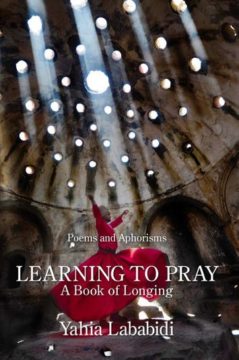 The twin books of Egyptian poet Yahia Lababidi— Learning to Pray: A Book of Longing and Desert Songs, published in 2021 and 2022, respectively—uphold the Sufi tradition that was critical in shaping the imagery, symbolism, metaphors, tropes, and indeed the world view, of classical Sufi poetry and portray mercy with a pluralistic vision by upholding an expression of love above all divides. Lababidi does this by the clean magic of his language, relatable imagery and fine craft.