
William H. Janeway in Project Syndicate:
 My colleagues Gary Gerstle and Helen Thompson share an academic home at the University of Cambridge, and their new books share a common purpose: how to understand the dysfunctionality that has beset Western democracies. They explore that question in very different but complementary ways, offering deep insights into the disequilibrium dynamics of democratic capitalism. When read together, one sees clearly how the dissolution of Gerstle’s Neoliberal Order has stoked the disorder that Thompson analyzes.
The contrast between the two books owes much to the authors’ backgrounds. Gerstle, a historian of political ideas, ideologies, and cultures, writes from an American perspective. In The Rise and Fall of the Neoliberal Order: America and the World in the Free Market Era, he tracks how initially radical political programs become institutionalized as all-encompassing “orders” when the opposition accepts their terms. Thus, the New Deal Order was established when the Republican Eisenhower administration chose not to try to repeal the Democratic Roosevelt administration’s central institutional reforms.
More here.
 L
L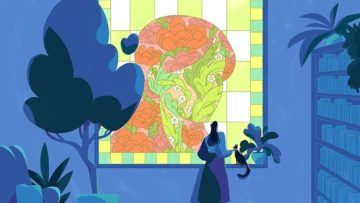 Sad times are inevitable, and most people eventually rally. But clinical depression is different, and more brutal. All sense of well-being evaporates; life can seem not worth the trouble. According to one estimate, more than 60% of people worldwide who have attempted suicide have a depressive disorder (
 The United States may regard itself as a “
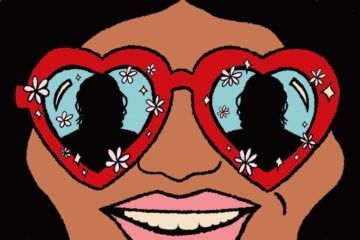 For humans, biologically speaking, soul mates are entirely real. But just like all relationships, soul mates can be complicated. Of course, there isn’t a scientifically agreed-upon definition for “soul mate.” But humans are in a small club in the animal kingdom that can form long-term relationships. I’m not talking about sexual monogamy. Humans evolved with the neurocircuitry to see another person as special. We have the capacity to single someone out from the crowd, elevate them above all others and then spend decades with them.
 At its height in the 1840s, the West African kingdom of
  Marco D’Eramo in Sidecar:
 John Burn-Murdoch in the FT (image © Bloomberg):
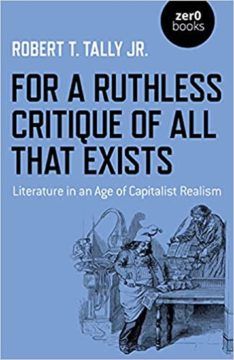 Robert Scott in the LA Review of Books: