
Hope Reese in The New York Times:
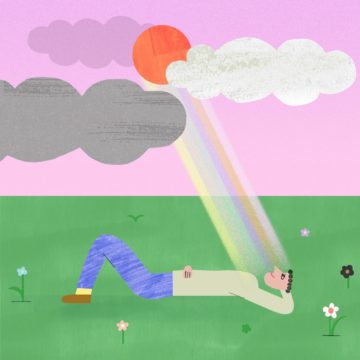 Awe can mean many things. It can be witnessing a total solar eclipse. Or seeing your child take her first steps. Or hearing Lizzo perform live. But, while many of us know it when we feel it, awe is not easy to define. “Awe is the feeling of being in the presence of something vast that transcends your understanding of the world,” said Dacher Keltner, a psychologist at the University of California, Berkeley.
It’s vast, yes. But awe is also simpler than we think — and accessible to everyone, he writes in his book “Awe: The New Science of Everyday Wonder and How It Can Transform Your Life.” While many of us associate awe with dramatic, life-changing events, the truth is that awe can be part of everyday life. Experiencing awe comes from what Dr. Keltner has called a “perceived vastness,” as well as something that challenges us to rethink our previously held ideas. Awe can be triggered from moments like seeing the Grand Canyon or witnessing an act of kindness. (About a quarter of awe experiences are “flavored with feeling threatened,” he said, and they can arise, for example, by looking at a lion in a zoo or even gruesome videos of genocide).
More here.
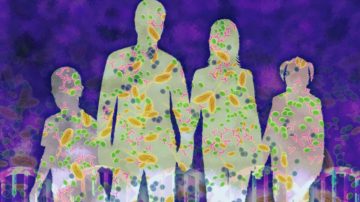 To learn to socialize, zebrafish need to trust their gut. Gut microbes encourage specialized cells to prune back extra connections in brain circuits that control social behavior, new University of Oregon research in zebrafish shows. The pruning is essential for the development of normal social behavior.
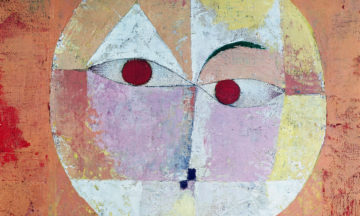 Each of us constructs and lives a “narrative”,’ wrote the British neurologist Oliver Sacks, ‘this narrative is us’. Likewise the American cognitive psychologist Jerome Bruner: ‘Self is a perpetually rewritten story.’ And: ‘In the end, we become the autobiographical narratives by which we “tell about” our lives.’ Or a fellow American psychologist, Dan P McAdams: ‘We are all storytellers, and we are the stories we tell.’ And here’s the American moral philosopher J David Velleman: ‘We invent ourselves… but we really are the characters we invent.’ And, for good measure, another American philosopher, Daniel Dennett: ‘we are all virtuoso novelists, who find ourselves engaged in all sorts of behaviour… and we always put the best “faces” on it we can. We try to make all of our material cohere into a single good story. And that story is our autobiography. The chief fictional character at the centre of that autobiography is one’s self.’
 What do Noam Chomsky, living legend of linguistics, Kai-Fu Lee, perhaps the most famous AI researcher in all of China, and Yejin Choi, the 2022 MacArthur Fellowship winner who was profiled earlier this week in The New York Times Magazine—and more than a dozen other scientists, economists, researchers, and elected officials—all have in common?
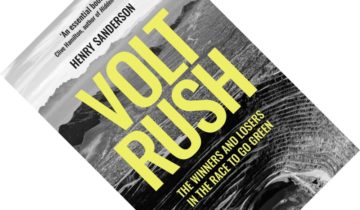 The problems created by humanity’s dependence on fossil fuels are widely appreciated, and governments and businesses are now pursuing renewable energy and electric vehicles as the solution. Less appreciated is that this new infrastructure will require the mining of vast amounts of metals, creating different problems. In Volt Rush, Financial Times journalist Henry Sanderson gives a well-rounded and thought-provoking exposé of the companies and characters behind the supply chain of foremost the batteries that will power the vehicles of the future. If you think a greener and cleaner world awaits us, Volt Rush makes it clear that this is far from a given.
 I really enjoy doing it: it makes me feel good about myself. It gives me a boost, mentally and physically.” If these were your reactions to an activity, you’d surely be inclined to do it as often as you could. After all, aren’t a lot of us looking for ways to find more meaning in life and to be happier and healthier? What, then, is the act that elicits such positive responses? The answer: being
  S
S In recent years, the vagus nerve has become an object of fascination, especially on social media. The vagal nerve fibers, which run from the brain to the abdomen, have been anointed by some influencers as the key to reducing anxiety, regulating the nervous system and helping the body to relax.
 Alex Turnbull in Phenomenal World:
 Marco D’Eramo in Sidecar:
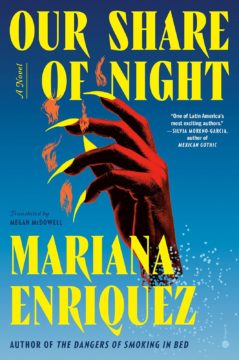 David Kurnick in Bookforum:
 Paul Grimstad in The Baffler:
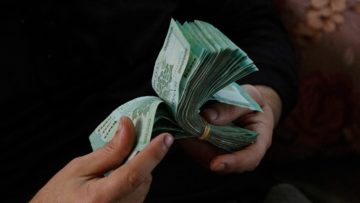 On August 11th an unemployed 42-year-old grabbed his shotgun and a large jerry can of petrol. Dressed in a T-shirt and flip-flops, Bassam al-Sheikh Hussein walked into a
  Bushra Rehman’s stunningly beautiful coming-of-age novel “Roses, in the Mouth of a Lion” is set in the Corona neighborhood of Queens, New York, which was enshrined in pop culture by Paul Simon’s 1972 hit “Me and Julio Down by the Schoolyard.” Rehman’s exuberant young protagonist, Razia, knows the song well, although it puzzles her. “Why would Paul Simon be singing about Corona?” she muses. “I didn’t see many white people there unless they were policemen or firemen, and I didn’t think Paul Simon had ever been one of those.”
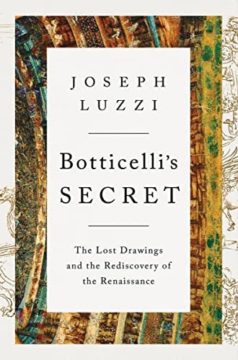 I
I