
Charles Foster at Literary Review:
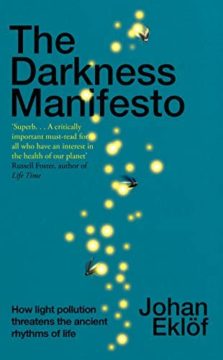 God does not approve of street lighting, observed Jean-Jacques Rousseau. That wasn’t an oblique aphorism: it was simple biblical exposition. The God of Genesis is famously keen on maintaining boundaries between domains. There is supposed to be light (‘Let there be light’) and darkness (‘He separated the light from the darkness’ and called ‘the light “day”, and the darkness “night”’). Now, over much of the globe, night has been cancelled. The night sky in Hong Kong is 1,200 times brighter than the unilluminated sky. Millions will never see the constellations so central to the stories humans have told about the cosmos.
The cancellation began when humans discovered fire and used it to extend their days. This was a gentle type of hubris, different in kind as well as scale from the hubris of the Chinese engineers who are said to be about to put artificial moons into space, their orbits synchronised with the night hours of each commissioning city, pumping out light eight times stronger than the light of the real moon.
more here.
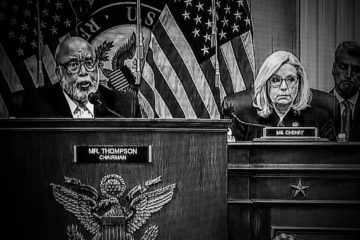 In voting on Monday to issue a sweeping final report, the Jan. 6 committee has honored its duty and the Constitution. When the full report is released this week, there will be much to review and process for our country, our government and American history. But given the facts that have been revealed, these hearings had to end with criminal referrals against Donald Trump and his minions.
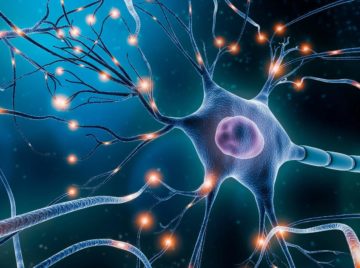 Nerve cells, or neurons, are the basic functional units of the nervous system. Multiple interconnected neurons form a neural circuit and use electrical and chemical signals to quickly transmit information throughout an organism. The nervous system is broadly divided into two sections: the central nervous system (CNS) and the peripheral nervous system (PNS). The CNS consists of the brain and spinal cord whereas the PNS includes neurons that branch off from the CNS and connect to the rest of the body. In general, neurons in the PNS receive and carry signals in the body while neurons in the CNS analyze information.
 We wondered: Were we condensing phrases to terms because we were typing with our thumbs? Had we come to expect listeners and readers to autocomplete and fill in syntax? Had work jargon saturated private life because Americans worked such long hours? Had a generation told by daycare providers that they were good toy-picker-uppers grown up to make a norm of behaviorist verbing? Had the passive constructions by which one avoids assigning blame (or credit) in the workplace made naming who did what seem rude?
 Fortunately, a whole raft of new technologies is being developed that make a system-wide revolution in food production feasible. According to recent research by one of us (Chris), this transformation could meet increased global food demands by a growing human population on
  So, unfortunately, it’s time for another one of these. By which I mean both a “
 A
A 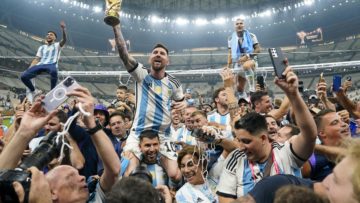 Pick the best moment of the match. It seems impossible. The
 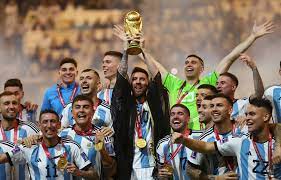 OK, I’m going to do my best here. But I need you to know exactly what you are getting, as Joan Didion once wrote, and what you are getting is a man who cannot feel his face. My hands are still shaking. There are tears in my eyes. I’m writing this less than 10 minutes after the end of the greatest World Cup final ever, which Lionel Messi’s Argentina won on penalties over Kylian Mbappé’s France, and I do not believe it is recency bias that makes me think that this match was the single most thrilling sporting event I have ever witnessed. Every game is a story. And when you consider the stakes, the performances, the history in the balance, the refusal of either side to lose, the moments of astonishing play, the sudden reversals and wild swings of momentum, the knife’s-edge uncertainty of the outcome, and the epochal significance of a result that brought the career of the world’s best player to an almost magically perfect climax, it is hard to imagine a story more overwhelming or more satisfying than this one.
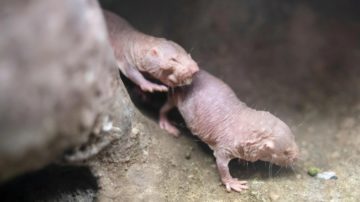 Rochelle “Shelley” Buffenstein has one of the world’s largest, if not the largest, lab-dwelling colonies of the naked mole rat. (No one has done a worldwide tabulation, but she has 4,500 of them.) Buffenstein has spent decades studying the little subterranean-dwelling rodents. Over the years, she and her colleagues have uncovered one surprising discovery after another, which has led them to re-orient the whole field of anti-aging research.
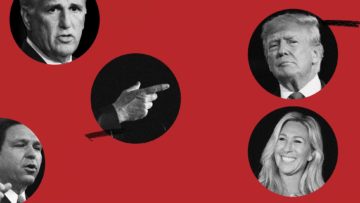 Leibovich: The Republican Party is in a strange place. The 2022-midterm losses stunned the GOP and created calls for a 2024 challenger to Donald Trump. But can the party move past the man who dominated it for six years? Now we’re actually going on seven years, almost eight years, right? It just keeps going and going. So, hi, Elaina—tell us everything.
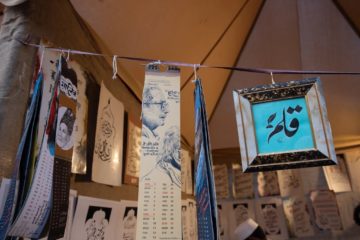 The four designated stages inside the crowded stadium complex in the heart of the busy capital weren’t enough. So the poetry lovers also took to the footpaths and the spaces in between, turning them into impromptu open-mic platforms for India’s embattled language of love.