Stone
De piedra, sangre.
I make my own heaven. I drag it out of the streets, and
inhospitable terrains. I mixed “tabique”, brick, mortar with
my hands, kneading,
I need, to make my own heaven.
It is clandestine, in broad daylight.
It’s microwave popcorn, from Costco, because Costco can
cross the border as many times as it wants and it has never
been asked to go back to where it came from. Not in this
kitchen, scrubbed so clean, with bleach, that the roaches have
to ask permission to scatter out onto the floor.
Sulema and I, don’t flinch. She has figured me out. We know
we have lived some shit and now, it takes more than a
cockroach to keep us from moving, forward.
Fuck the roaches, the military, the long nights and even
longer days. There is popcorn to be made,
a courtyard of children waiting for it.
Baby girl walks in to check on our progress. She is waiting
impatiently for popcorn, the smell of butter making its way
around the shelter, La Casa.
The house is built on a solid foundation of Goodyear tires,
and unpacked, repacked, suitcases, unpacked, repacked plans.
Today, there is popcorn.
All that matters is today,
For my sake, not Sulema’s.
The flowerbeds, and the upside-down Christmas trees, drying
out in the sun are beautiful.
I will remember them, when I am warm by a campfire,
watching my children for signs of a chill.
I will remember them,
determined,
uneven steps, protruding out of a hillside, going wherever
they need to go.
Wherever they need to go.
There is no going back.
Sulema and I both know this, standing in the hot kitchen of
the TJ shelter, it is obvious.
It is a beautiful truth, it takes hesitation and beats it down,
into the floor.
We danced on it.
by Aideed Medina
from Split This Rock

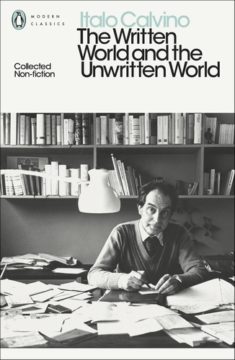 Can there be much material left in Italo Calvino’s desk drawers? Since the death of the puckish Italian polymath in 1985, no fewer than six collections of his nonfiction have appeared in English, gathered into the autobiographical (The Road to San Giovanni, Hermit in Paris) or the literary-critical (Six Memos for the Next Millennium, Why Read the Classics?).
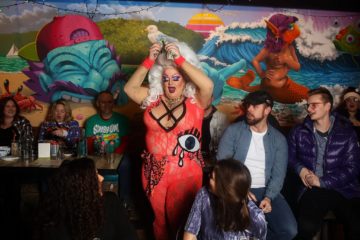 HUNTSVILLE, Ala. — It was an unusually chilly Thursday night in December, and a drag queen named Miss Majesty Divine was putting the final touches on her show makeup. She was about to go onstage for her regular gig at a basement tiki bar, one of the last performances before Christmas. Up at street level, two unwelcome guests had arrived. They were not fans. They were men with bushy beards, one holding a bullhorn, the other a placard that depicted a drag queen holding a screaming baby and the hashtag #stopdragqueenstoryhour. “Repent, you filthy dog! You are going to burn in hell!” the one with the bullhorn shouted. “God sent AIDS to deal with people like you!” Madge, as she is known to her friends and adoring fans, was unfazed. “I teach math to middle schoolers,” Madge deadpanned. “You think I haven’t been called some things?”
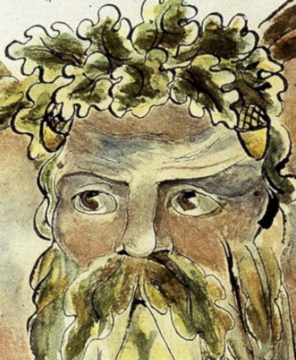 Something was in the water in Austin. In the 1960s, a gang of classics scholars and philosophy professors had rolled into town like bandits, the University of Texas their saloon: William Arrowsmith, chair of the Classics Department, who scandalized the academic humanities with a Harper’s Magazine essay titled “The Shame of the Graduate Schools,” arguing that “the humanists have betrayed the humanities” and that “an alarmingly high proportion of what is published in classics—and in other fields—is simply rubbish or trivia”; John Silber, promoted to dean of the College of Arts and Sciences just ten years after graduating from Yale, who promptly replaced twenty-two department heads, much to the ire of the university’s board; and a third, an unassuming former radio broadcaster from the United Kingdom with a knack for classical languages and only a master’s degree to his name.
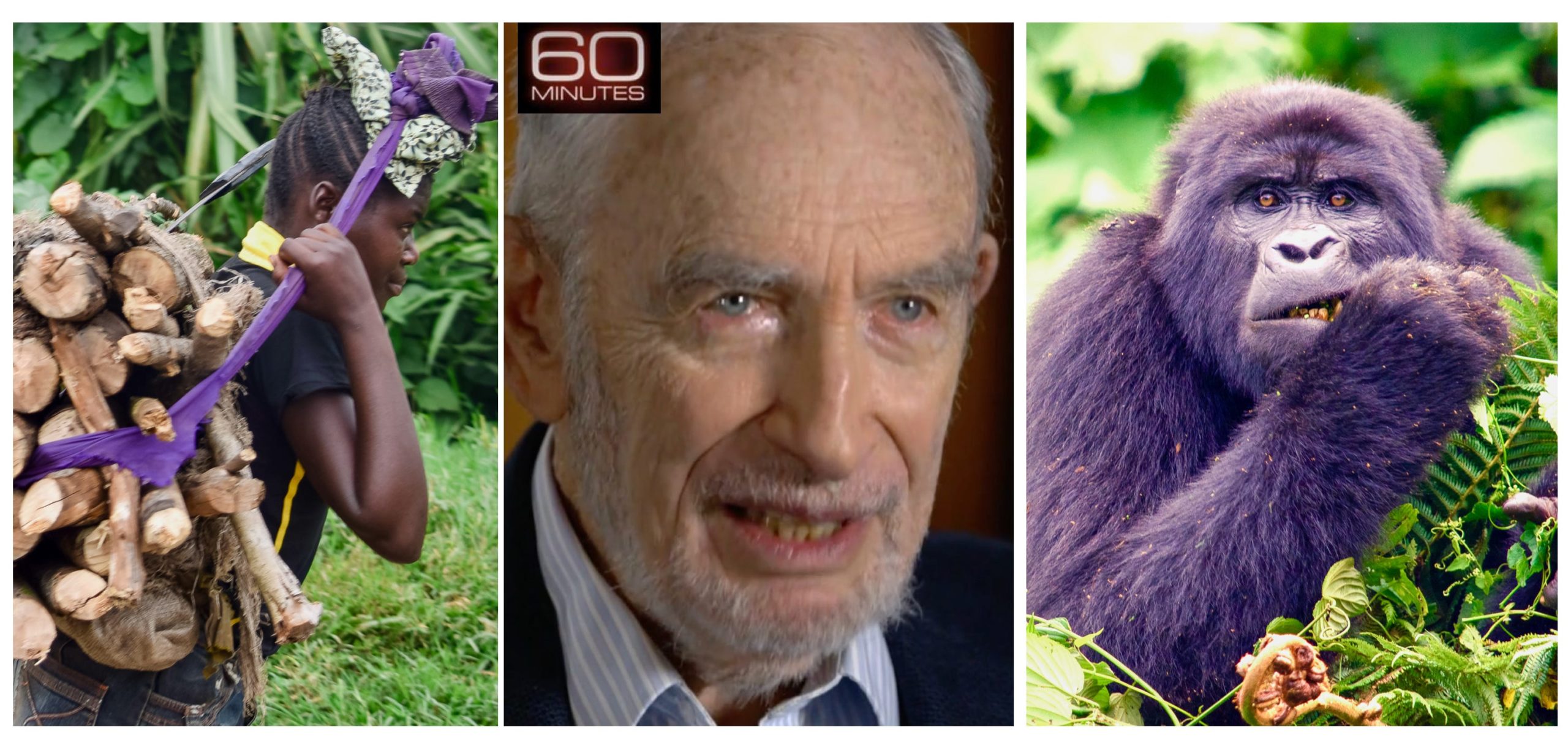 On CBS “60 Minutes” last night, scientists
  China’s rise has been the defining story of the past three decades. No analysis of international economics or politics can ignore it. But the conversation has shifted over time. Before 2017, it was widely believed that China could become a “
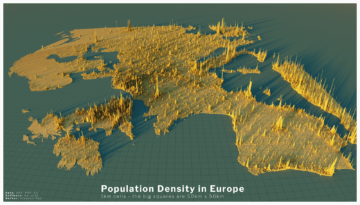 It can be difficult to comprehend the true sizes of megacities, or the global spread of
 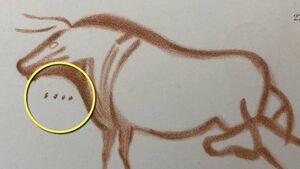 A London furniture conservator has been credited with a crucial discovery that has helped understand why Ice Age hunter-gatherers drew cave paintings.
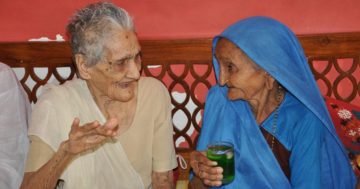 You may wonder about the focus on the need for social connections as one grows older, in this book. After all, isn’t friendship usually associated with youth? Education management expert Ravi Acharya would say no to that. After spending his working years in Pune and Ahmedabad, among other places, Acharya moved to Bengaluru. He is lucky to have two of his closest friends live on the same street. Acharya says we don’t realise the importance of actually talking to our friends, in a world dominated by conversations on WhatsApp, Facebook, and other social media. “We friends make it a point to meet once a month,” says Acharya, “and avoid conversations over WhatsApp unless necessary. Such social connections and making an effort toward being in touch is important for active ageing.”
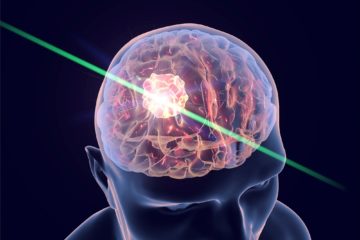 Scientists are harnessing a new way to turn cancer cells into potent, anti-cancer agents. In the latest work from the lab of Khalid Shah, MS, PhD, at
 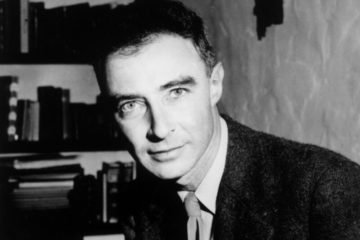 Nearly 70 years after having his security clearance revoked by the Atomic Energy Commission (AEC) due to suspicion of being a Soviet spy, Manhattan Project physicist
 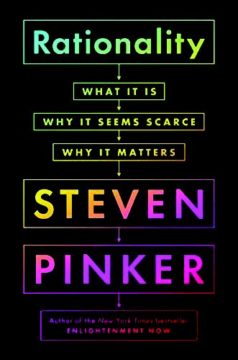 Just another run-of-the-mill, middle-of-the-road Pinker volume. Which is another way of saying it’s bloody marvelous. What a consummate intellectual this man is! Every one of his books is a bracing river of fluent readability to delight the non-specialist. Yet each one simultaneously earns its place as a major professional contribution to its own field. Grasp the fact that the field is different for each book, and you have the measure of this scholar. Steven Pinker’s professional expertise encompasses linguistics, psychology, history, philosophy, evolutionary theory—the list goes on. There’s even a book on how to write good English—for, sure enough, he is a master of that too.
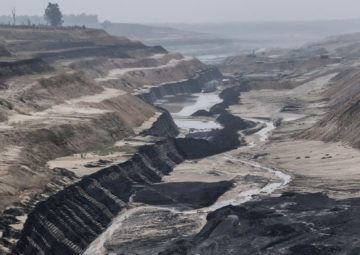 The village was located in the central Indian state of Chhattisgarh, on the edge of the dense Hasdeo Arand forest. One of India’s few pristine and contiguous tracts of forest, Hasdeo Arand sprawls across more than 1,500 sq km. The land is home to rare plants such as epiphytic orchids and smilax, endangered animals such as sloth bears and elephants, and sal trees so tall they seem to brush against the sky.
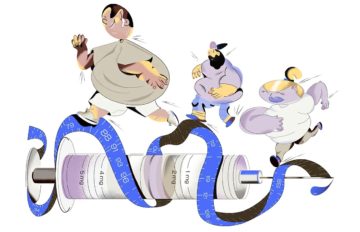 The hotel ballroom was packed to near capacity with scientists when Susan Yanovski arrived. Despite being 10 minutes early, she had to manoeuvre her way to one of the few empty seats near the back. The audience at the ObesityWeek conference in San Diego, California, in November 2022, was waiting to hear the results of a hotly anticipated drug trial. The presenters — researchers affiliated with pharmaceutical company Novo Nordisk, based in Bagsværd, Denmark — did not disappoint. They described the details of an investigation of a promising anti-obesity medication in teenagers, a group that is notoriously resistant to such treatment. The results astonished researchers: a weekly injection for almost 16 months, along with some lifestyle changes, reduced body weight by at least 20% in more than one-third of the participants