Jef Akst in The Scientist:
 Most models of how tumors evolve have assumed that the process is based predominately on cancer cells’ genetics, and many cancer treatments are specifically targeted to mutations associated with disease. But comparing whole genome sequence data with RNA-seq data from samples of colorectal tumors revealed that the vast majority of gene expression differences among cancer cells cannot be explained by genetics, researchers report in Nature today (October 26).
“So far, a lot of the work that’s been done exploring cancer evolution in cancer development has focused very much on just the genetics,” says Nicholas McGranahan, a computational cancer researcher at the University College London Cancer Institute’s CRUK UCL Centre who was not involved in the research. But according to the new study, “there’s lots of these alterations that they can’t identify a clear [genetic] underpinning for. . . . It’s a nice study because it highlights some of the limitations of what we’ve been doing before.”
Computational biologist Andrea Sottoriva says that it’s those limitations that led him and his colleagues to consider the transcriptome in cancer evolution. “Basically, looking at the genetic evidence was not explaining everything that we were seeing,” says Sottoriva, a group leader at the Institute of Cancer Research, London, and the head of Computational Biology Research Centre at Human Technopole in Milan, Italy. For example, he explains, “if you just look at . . . mutations in genes that are involved in cancer, it’s not very easy to distinguish a benign cancer from a malignant cancer: In a benign cancer, there are as many cancer driver mutations as in a malignant cancer.”
More here.

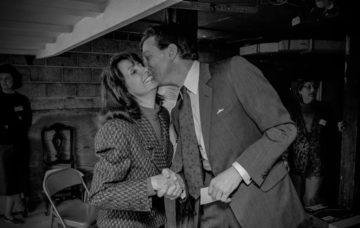 Now comes news of a maniac breaking into a house in the middle of the night, bludgeoning an 82-year-old man in the head with a hammer while demanding to know where his famous wife was. Perfect Halloween movie fare. Except it actually happened. One of the most macabre stories to come out of the Jan. 6 attack on the Capitol and democracy, ginned up by Donald Trump, was when the mob roamed the halls, pounding the speaker’s door with bloodcurdling taunts of “Where’s Nancy?” Speaker Pelosi was not there, thank God. She was huddling with other top officials in a secure bunker, placing call after call for help that was slow to arrive.
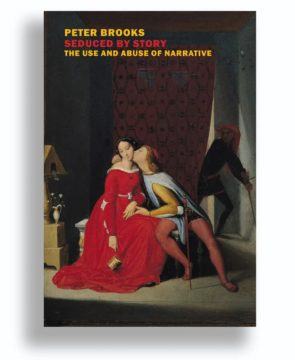 Imagine taking in an orphaned baby bird, giving it food and shelter so that it could grow, and then one day it swoops down and attacks the family hamster.
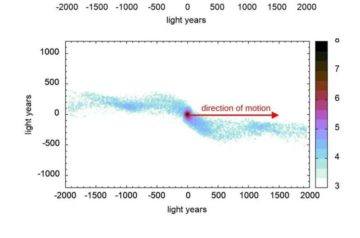 An international team of astrophysicists has made a puzzling discovery while analyzing certain star clusters. The finding challenges Newton’s laws of gravity, the researchers write in their publication. Instead, the observations are consistent with the predictions of an alternative theory of gravity. However, this is controversial among experts. The results have now been published in the Monthly Notices of the Royal Astronomical Society.
 Homo sapiens have existed on the planet for
 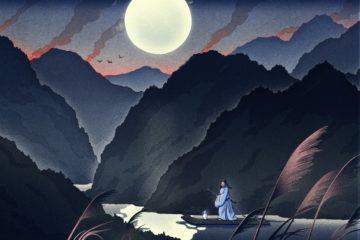 The astounding influence that Chinese poetry in translation has had on the English language throughout the 20th century—from the Modernist, Imagist revolution of
 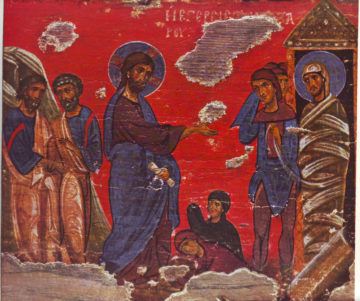 What counts as resurrection? A general rising of the dead, a return from the afterworld at the end of time in some physical embodiment, is specific to a small group of monotheistic religions: Zoroastrianism, Islam, Judaism, Christianity. Irksome sympathizers say that the dead person will “live” in memory. Reincarnation, especially prevalent in the belief systems collected under Hinduism, is an expansive view of resurrection. The “undead”—whether zombies or ghosts—cluster at the threshold of living again. Science fiction and the superrich try to upload the self to a mechanical container. Some physicists propose the eventuality of a quantum resurrection out there in this universe or another. The corpse fertilizes the cemetery grass. What I began seeking, though, was a straight-up rewinding, my own Lazarus, selfsame.
 Taylor Swift was quite the romantic when she burst on the scene in 2006. She sang about the ecstasies of young love and the heartbreak of it. But her mood has hardened as her star has risen. Her excellent new album, Midnights, plays upon a string of negative emotions — anxiety, restlessness, exhaustion and occasionally anger. “I don’t dress for women,” she sings at one point, “I don’t dress for men/Lately I’ve been dressing for revenge.”
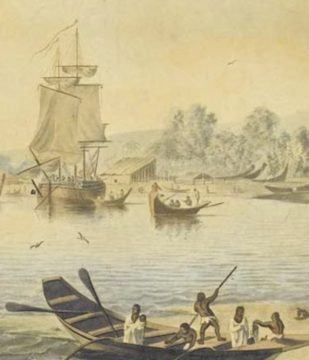 The first Europeans to reach Tahiti were the crew of HMS Dolphin, commanded by Samuel Wallis, in June 1767. When the Dolphin approached the island and, like the Beagle, anchored in Matavai Bay, some Tahitians had thought the ship was “a floating island.” Others had recalled a prophecy that, as a result of the chopping down of a sacred tree, newcomers of an unknown kind would arrive and that “this land would be taken by them. The old order will be destroyed and sacred birds of the land and the sea will come and lament what the lopped tree has to dictate. [The newcomers] are coming upon a canoe without an outrigger.”
 Studying quantum mechanics, which I’ve been doing
  The politics of inflation in 2022 are surprising.
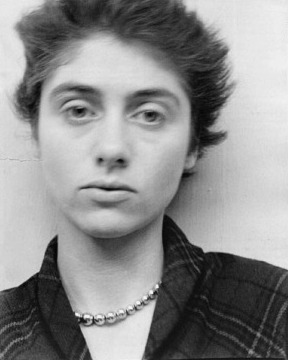 Much has been written about
 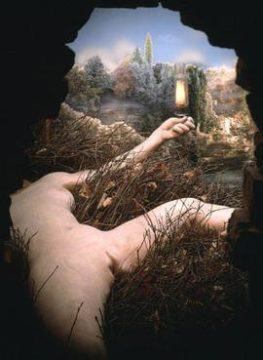 One bleary morning in a darkened art history classroom—think Modernism 101—a slide of the interior of Étant donnés: 1° la chute d’eau / 2° le gaz d’éclairage (1946-1966) flashed by. Its glimmering afterimage remained in my mind’s eye long after. One might say it never really left. I still remember how rattled I was as I tried to make sense of it. The odd installation didn’t fit into what was being taught as modern art at the time, yet conversely—perversely—it nominally coincided with enough of what art history syllabi then encompassed: female nudity mediated by a male gaze, corporeality framed by idyllic landscapes. What perhaps shook me most, however, was that it didn’t tally at all with what I was just learning about the art of its maker. Duchamp, the painter turned cool conceptualist. Duchamp, father of the readymade and chess-playing lover of puns. Duchamp, the sometime art dealer, occasional crossdresser, and elegant prankster who had definitively “retired” by the 1930s. Even if these myriad “Duchamps”already indicated a great flexibility regarding the concept of art and artist, it was Etant donnés, I thought, that didn’t fit. And I was not alone in thinking so.
 In his